A Visitor’s Guide to Aracena’s Feria Regional del Jamón y del Cerdo Ibérico
A Visitor’s Guide to Aracena’s Feria Regional del Jamón y del Cerdo Ibérico
Aracena’s Feria Regional del Jamón y del Cerdo Ibérico is the Sierra’s biggest autumn food weekend; part tasting, part market, and part local tradition. Here’s how to plan your visit, understand the labels, and build a full Aracena weekend around it.
Late October has its own soundtrack in Aracena: the murmur of a crowded pavilion, glasses meeting counters and long knives passing rhythmically through jamón. For two weekends, the town becomes a meeting place for the people who raise, cure, cut, sell, and take great pleasure in eating the product that has shaped the Sierra’s identity.
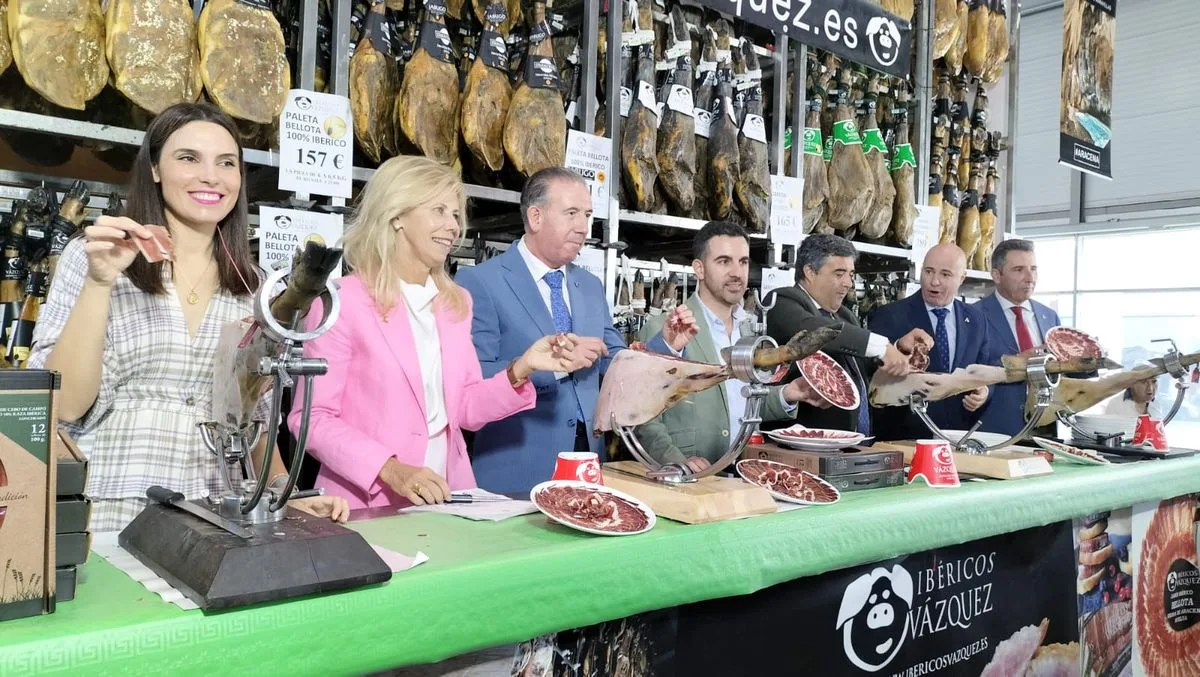
The Feria Regional del Jamón y del Cerdo Ibérico is one of Aracena’s largest annual gatherings and an official Fiesta de Interés Turístico de Andalucía. Producers fill the fairground with jamón, paleta, lomo, sausages and other foods from the region. Cutting competitions, tastings, demonstrations and live music give you plenty to watch, although some of the best conversations happen across the stands. Ask where something was produced or how long it was cured and you are unlikely to receive a one-word answer.
Some visitors arrive knowing the difference between every coloured seal on a leg of jamón. Others simply know that they would like to taste it. Both will be perfectly at home here. You can spend a few hours exploring the fair or make it the centre of an autumn weekend, leaving room for Aracena’s restaurants, woodland and historic streets between tastings.
The feria normally occupies two consecutive weekends in the second half of October. At the time of writing, Aracena Town Council had not released the complete official programme for 2026. We will update this guide when it appears; until then, use the council’s ferias and events page for confirmed dates, opening hours and access arrangements.
The Feria at a Glance
- When: The feria returns from October 16–18 and 23–25, 2026. At the time of writing, Aracena Town Council had not released the complete programme.
- Where: The main stands and activities are usually held at the Pabellón Ferial in Aracena, with additional events taking place elsewhere in town.
- When to arrive: Late morning gives you time to explore the stands before the fairground becomes busier. Check the programme carefully, as opening and closing times vary across the six feria days.
- What to budget for: Access arrangements will be confirmed in the official programme. Set aside money for tasting plates, drinks and anything you decide deserves a place in your suitcase.
- Who will enjoy it: Travellers interested in food, farming and regional traditions; enthusiastic cooks; serious jamón devotees; and families looking for a lively introduction to one of the Sierra’s defining foods.
Why This Feria Belongs in Aracena
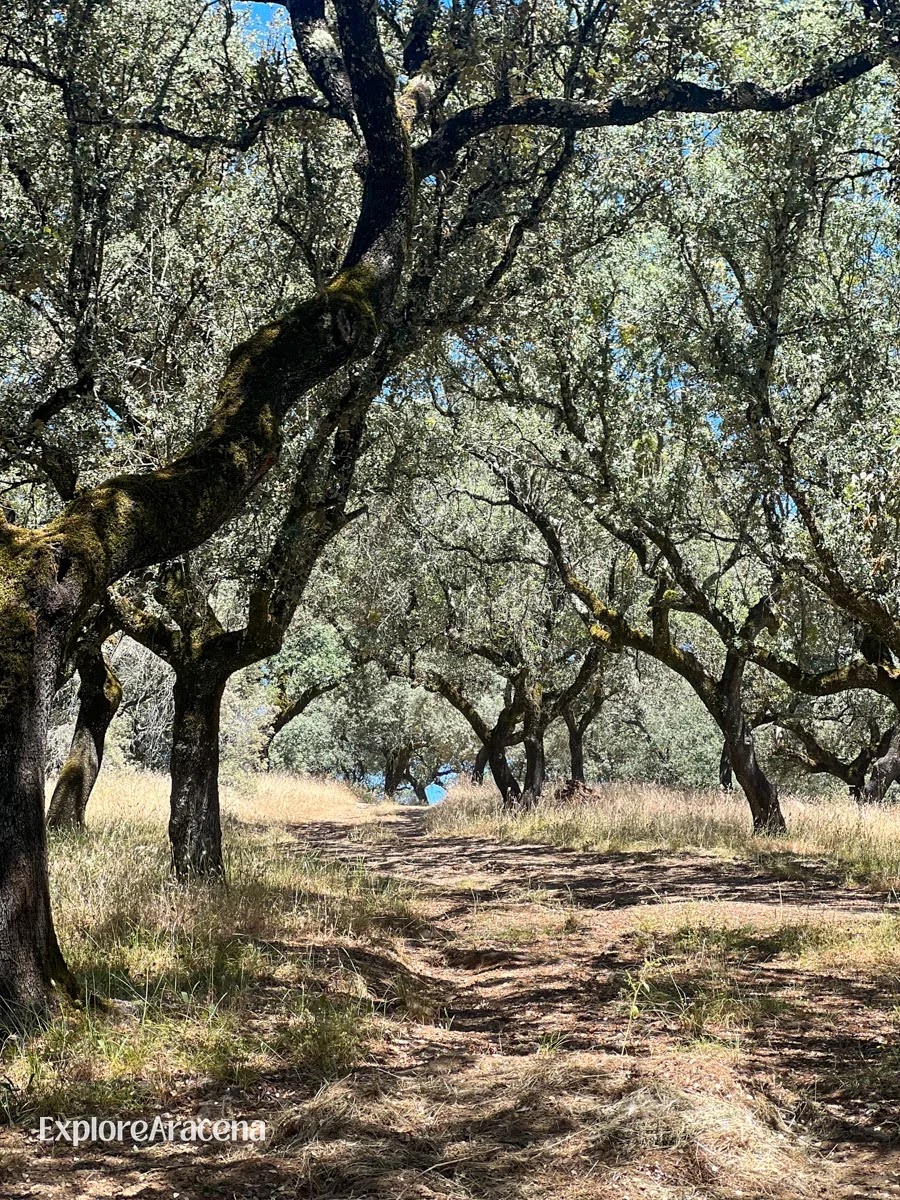
Follow almost any road out of Aracena and you will soon enter the dehesa. Holm and cork oaks stand across open pasture, and Iberian pigs forage beneath them when the acorns begin to fall. This is working countryside, shaped over generations to support animals, woodland and the families whose livelihoods depend upon both. Jamón may be the finished product, but its character begins out there.
The feria brings that wider world into town. Producers place their hams, paletas, cured loins and sausages side by side, giving you the rare opportunity to taste how one curing house differs from another. Conversations move easily from flavour to breed, grazing, salt and months spent hanging in a cellar. You do not need any specialist knowledge to join in. Curiosity will take you a surprisingly long way, especially when the person behind the counter has spent years working with the product in front of you.
For Aracena, this is far more than a well-attended food event. The feria celebrates an industry woven through the Sierra’s economy, landscape and family histories. Understanding that relationship changes the way you taste what is on the plate. Our guide to jamón ibérico will help you recognise the labels and choose what to try, and our Ultimate Guide to Aracena can help you shape the rest of your visit around the feria.
What to Expect at the Feria
Each edition brings a new programme, though much of the feria’s appeal requires no timetable at all. The pavilion is busy enough to follow your curiosity.
Producer Stands and Tastings
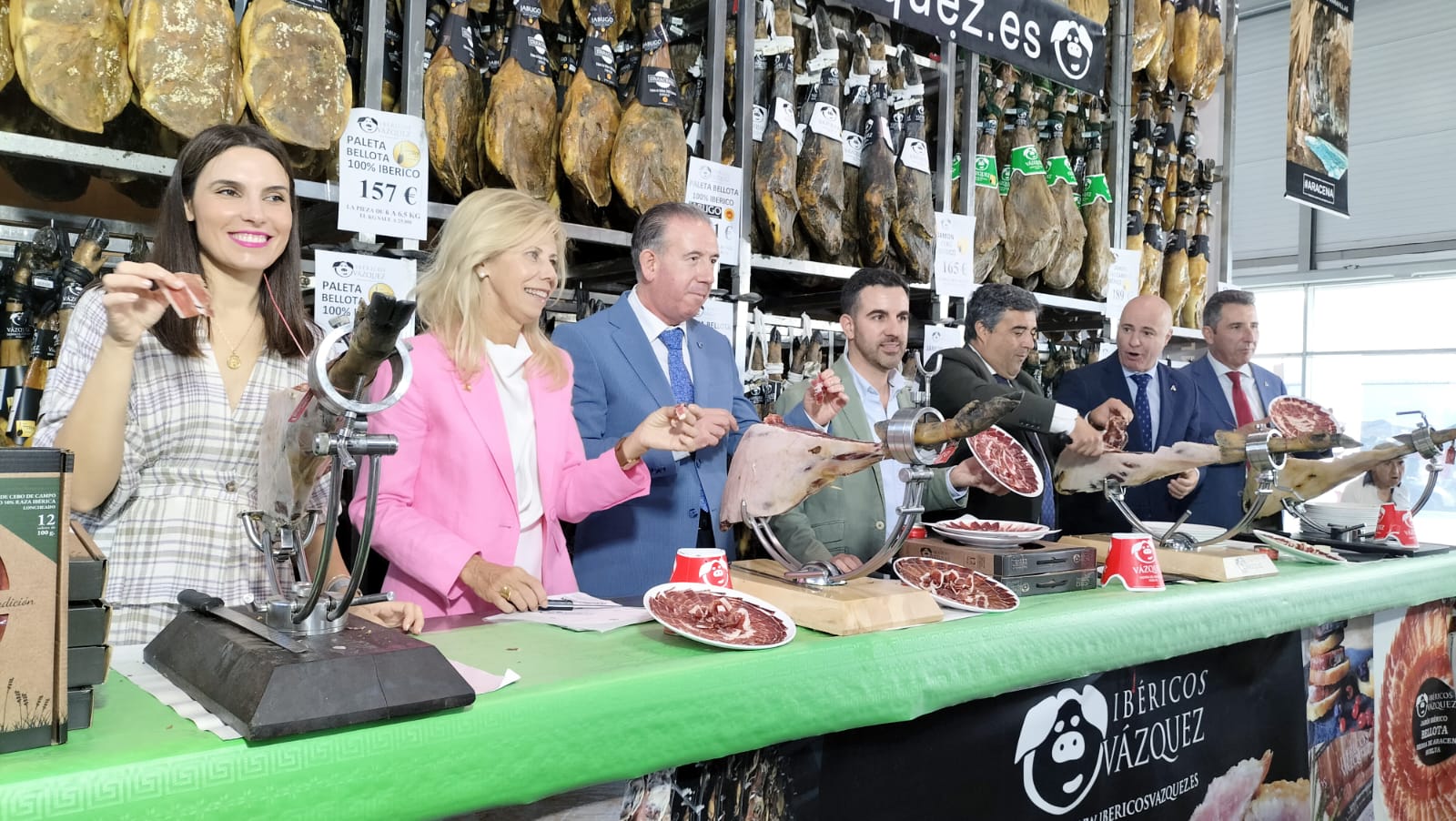
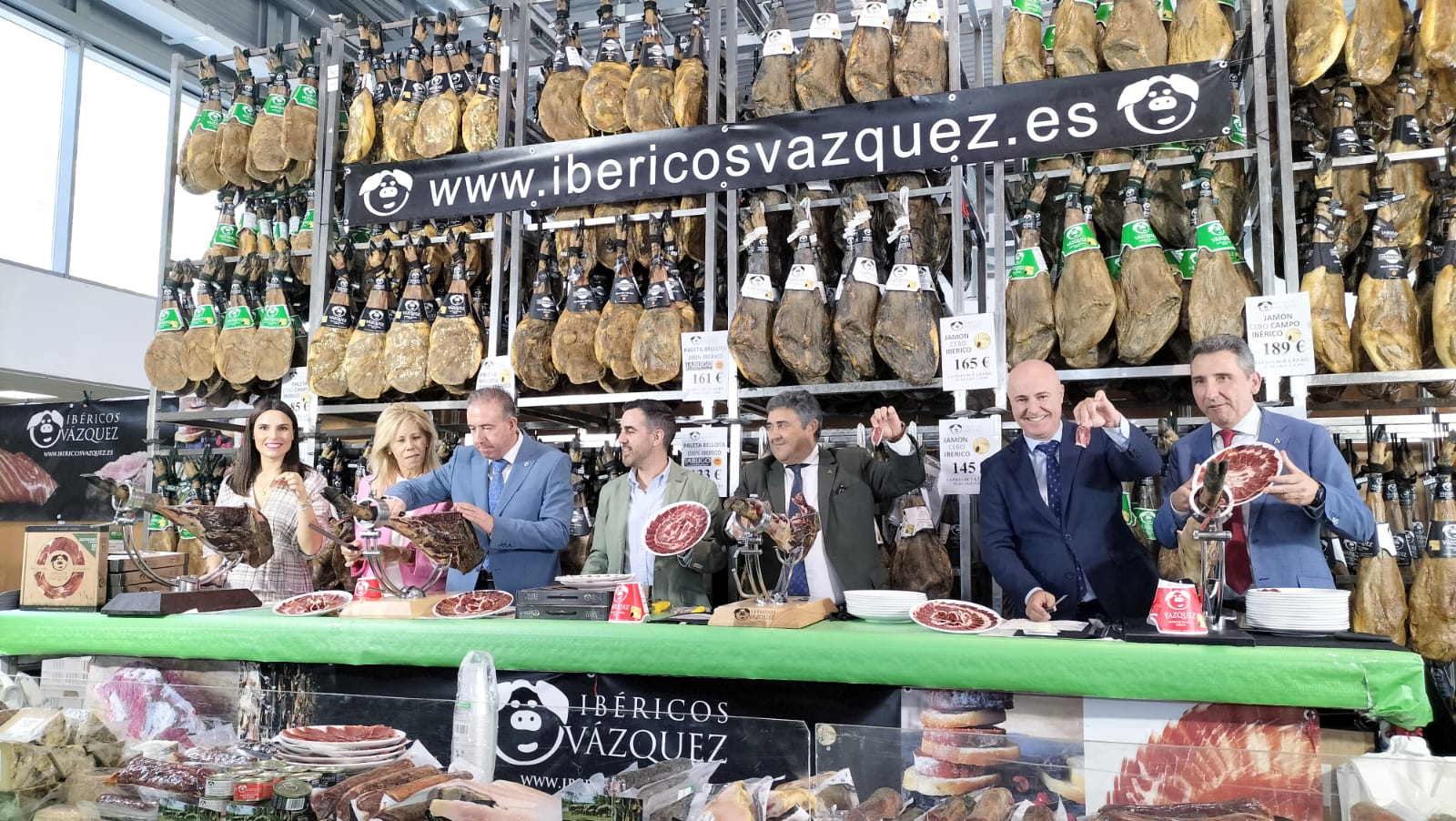
Inside, whole legs of jamón hang above counters crowded with paletas (cured shoulder), lomo (cured pork loin), salchichón, chorizo and other specialities from the Sierra. Producers cut slices as people watch, answer questions across the counter and wrap purchases destined for kitchens far beyond Aracena.
We recommend walking through the pavilion once before you begin buying. Look at what each producer has brought and notice where people stop to talk rather than simply collect a sample. Your questions do not need to be technical. Ask what they suggest tasting first, where it was produced or how long it spent curing. One answer will usually lead to a story, and that story often helps you understand why two excellent hams can taste completely different.
The Craft of the Cortador
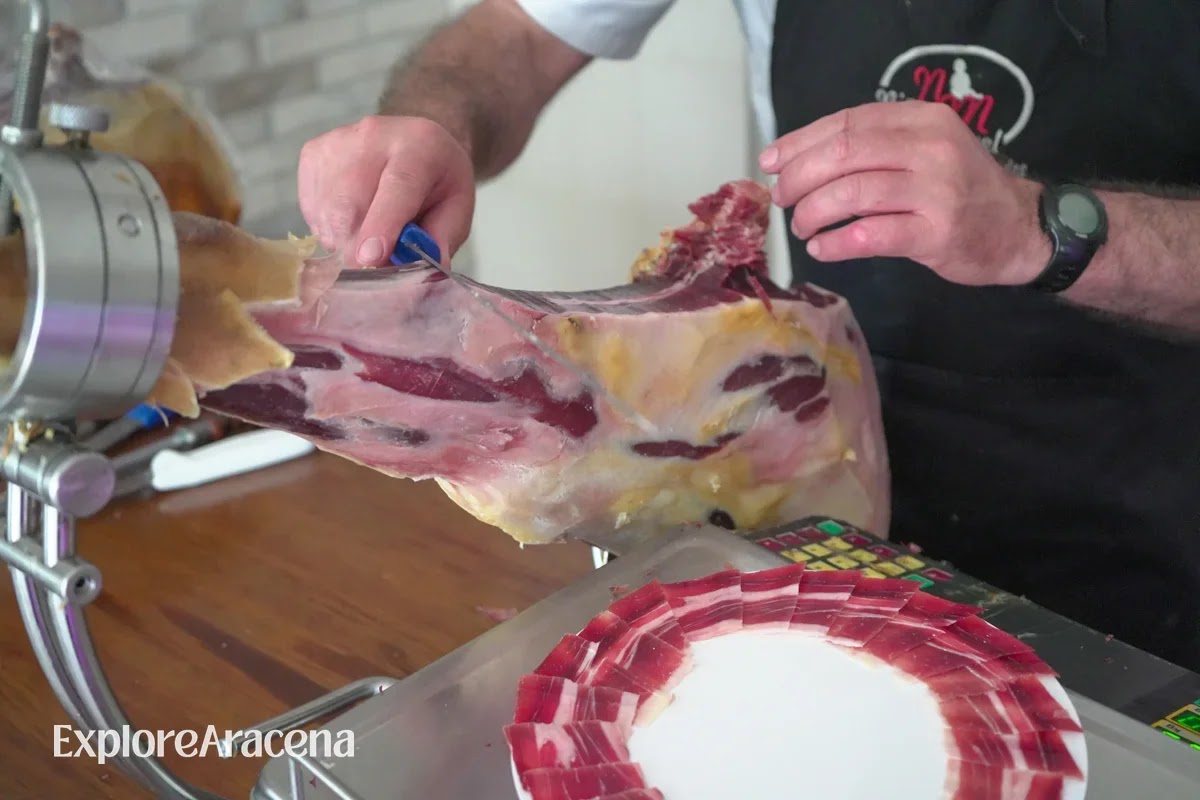
A cortador is a professional jamón carver, although the English translation hardly conveys the skill involved. The leg is secured in a jamonero, and a long, flexible knife travels almost level with its surface. Each slice should be thin, balanced and small enough to eat in one or two bites.
The work changes as the blade moves around the leg. Bone interrupts the line, the shape narrows and the proportion of meat to fat shifts from one section to the next. A good cortador adjusts almost instinctively, placing each slice so that the finished plate carries a satisfying mixture of textures and flavours.
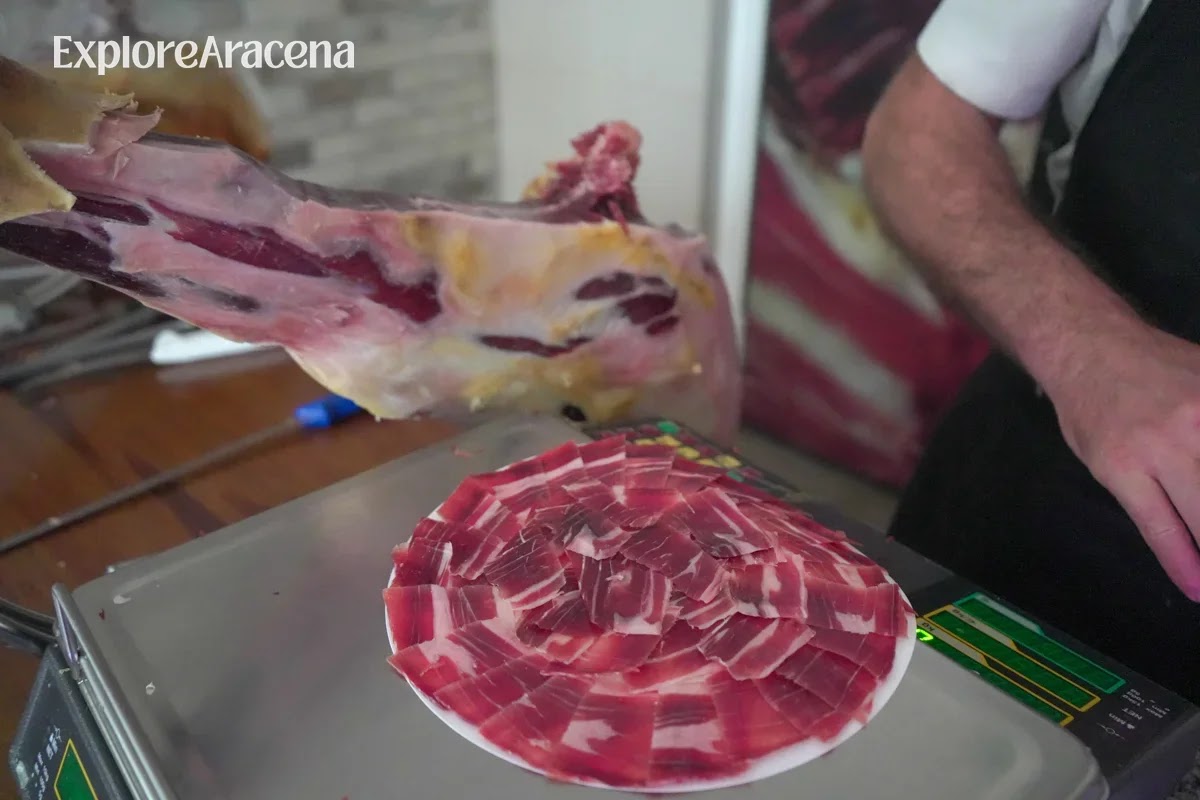
Watch closely if you have the opportunity. The movement may appear effortless, but that confidence has been earned over countless hours with a very sharp knife. Once the jamón reaches your plate, give it a moment. The fine slices begin to warm, the fat softens and the aroma becomes fuller before you take the first bite.
Competitions and Demonstrations
At certain hours, attention shifts from the counters to the people whose hands turn the raw or cured product into something ready for the table. A crowd gathers, knives are laid out and the work usually hidden inside kitchens, curing houses and butcheries becomes the main event.
The professional cutting competition is one of the feria’s established highlights. Each cortador must work carefully around the bone, maintain the quality of the slices and present plates worthy of close inspection.
Other editions have included DOP Jabugo sensory tastings, showcooking with chefs and culinary students, and demonstrations of traditional pig butchery. The latter is exactly what its name suggests: an educational presentation showing how the animal is divided and how different cuts are used. It offers valuable insight into the food culture of the Sierra, though families with young children and visitors uncomfortable with butchery may prefer to choose another activity.
These events are distributed across both weekends and may take place outside the main pavilion, including at the Museo del Jamón or participating restaurants
Regional Food and Crafts
Jamón receives top billing, but it does not have the fairground entirely to itself. An adjoining marquee gives other producers and craftspeople room to show what the Sierra makes, grows and bottles. Recent editions have brought together dozens of businesses beyond the ibérico sector, turning this part of the feria into far more than an overflow tent.
The selection changes each year, but you may encounter local cheeses, honey, preserves, pastries, liqueurs, and handmade goods. Look beyond familiar packaging and speak to the person who made what you are holding. A jar of chestnut preserve or a bottle produced a few kilometres away carries its own connection to the landscape, and smaller purchases are considerably easier to fit into your luggage than a whole leg of jamón.
Local drinks also have deep roots here. If a bottle from the Sierra catches your attention, our visit to the historic Martes Santo Distillery explores another part of Aracena’s food and drink story.
Music and Evening Gatherings
The selling may slow towards evening, but the crowd is far from ready to go home. Live bands take over at the fairground and groups reassemble with drinks in hand, ready to start the more social part of the event.
Previous programmes have carried the food into the centre of town with a late-night tasting in Plaza de San Pedro. Plates inspired by the traditional matanza (the communal preparation of pork after the slaughter) are served out in the open, often at an hour when international visitors might already be considering bed. In Aracena, ten o’clock is a perfectly reasonable time for another tapa.
Leave room for this part of the feria. The evening tells a different story of the town’s culture: children play nearby as their families continue chatting over another drink, and nobody seems especially concerned with calling it a night. Our guide to late dinners in southern Spain explains the rhythm, though the feria is an excellent place to learn it firsthand.
How to Read a Jamón Label Without Becoming an Expert Overnight
The feria places dozens of hams within a few steps of one another, and the vocabulary can become bewildering very quickly. Fortunately, Spain’s ibérico quality standard uses coloured seals to identify how the pig was raised and, in the highest category, whether it was entirely Iberian.
The Four Colours to Know
- Black: Jamón de bellota 100% ibérico. The pig is pure Iberian breed and completed its final fattening period eating acorns and other natural resources in the dehesa during the montanera. This is the only category officially permitted to use the term pata negra.
- Red: Jamón de bellota ibérico. The pig also fed in the dehesa during the montanera, but it is 50% or 75% Iberian rather than pure breed. The exact percentage should appear on the label.
- Green: Jamón de cebo de campo ibérico. The pig had access to outdoor land and ate a combination of feed and natural resources. Check the label for its Iberian breed percentage.
- White: Jamón de cebo ibérico. The pig was raised on feed in a more intensive farming system. Its Iberian breed percentage must also be stated.
The colour gives you facts, not a command about what you must enjoy. Taste across the categories if you can, paying attention to aroma, salt, texture, and the way the fat softens. Marbling belongs in good jamón; it carries much of the flavour and helps create that silky texture on the tongue.
When you are ready to buy, ask the producer to show you the full label. A useful opening question is: “Is it acorn-fed, and how long was it cured?” From there, let the conversation develop. Nobody expects you to speak fluent jamón.
The Ibérico Pig, the Dehesa and the Acorn Season
From a distance, the dehesa can resemble a naturally spacious forest. Its scattered holm and cork oaks, open pasture and grazing animals create an impression of effortless balance. In reality, this is a carefully managed landscape shaped by pruning, grazing and generations of rural knowledge. The trees provide acorns, shade and cork; the ground supports livestock; and each part of the system depends upon the health of the others.
Autumn brings the montanera, the final fattening period for pigs destined to become jamón de bellota. As acorns ripen and fall, the animals range beneath the oaks to forage. Their diet, movement and Iberian genetics influence the composition of the fat that later runs through the cured meat. That process is where the softness, aroma, and flavour on your plate first begin, long before salt or a curing cellar enters the story.
The feria arrives around the opening of this seasonal cycle. A few good rains are enough to wake the forest floor. Mushrooms emerge among the leaves as acorns begin falling overhead. Food and landscape become particularly difficult to separate at this time of year, which is one reason October feels so alive here. Our guide to mushroom season in the Sierra de Aracena explores more of what is happening beyond the fairground.
Set aside time to see the dehesa for yourself. Public walking routes and country roads take you among the oaks without entering private fincas, and even a short visit will give the feria greater context. The nearby Descansadero de Marimateos is an easy place to begin, with woodland, water and picnic tables a short distance from Aracena.
Crowds, Parking, and Getting Around
On feria weekends, parking in Aracena becomes something of a competitive sport. Arrive without a plan, and you may spend more time circling the town than choosing your first plate of jamón.
- Come near opening time if you can. Weekend crowds build quickly, particularly around scheduled tastings and competitions. An earlier arrival gives you more room to explore the stands and improves your chances of finding sensible parking.
- Follow the temporary signs. Parking areas, traffic restrictions and access routes may change for the 2026 edition. Use the official instructions once they are published and follow the directions of local police rather than insisting upon the shortest route shown on your phone.
- Check every sign before leaving the car. A space is not available if it blocks a garage entrance marked Vado Permanente, even when other vehicles have parked nearby. An inconvenient walk is considerably cheaper than a fine or tow.
- Know where you are heading. The main event is held at the Pabellón Ferial Ciudad de Aracena, close enough to reach on foot from much of the town. If you are staying overnight, ask your accommodation whether you can leave the car there and walk.
- Plan purchases around the weather. Vacuum-packed jamón is convenient for travelling, but cheese, fresh meat and other foods may need cooler storage. Ask the producer how to carry each item safely before leaving it in a parked car.
Driving from Seville normally makes Aracena straightforward to reach, though the final approach can slow considerably during a large event. Our guide to getting to Aracena covers the main routes and bus connections.
Public transport requires closer attention. Confirm both halves of the journey directly with the operator, especially on Sundays, and check that the final bus leaves after the activity you want to attend. Our guide to visiting Aracena without a car explains what is realistic once you arrive.
A Weekend in Aracena During the Feria
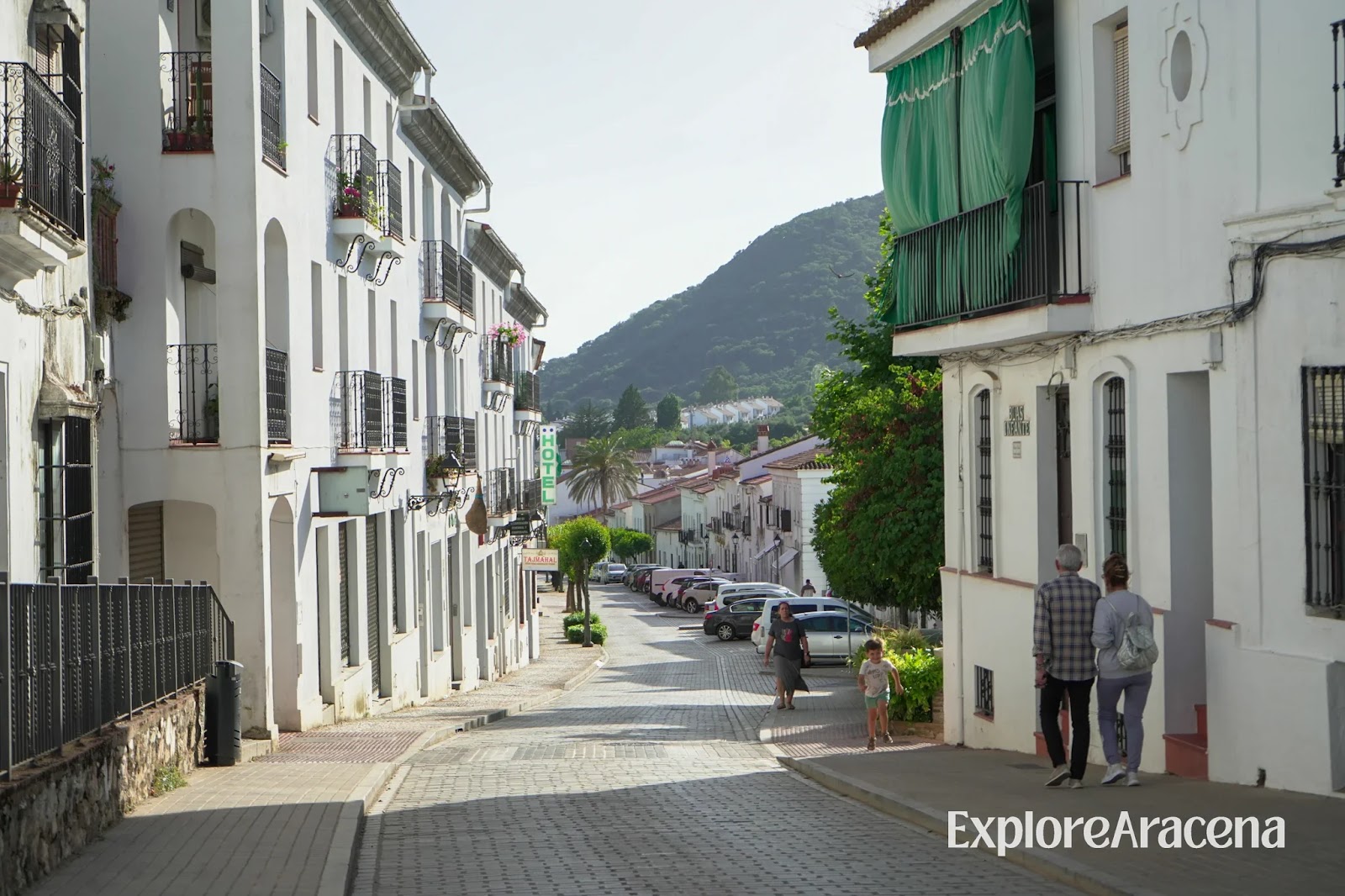
The feria deserves several hours, though it need not consume every waking minute of your trip. Aracena is compact, and the fairground sits close to the cave entrance and historic centre. You can move between them on foot once you park the car somewhere legal for the weekend.
Use this itinerary as a framework, then rearrange it around the official programme. A cutting competition or tasting you particularly want to see should take priority over our suggested order.
Friday Evening: Arrive Before the Crowds
If your schedule allows, arrive on Friday and check in before Saturday’s visitors begin filling the town. Take a walk through the centre, reserve dinner, and have an early look at the feria if the stands are open.
Do not leave your restaurant decision until hunger strikes. Tables fill quickly during major events, and Aracena takes lunch and dinner far too seriously to rush either. Our guide to the best restaurants in Aracena will help you book somewhere that suits the evening.
Saturday: Give the Feria Centre Stage
Go to the fairground near opening time and spend the morning meeting producers, watching the demonstrations and deciding what you may want to buy later. Break for lunch when the pavilion becomes crowded, giving yourself enough time to enjoy the meal without continually checking the programme.
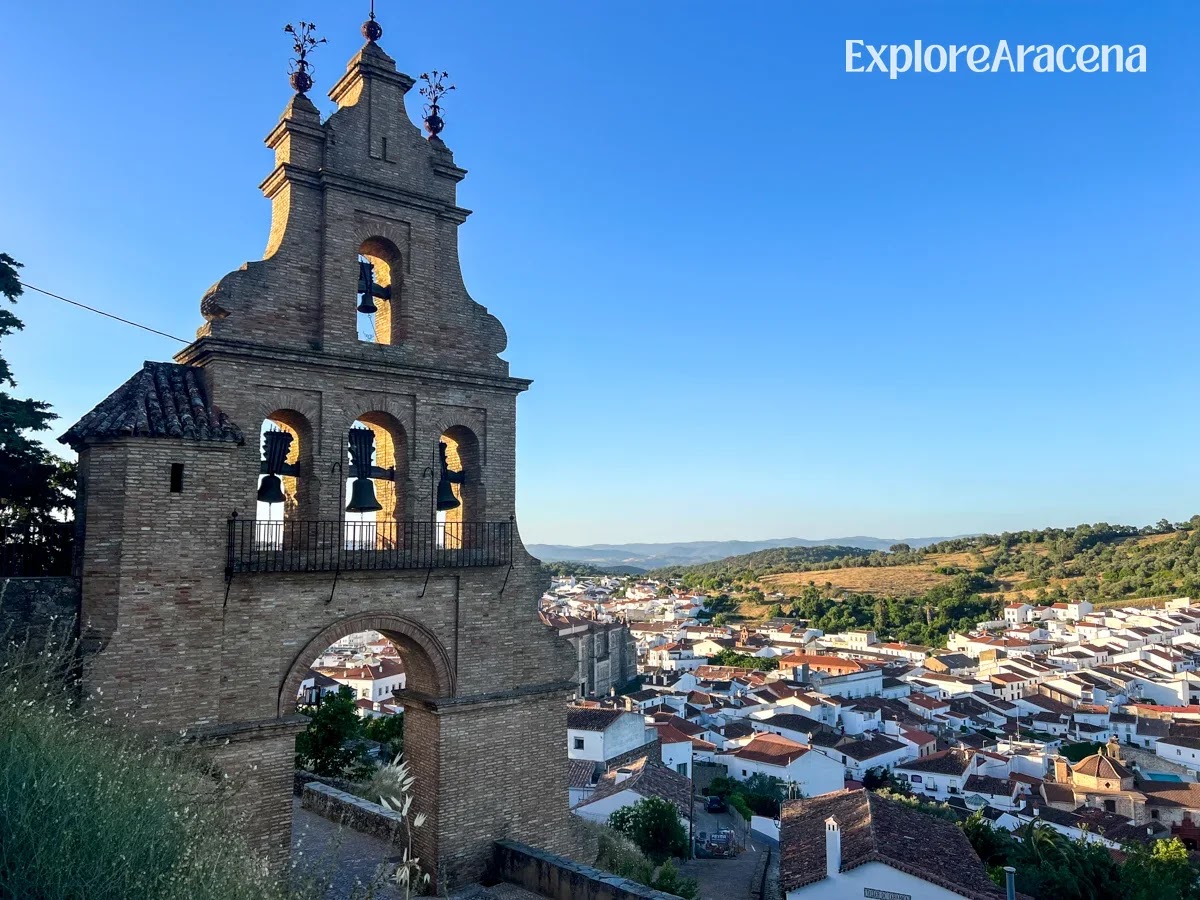
Later, follow part of our Aracena walking tour through the centre and up towards the castle hill. October light across the rooftops is reason enough to make the climb, even when the castle interior has already closed.
Return for an evening performance or tasting if something in the programme catches your interest. Otherwise, let dinner have the remainder of the night.
Sunday: Go Underground, Then Choose Your Favourites
Book a morning visit to the Gruta de las Maravillas before travelling. Feria weekends bring more people into town, and cave visits have fixed capacities. The entrance is close to the fairground, so you can return to the pavilion afterwards without moving the car.
Use this second visit for the producers you want to speak with again and the products you have decided to take home. Ask for vacuum packing where available and confirm how each purchase should be stored during the journey.
Staying Longer?
Save nearby villages and countryside walks for an additional day. Trying to add both to a feria weekend will leave you watching the clock through experiences that deserve more attention. Browse our Sierra town guides and choose one place that genuinely interests you, or extend the trip with a route from our hiking guide.
When You Need a Change of Flavour
Several hours of tasting cured pork can leave even the most committed jamón enthusiast ready for something else. Fortunately, Aracena’s food culture extends well beyond its most famous product.
Sit Down for Lunch
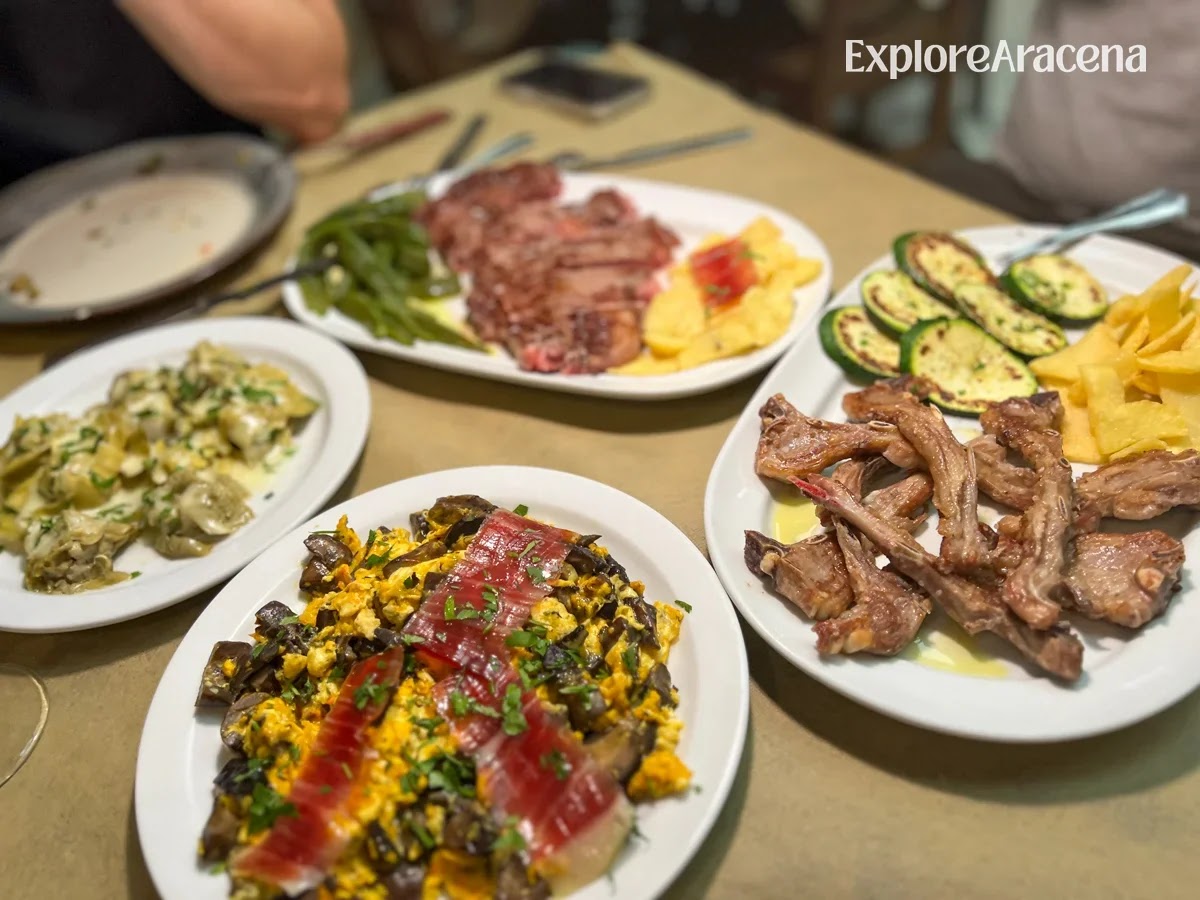
The feria is excellent for grazing, though a plate eaten standing beside a busy counter has its limits. Reserve a restaurant, and enjoy a leisurely lunch. Autumn menus may bring mushrooms, local cheeses, soups, and seasonal vegetables alongside the Sierra’s meat dishes. Our restaurant guide will help you find the right table, and our afternoon at Brioso Restaurante shows how easily lunch can become one of the day’s main events.
Visit the Shops in Town
The feria is useful for comparison, but Aracena’s specialist food shops are worth visiting too. Ask a producer where their products are sold locally, or ask a shopkeeper what they would take home themselves. These conversations tend to produce better recommendations than any hurried search for “the best jamón shop near me.”
Give Your Senses a Rest
After a crowded pavilion, walk through the streets around San Pedro and the historic centre. Continue uphill if your legs are willing, or find a plaza and let the town pass around you for a while. Save the countryside for a spare morning or an additional day; the dehesa is difficult to appreciate when squeezed between two appointments.
Frequently Asked Questions
Do I Need a Ticket?
General admission to the fairground has been free in recent editions, although certain tastings, gala events or limited-capacity activities may require registration, an invitation or a separate ticket. Check the Aracena Town Council programme before travelling rather than assuming every event works the same way.
Can I Visit for Only a Few Hours?
Yes. Arrive near opening time, walk through the producer stands and choose one demonstration or tasting that interests you. A shorter visit works particularly well if you are coming from elsewhere in the Sierra, although staying overnight allows you to enjoy the evening programme without worrying about the drive home.
Is the Feria a Good Place to Buy Jamón?
It is especially useful if you want to compare several producers in one place. Taste before buying, read the full label and ask whether the seller can vacuum-pack your purchase. If you are flying home, check your destination’s rules for bringing in meat products; sealed packaging does not automatically make an item legal to import.
What Should I Ask a Producer?
Begin with something straightforward:
- Is it acorn-fed?
- What percentage Iberian breed is it?
- How long was it cured?
- How do you recommend serving it?
You do not need to ask all four as though conducting an interview. Choose the question you genuinely care about and listen to where the answer takes you.
Is It Suitable for Families?
The feria is a public, intergenerational event, and children are very much part of the weekend. Earlier hours are easier for pushchairs and young visitors because the pavilion becomes crowded. Read the programme before attending the traditional butchery demonstration, as its subject is presented directly and may not suit every child.
Is It Worth Visiting if I Do Not Eat Pork?
The event is firmly centred on the Iberian pig, so the main tastings and demonstrations will have limited appeal to vegetarians and visitors who avoid pork. The craft marquee, music, and town atmosphere still offer something to enjoy, and Aracena’s restaurants serve food beyond jamón. Check menus and reserve somewhere suitable rather than relying on the fairground for a complete meal.
Jamón Makes More Sense in Aracena
Here, the journey from landscape to plate is visible. You pass the oaks on your way into town, meet the people who work with the product, and taste the differences they have spent years learning to recognise.
You may leave with vacuum-packed jamón in your bag. You will remember the producer who sold it to you and understand that its flavour began long before the curing room, beneath the oaks outside Aracena. That is what this feria adds to the tasting.