Understanding Jamón Ibérico - Why Aracena Produces Spain’s Finest Cured Ham
Understanding Jamón Ibérico - Why Aracena Produces Spain’s Finest Cured Ham
A detailed guide to understanding jamón ibérico in Aracena, Andalusia. Learn how it’s made, what makes it so special, and how to experience this iconic Spanish delicacy at its source in the Sierra de Aracena.
Understanding Jamón Ibérico: Aracena's Greatest Export
Jamón ibérico de bellota is more than food in Aracena. It’s culture, economy, identity; something that sits at the centre of daily life of the region.
The first time you see the giant jamon hanging behind the bar, it can come as a shock to international travellers. I was immediately curious about the role it played in the culture, knwoing how food is such a prominent element to understanding a society.
It felt almost ceremonial, like something to be observed. However, the longer I stayed, the more it became familiar. Shared between tables, ordered without hesitation, Jamón ibérico is part of the natural rhythm of being there.
Here’s what you need to know to properly appreciate jamón ibérico de bellota, not just as a product, but as something shaped by place.
Why Aracena's Jamón Is Special
The Sierra de Aracena y Picos de Aroche Natural Park is considered the heartland of jamón ibérico de bellota, widely regarded as the most prized cured ham in the world. That reputation doesn’t come from marketing; it comes from the land itself.
Everything begins in the dehesa: a vast, open landscape of cork and holm oak trees. Nearby Jabugo, often considered the spiritual home of jamón ibérico, anchors the region’s reputation, its name widely recognised for producing some of the finest cured ham in Spain.
It feels both managed and wild at once, shaped over time rather than designed all at once. Black Iberian pigs move freely here, drifting between shade and sun, feeding on acorns during the montanera season from October to February.
Spending time in this landscape shifts your understanding. This isn’t simply farming; it’s a long-standing relationship between animal, environment, and time. Nothing is rushed, and that patience carries through to what eventually arrives on your plate.
There’s history here too, though it doesn’t always present itself directly. The curing of ham in this region dates back centuries, shaped by necessity as much as tradition; salt, air, and time used to preserve what the land provided. Over generations, that process became more refined, more intentional, but never rushed. What exists now isn’t a modern reinvention, but a continuation. Something carried forward rather than redesigned.
The Grades You Need to Know
Understanding the different types of jamón ibérico changes how you experience it. There’s more nuance than most people expect.
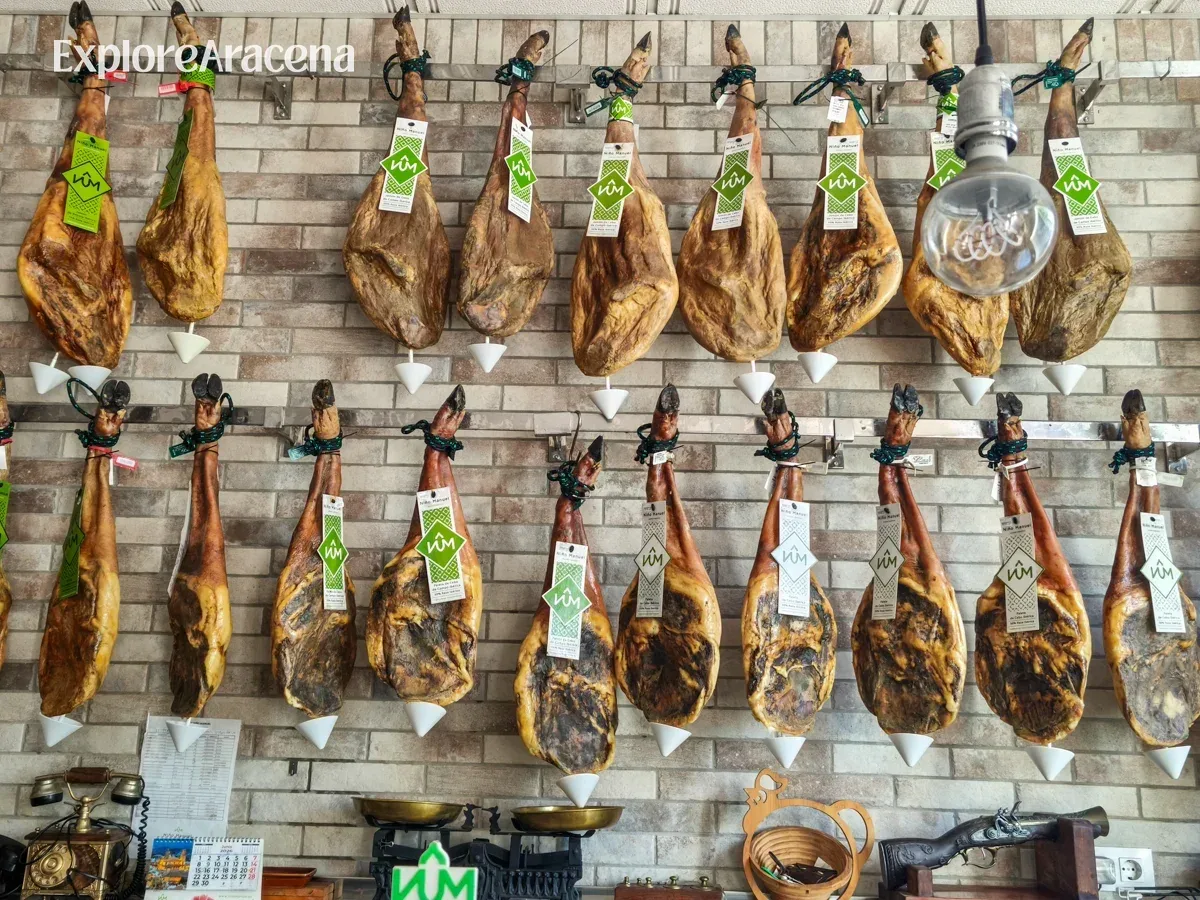
Jamón ibérico de bellota
The pinnacle. Made from 100% Iberian pigs raised freely in the dehesa, feeding primarily on acorns. Cured for at least 36 months, often longer. This is what Aracena is known for; once you’ve tasted it, you’ll carry the torch and pass it to all of your friends back home with stellar recommendation.
Jamón ibérico de cebo de campo
Still high quality, but different. These pigs have some access to open land, though their diet is supplemented with grain. The flavour is good, though less layered.
Jamón ibérico de cebo
Raised on grain feed in more controlled conditions. More affordable, but missing the depth that comes from the dehesa environment.
Jamón serrano
A separate category altogether, made from white pig breeds. It has its place, but it doesn’t carry the same richness or connection to this region.
Where to Buy and Taste
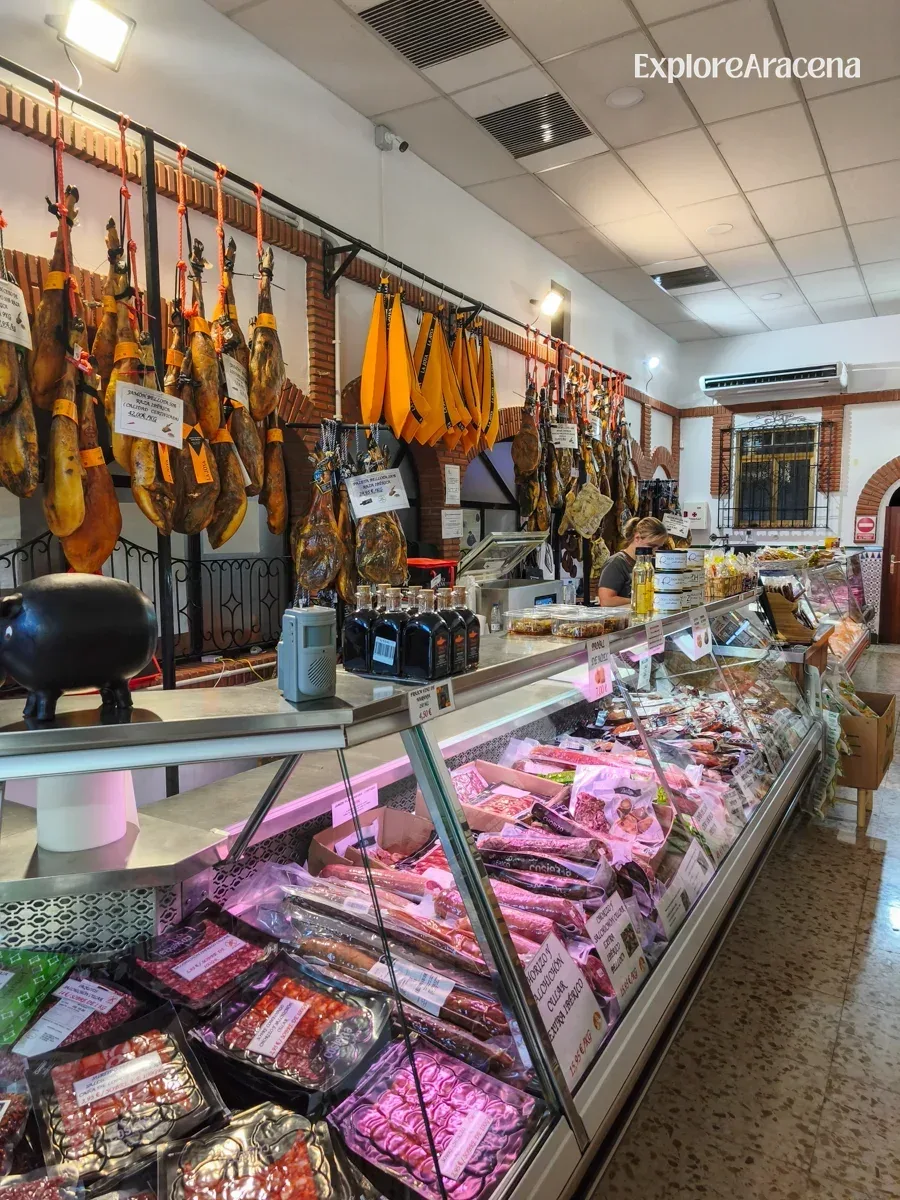
The Museo del Jamón de Aracena is a good starting point. It explains the full process, from landscape to curing to final product, and gives useful context.
But understanding doesn’t really happen there, it happens in the bars where you have the opportunity to indulge in the full experience.
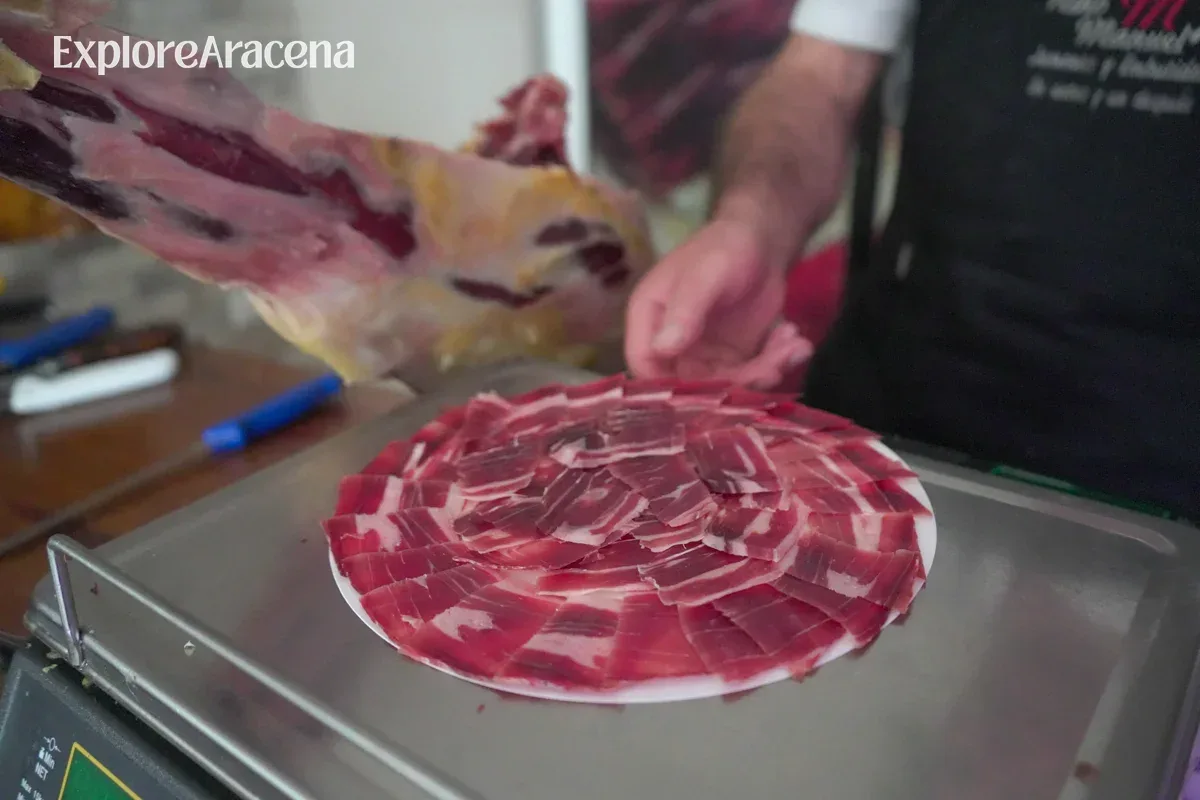
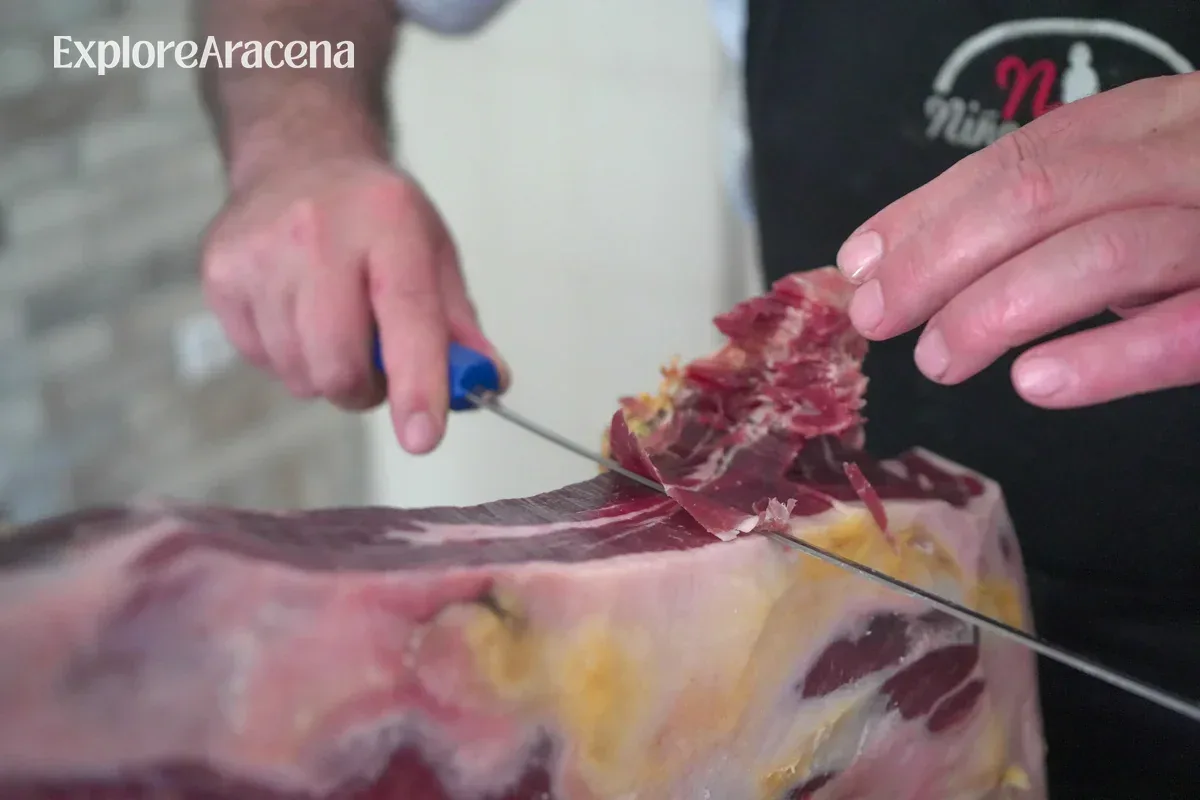
Order a media ración of jamón ibérico de bellota and take your time. Watch the cortador at work; each slice is deliberate, almost instinctive. It’s not performative, it is deeply engrained to the life, the people, the culture of Aracena, truly authentic.
Take your time and taste it properly. Let it sit for a moment. It softens almost immediately, releasing something nutty, slightly sweet, and deeply savoury. It’s a balanced, and unexpectedly complex flavour.
What to Pay
Real jamón ibérico de bellota is expensive; that’s part of its reality.
Expect to pay around €15–25 for a ración in a restaurant, and €80–120+ per kilo if you’re buying it to take away. Sometimes more, depending on quality and origin.
It isn’t everyday food, even here.
And that’s part of the appeal. It invites you to pause, to share, and to pay attention. Jamón ibérico de bellota is meant to be savoured and enjoyed among good company, a shared experience.
If you see it being sold cheaply, it’s definitely worth questioning. Because what you’re paying for isn’t just the product, it’s the time, the landscape, and everything that shaped it long before it reached you.
jamón ibérico, ham, local food, dehesa, gastronomy