Gruta de las Maravillas Guide - Is It Worth Visiting the Cave in Aracena?
Gruta de las Maravillas Guide - Is It Worth Visiting the Cave in Aracena?
A detailed guide to the Gruta de las Maravillas in Aracena, Andalusia. Discover what to expect, ticket information, accessibility tips, and why this underground lake cave is one of the most remarkable natural experiences in southern Spain.
Quick Facts Before You Visit
Is the Gruta de las Maravillas Worth Visiting?
To put it plainly, yes, without a doubt.
There are certain places that exceed expectations, and the Gruta de las Maravillas in Aracena is most certainly one of them.
If you are exploring Andalusia and looking for a natural experience that feels authentic and memorable, the Gruta de las Maravillas deserves a place on your itinerary. Though it is part of Aracena’s touristic allure, it is not staged nor exaggerated. It doesn’t feel like a spectacle designed for mass tourism; it is something much older and slower. A true natural beauty to behold.
Between us, we have visited cave systems in the United States, Australia, New Zealand and across Europe. We thought we knew what to expect during a tour: stalactites, stalagmites, dramatic lighting and, of course, a guided explanation. What you may not expect from the cave in Aracena is the water and its serene stillness.
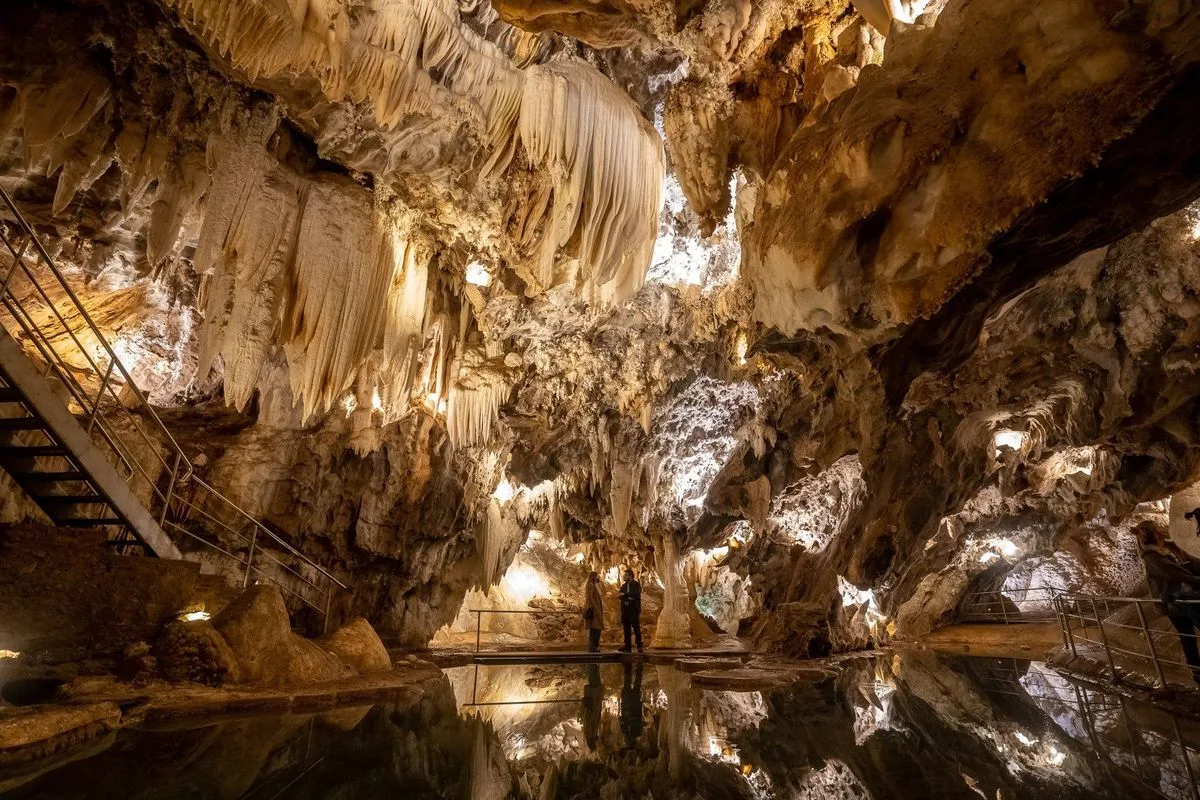
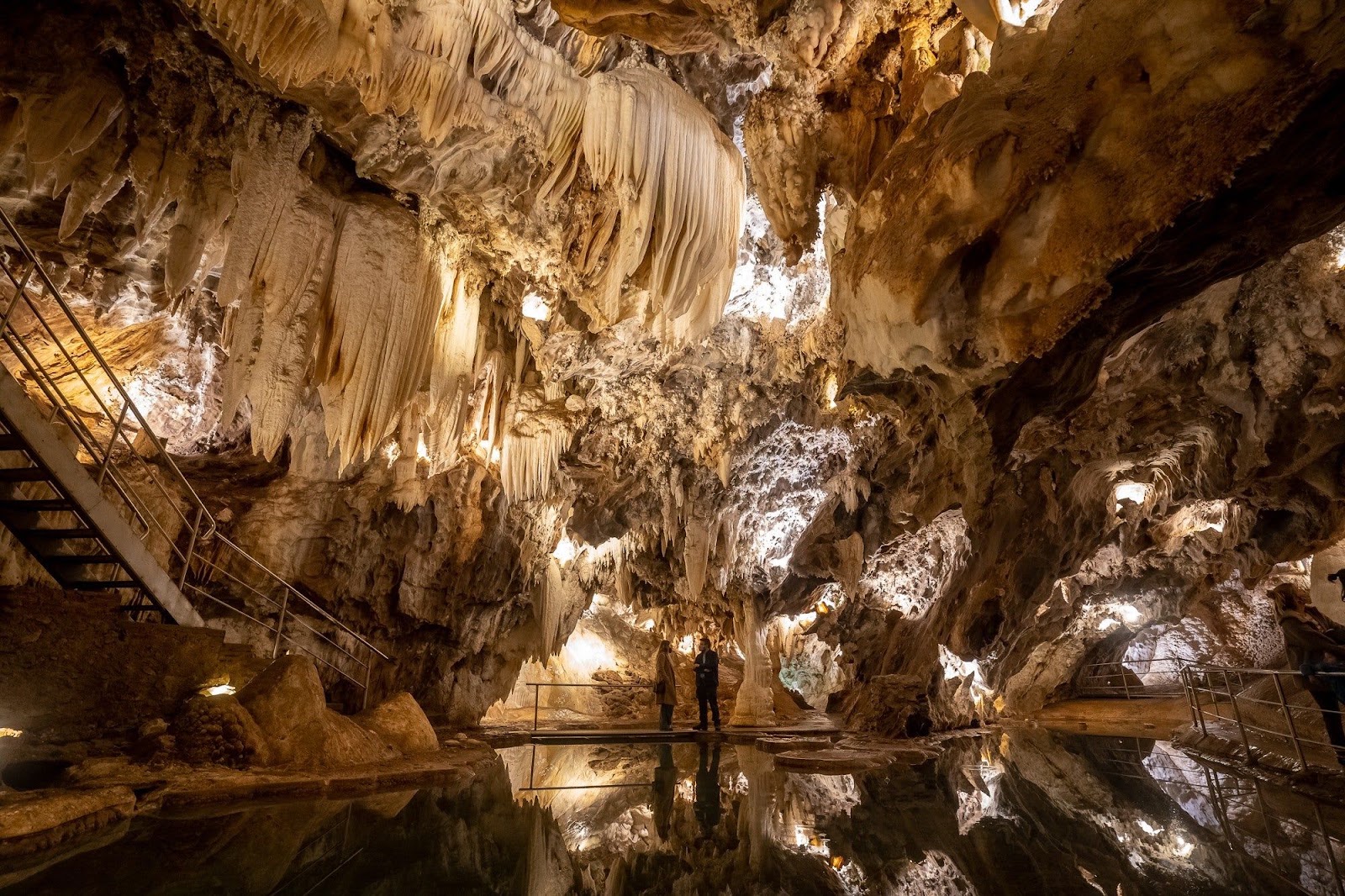
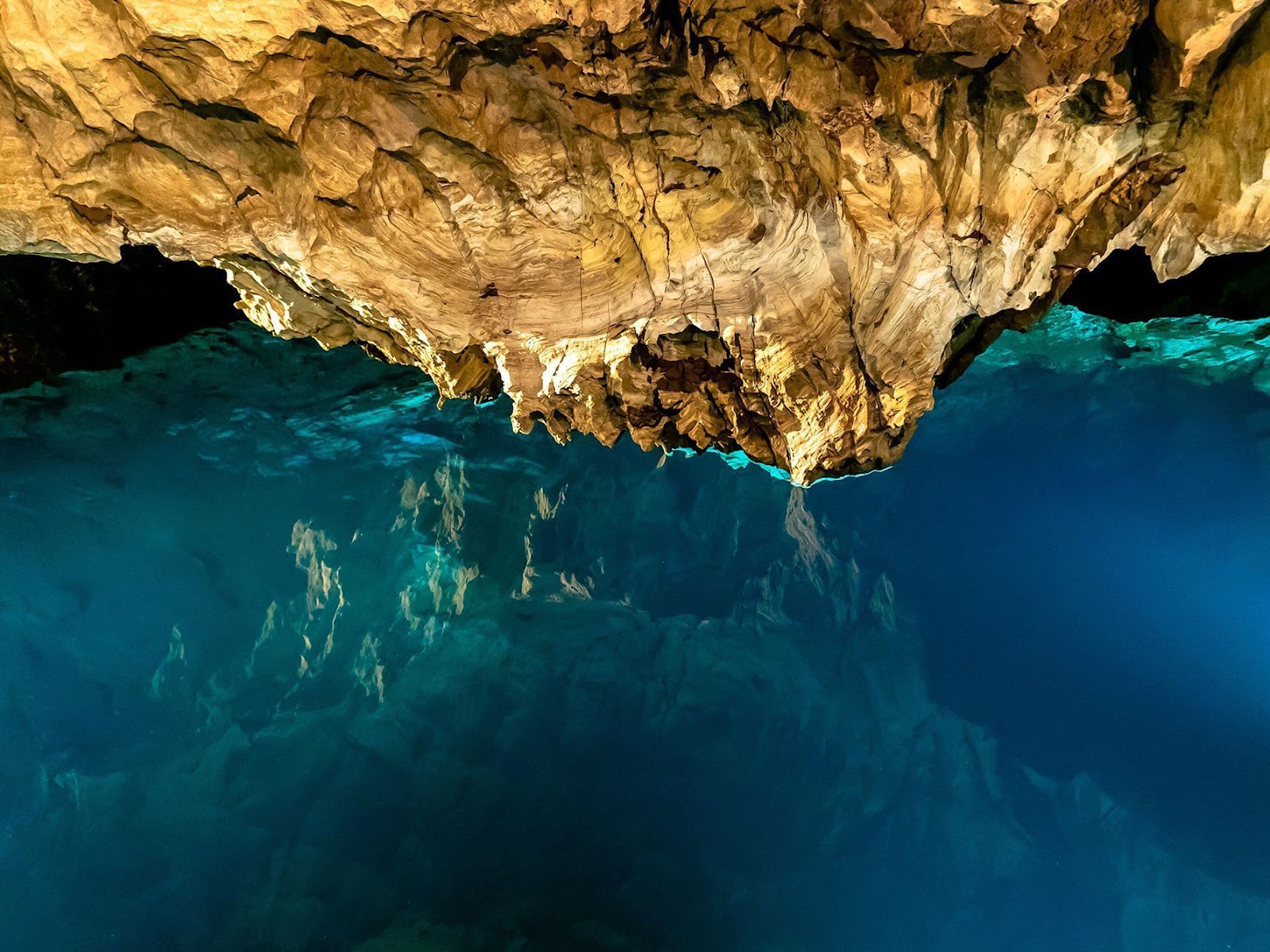
Vast, still underground lakes mirror the mineral formations above, glowing in enchanting shades of deep blue and green. We had never seen such an extraordinary volume of water inside a cave displayed so beautifully.
When we visited the Gruta de las Maravillas with my parents, both in their mid-seventies, we all left slightly stunned and in awe. It exceeded the expectations we carried upon entering. A deep, almost otherworldly calm settled over us during our exploration, a moment of peace that will remain in our memories for years to come.
For slow travellers and international visitors who venture beyond the usual routes, the cave in Aracena is reason enough to pause, look closer and wander this quietly extraordinary corner of Spain.
What Makes the Gruta de las Maravillas So Special?
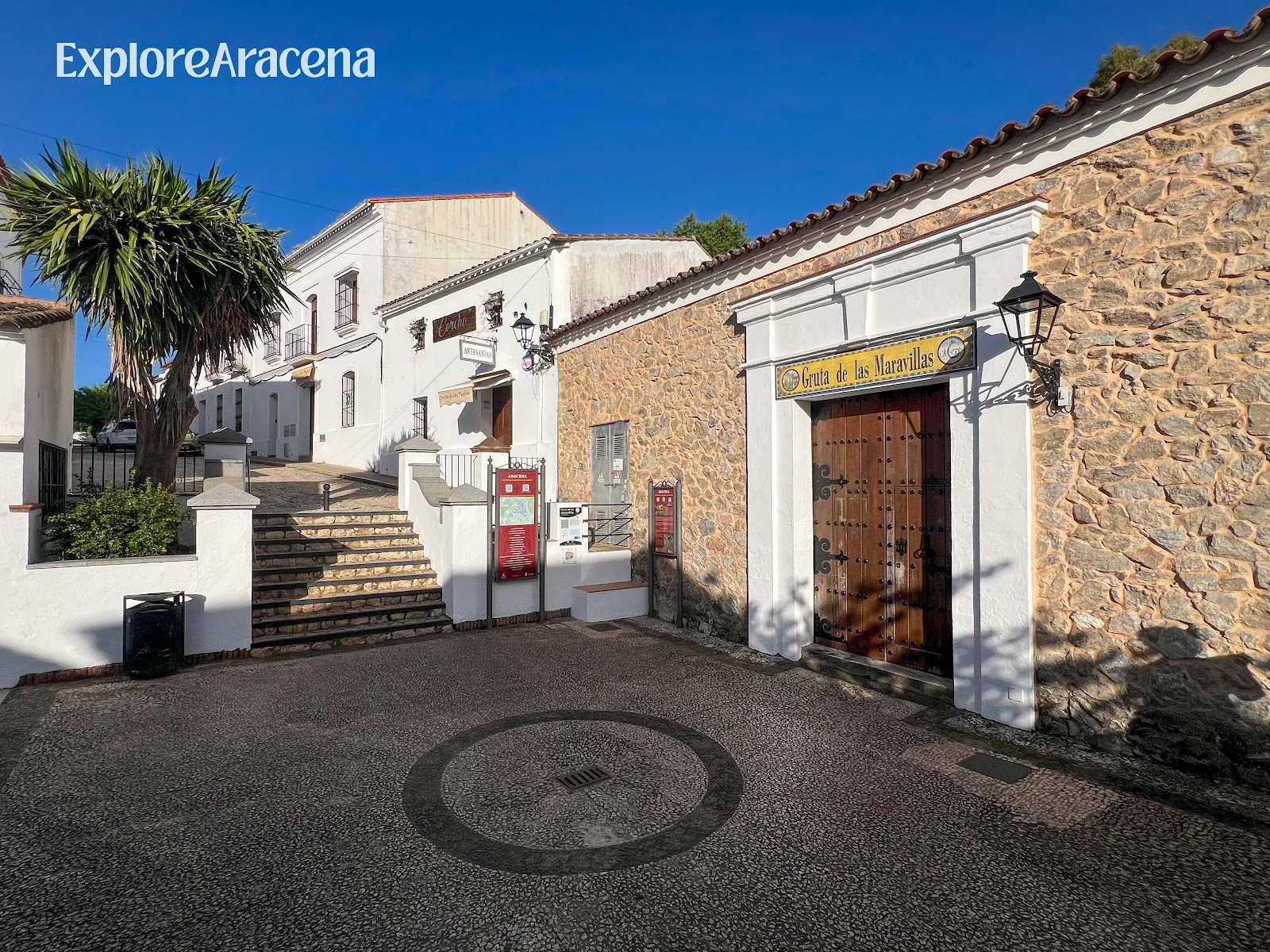
Beneath the castle hill of Aracena, you can find the entrance to the Gruta de las Maravillas in the main part of town. Standing above the underground lakes, nothing prepares you for what lies underneath. There is no hint of the scale or stillness waiting below.
The defining feature is the underground lake system. Water plays a supporting role in many caves. Few integrate it so dramatically into the visitor route. The glassy surfaces reflected the mineral formations so perfectly that everything seemed doubled, deepened, almost dreamlike. At moments, it felt theatrical, and yet nothing about it was artificial. It was simply nature at its most composed.
The lighting is subtle to the point that you may almost forget it is there. It serves to reveal rather than perform. You find yourself remarkably close to the formations, close enough to notice texture and shadow, which makes the experience feel immersive rather than observed from a distance.
It feels like a cared-for, protected space. As if we were guests in a place that still belongs, first and foremost, to the earth itself.
A Brief History and Geological Overview
The Gruta de las Maravillas in Aracena was discovered in the late nineteenth century and opened to visitors in 1914, making it one of Spain’s earliest show caves. Knowing that history adds another layer to the experience; generations have walked the same paths, paused in the same chambers and felt the same stillness. It is a must-add item for your things to do in Aracena itinerary.
The Gruta de las Maravillas itself was shaped slowly. Beneath the Sierra de Aracena y Picos de Aroche Natural Park, underground water dissolved limestone over long stretches of time, carving out chambers and corridors in the dark. This region is defined by its karst landscape: a terrain riddled with caves, sinkholes and hidden waterways. Here, you can feel that unseen world at work in the underground lakes.
Over thousands of years, mineral-rich droplets built the stalactites, stalagmites and delicate formations that surround you today. This is the result of a silent collaboration with gravity, water and time.
And yet, you don’t need to understand any of that to be moved. We certainly didn’t need a geology lesson to feel it. The scale, stillness and atmosphere speak entirely for themselves.
What to Expect During the Visit
The visit to the Gruta de las Maravillas is guided and lasts around an hour.
You move through a series of chambers connected by walkways and stair sections that rise and descend with the natural contours of the cave. At times, the stair sections are steep. Most healthy adults will manage without difficulty, but it isn’t flat terrain, and you feel that.
Is the Gruta de las Maravillas suitable for elderly visitors? During our visit, my mother found a few of the stair-heavy stretches challenging and chose to pause in certain areas. It’s worth considering in advance if you or someone travelling with you has limited mobility. The beauty is accessible, just not entirely effortless.
Inside, the temperature remains cool year-round. Even in the height of summer, we were grateful for a light layer, and you will probably want one too.
Photography isn’t permitted. At first, that can feel disappointing. We instinctively reached for a camera more than once. But as the tour continued, we began to appreciate it. Without screens raised between you and the formations, you look up and take notice.
How Does It Compare to Other Famous Caves?
Here is how the Gruta de las Maravillas compares to several well-known cave systems around the world.
We will publish a dedicated guide to the best caves in Spain and Europe, where the Gruta de las Maravillas in Aracena will feature prominently. For now, it is enough to say that it comfortably ranks among the most visually striking caves in Europe.
When Is the Best Time to Visit?
Spring and autumn are ideal seasons to visit the Aracena cave.
Above ground, the light is softer and the air mild enough to wander through Aracena before or after descending into the cave. Those shoulder seasons feel naturally aligned with slow travel.
In summer, the Gruta de las Maravillas becomes a refuge. While much of Andalusia swelters, the steady coolness underground offers relief. If you are visiting Aracena in July, it can give the hottest part of your day somewhere worthwhile to go.
In winter, the atmosphere shifts again. Fewer visitors give you a greater sense of stillness, the kind of calm that can make you feel as though you’ve discovered a well-kept secret.
If you’re planning a rural escape in southern Spain, it’s easy to shape your itinerary around the Gruta de las Maravillas. The experience adapts to any season.
Practical Information: Tickets, Booking and Access
Opening hours vary slightly throughout the year. We recommend checking the official website before you visit.
Tickets for the Gruta de las Maravillas can be purchased online and should be booked in advance during weekends, holidays and peak spring months. Group sizes are controlled to preserve the experience, and the cave never feels crowded or rushed.
Tours are conducted primarily in Spanish. If you would prefer English explanations, it’s worth confirming availability in advance rather than assuming.
Accessibility is limited. The multiple stair sections make the cave in Aracena unsuitable for wheelchair users and challenging for those with significant mobility restrictions. It’s beautiful, but it asks something of you physically.
Why It Makes Sense to Stay in Aracena
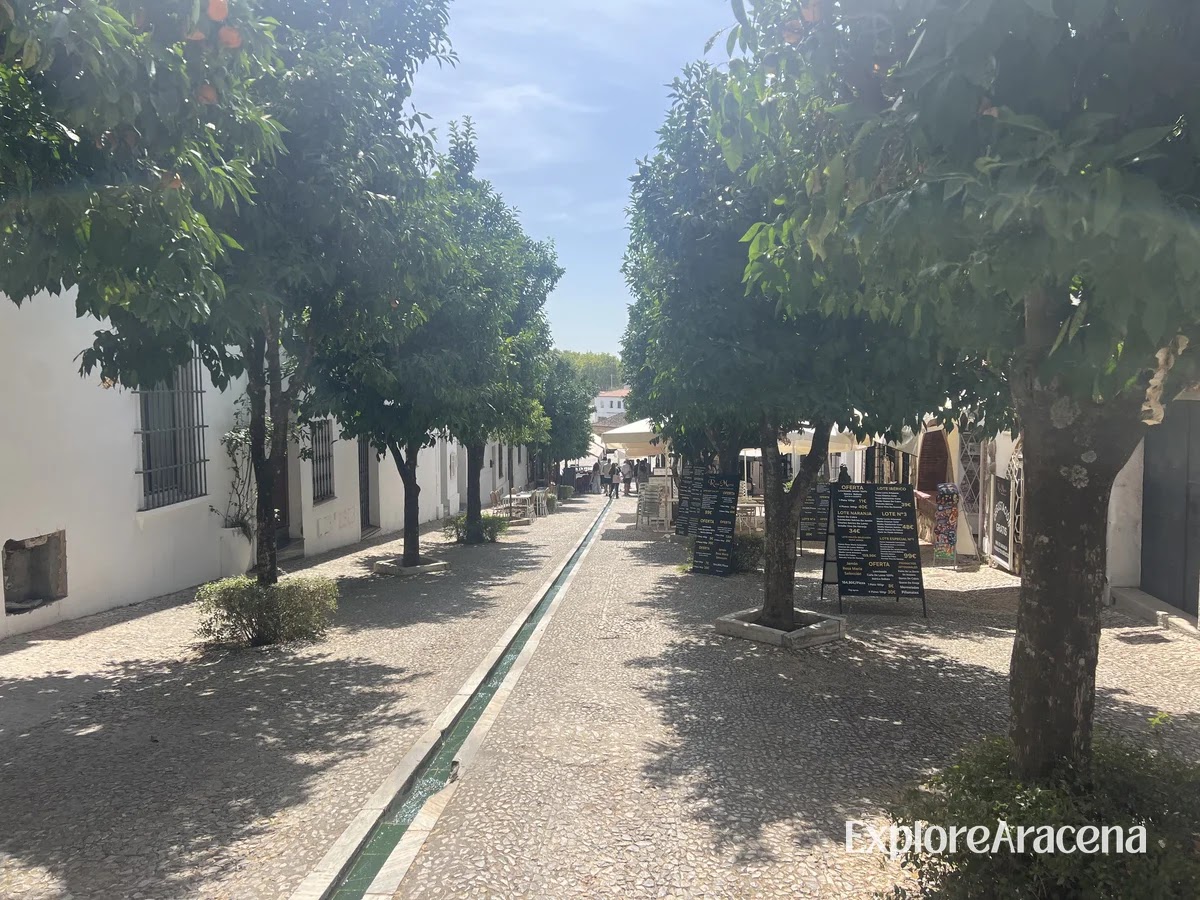
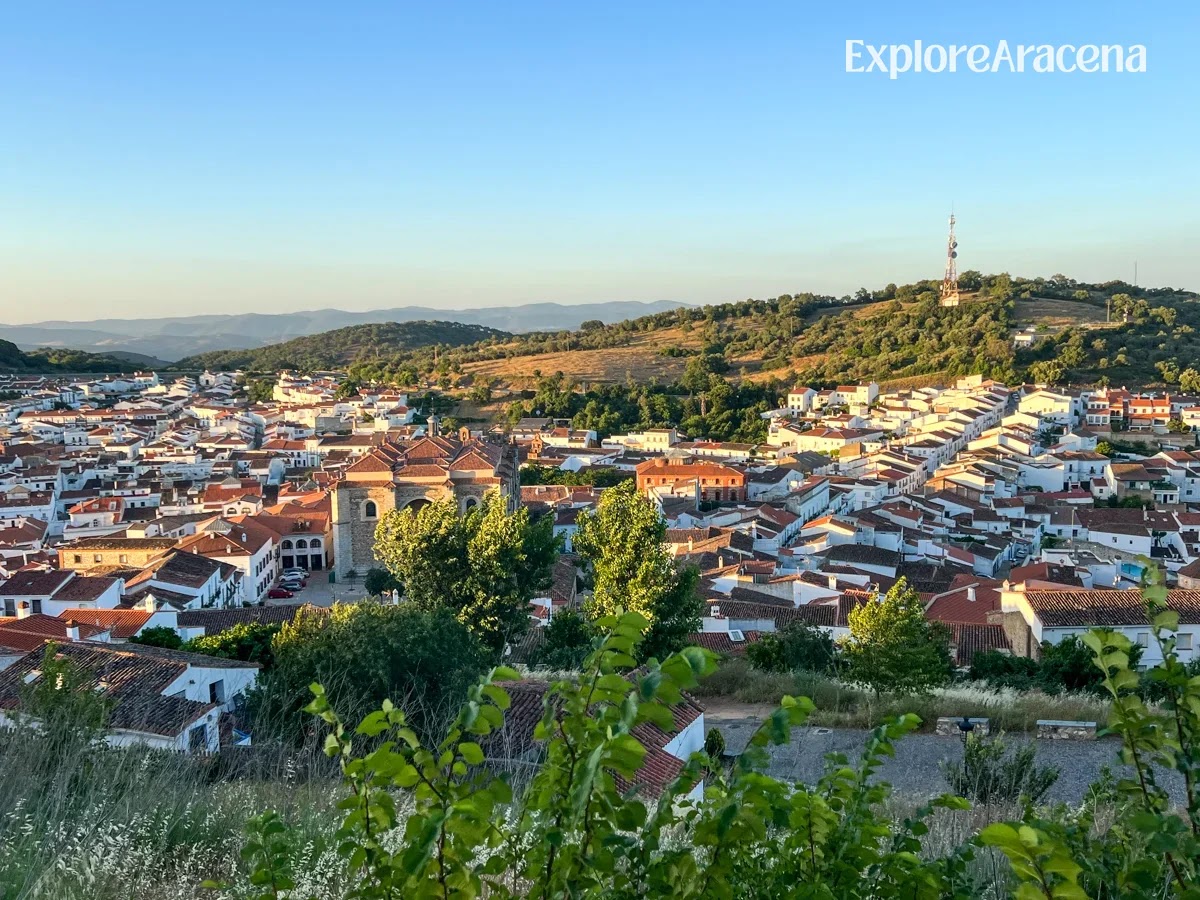
One of the aspects we valued most is how seamlessly the cave fits into the town itself. The Gruta de las Maravillas in Aracena isn’t hidden deep in remote countryside. Rather, it rests in the very heart of Aracena.
After you emerge back into daylight, the experience doesn’t abruptly end. There are many things to do in Aracena:
- Follow a walking route towards the castle for sweeping views across the hills, and reserve castle entry in advance if you plan to go inside.
- Drift through whitewashed streets that curve around the slopes.
- Browse small artisan shops filled with local crafts.
- Sit down in a traditional restaurant and order jamón ibérico, sliced thin and served with pride.
For slow travel in Andalusia, this continuity matters. By late afternoon, the pace shifts and day visitors begin to leave. This is when the locals reclaim the plaza.
If you’re compiling a list of the most memorable natural experiences in southern Spain, the Gruta de las Maravillas deserves a place near the top. Not because it announces itself loudly or dominates headlines, but because it surprises you, an experience that stays with you long after the tour ends.
Frequently Asked Questions
Is the Gruta de las Maravillas suitable for elderly visitors?
Most healthy older visitors can complete the tour, but there are several stair sections. Those with significant mobility limitations may find parts challenging.
How long does the cave tour last?
The guided visit takes approximately one hour.
Do you need to book tickets in advance?
Yes, especially during weekends, Easter week and the spring months.
Is the cave suitable for children?
Yes. Children who are comfortable with stairs and guided tours will enjoy the experience.
Is it one of the best caves in Spain?
Many visitors consider it one of the most visually impressive caves in Spain because of its underground lakes and lighting.
Can you take photos inside?
No. Photography is not permitted inside the cave.
Final Thoughts
There are countless things to do in Andalusia: Moorish palaces, dramatic coastlines and white mountain villages. The region rarely struggles to impress. What makes the Gruta de las Maravillas stand out is that it catches you off guard.
For international visitors who may never have heard of Aracena, this underground lake cave alone is reason to look more closely at western Andalusia. And for those already exploring the Sierra de Aracena, it feels less like an optional stop and more like something essential.
If you’re shaping a slow travel itinerary through southern Spain, this belongs on it. Not as a checkbox, but as one of those rare places that reshapes your expectations.