Breakfast in Aracena: Where to Go for Tostadas, Coffee, and Churros
Breakfast in Aracena: Where to Go for Tostadas, Coffee, and Churros
A practical breakfast guide to Aracena built around two first-hand tostada stops (Los Olivos and Taberna Rincón de Juan), plus a researched churros option near the caves.
Mornings in Aracena begin early at the neighbourhood bars. Coffee cups line the counter as bread warms beneath the grill, filling the room with that familiar toasted smell, the smell of breakfast.
A traditional breakfast here usually centres on the tostada. Tomato and olive oil are enough for many regulars. If you decide to add a few fine slices of local jamón, the heat from the bread softens the fat before the plate reaches your table. The pleasures are modest but specific: good bread, confident slicing and, of course, there is nothing like a cup of caffeine to start the day.
Coffee and a tostada are often treated as a natural pair in Andalusian bars, and some places offer them together as a simple breakfast deal. It is usually better value than choosing from a more elaborate breakfast menu, although the final price depends on your bread and topping. Tomato and olive oil tend to be among the least expensive choices; adding jamón usually costs more.
In this guide, we draw on our firsthand breakfasts at Bar Restaurante Los Olivos and Taberna Rincón de Juan to explain how an Andalusian morning works, from choosing your bread to ordering confidently at the bar. We will also explore the much-loved custom of eating churros for breakfast, with Churrería Chocolatería Castillo near the Gruta de las Maravillas offering a place to try it in Aracena.
Breakfast in Aracena at a Glance
- For an early start: Bar Restaurante Los Olivos
- For breakfast in the centre: Taberna Rincón de Juan
- For churros near the Gruta: Churrería Chocolatería Castillo
- Usual order: A media or entera tostada with your chosen topping, plus coffee
- Typical setting: Traditional bars, counter service and outdoor terraces
- Worth knowing: Rural opening hours change. Check before making breakfast the first appointment of your day.
What Does Breakfast Look Like in Aracena?
You are unlikely to be handed a long brunch menu in a traditional Aracena bar. Look instead for the bread options written above the counter or ask which types are available that morning.
A media tostada is half a piece or portion of bread; an entera gives you the whole thing. The precise size depends on the bread being used, so a quick glance at the plates around you can be more helpful than any translation.
Popular toppings include:
- Tomate y aceite: Crushed or grated tomato with olive oil
- Jamón: Served alone or over tomato and oil
- Mantequilla y mermelada: Butter and jam
- Queso or paté: Available in some bars
- Salmorejo: Occasionally offered as a richer tomato topping
Garlic may arrive as a peeled clove for rubbing directly across the toast.
You may also be asked which bread you prefer. Mollete is soft and rounded, with a pale crumb that takes particularly well to tomato and oil. Chapata has a firmer crust and more structure. Pan de pueblo tends to be rustic and substantial. Names and availability differ between bars, so there is no need to memorise a bread glossary before breakfast. Ask what they have and choose the one that works well with your desired toast ingredients.
Ordering customs vary too. Some bars expect you to speak to the person behind the counter before sitting down. Others take the order at your table. If the system is not obvious, just ask; even locals walk in with the same question.
Bar Restaurante Los Olivos: A Traditional Breakfast with Choices
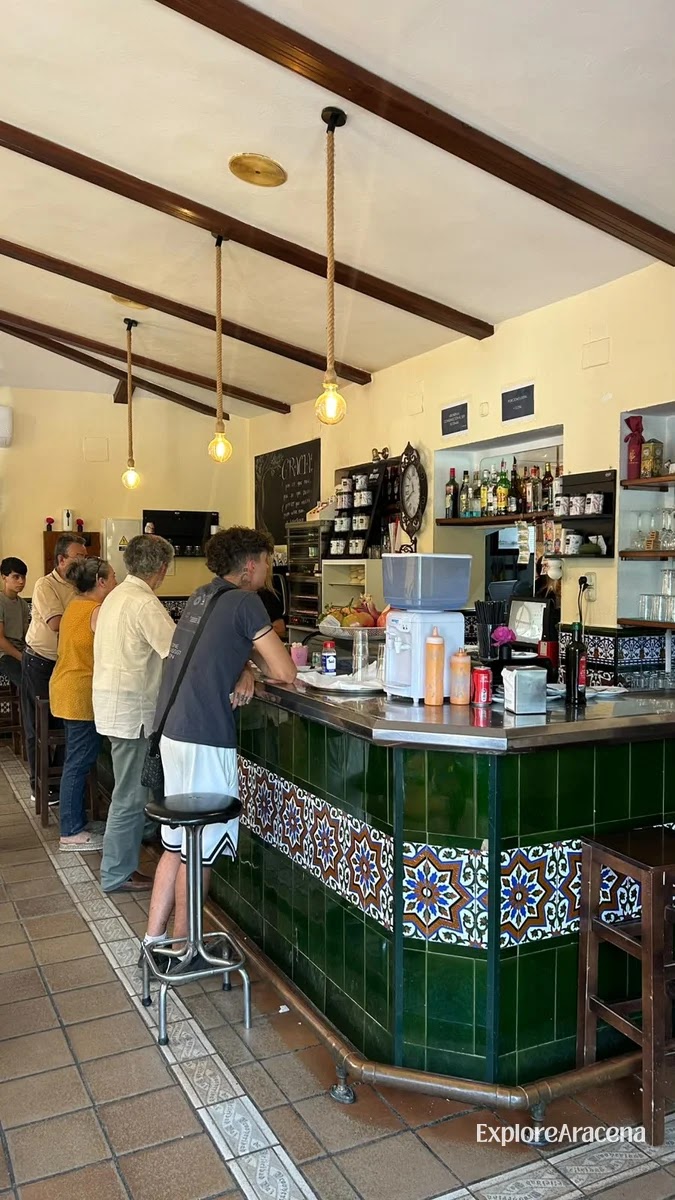
At Los Olivos, ordering begins at the bar. The green-tiled counter is the centre of the morning’s activity, with coffee being poured at one end and breakfast plates leaving from the other. Service was cheerful and assured during our visit, making the system easy to understand even if your Spanish bar etiquette is still a work in progress.
A long counter covered in green glazed tiles anchors the room. Patterned ceramics and dark timber beams bring warmth overhead, and then there’s the enormous coffee machine which handles the serious business of the morning.
Years of daily service have shaped the space. Cups and saucers sit within easy reach, and breakfast plates move across the counter without interrupting the conversation around them. The decorative ceramics belong comfortably among all this practical activity.
Beyond the main bar, photographs show a covered patio or courtyard painted in warm ochre, with rounded arches dividing the space. We ate in the main room, so ask which seating areas are currently open if you have your eye on the courtyard.
We ordered tostadas with jamón. The tostadas arrived almost bare, as is customary, with the salmorejo and olive oil served separately. This allowed us to build each one ourselves, adding as much or as little of every ingredient as we liked. A fresh clove of garlic was brought over when we asked for one.
You can rub the garlic directly across the coarse surface of the toast, then spoon over as much salmorejo as you fancy. Add a little olive oil, or douse your toast in it as you like; the region is known for its deliciously rich olive oil. Everyone at the table can build their breakfast differently, which is half the fun.
Jamón Cut for a Tostada
At Los Olivos, the jamón arrived in slices thin enough for the light to pass through their edges. Fine threads of fat began to soften against the warm bread, giving the meat a delicate sheen before we had taken the first bite.
This is where the hand of the cortador becomes important. Jamón cut this finely yields with the bread instead of pulling away from it in one piece. Its fat warms quickly, carrying the flavour across the tostada and leaving none of the chewiness that a thicker slice can bring.
We did not confirm the producer or classification, so we cannot attach a label to what we ate.
If terms such as bellota, cebo, and montanera are new to you, our guide to jamón ibérico in Aracena explains what they mean and what to look for when ordering or buying your own.
Coffee, and a Glass of Anis
Our coffees were strong without carrying the burnt edge that sometimes accompanies traditional bar coffee.
Once the plates had been cleared, two small glasses of anís arrived. This clear, aniseed-flavoured spirit is familiar across Spain and is often served after eating or added to coffee. Depending on how it is made, it can be sweet or dry, but its unmistakable liquorice fragrance never fails to make itself known before the first sip.
The anís served to us had been made locally. Being invited to finish breakfast in this way made the drink feel like a small introduction to the house traditions, and we were very happy to accept.
For two complete breakfasts, including the coffees and anís, we paid €12.70. Prices may have changed since our visit, but the figure gives you a useful point of reference.
Practical Information for Los Olivos
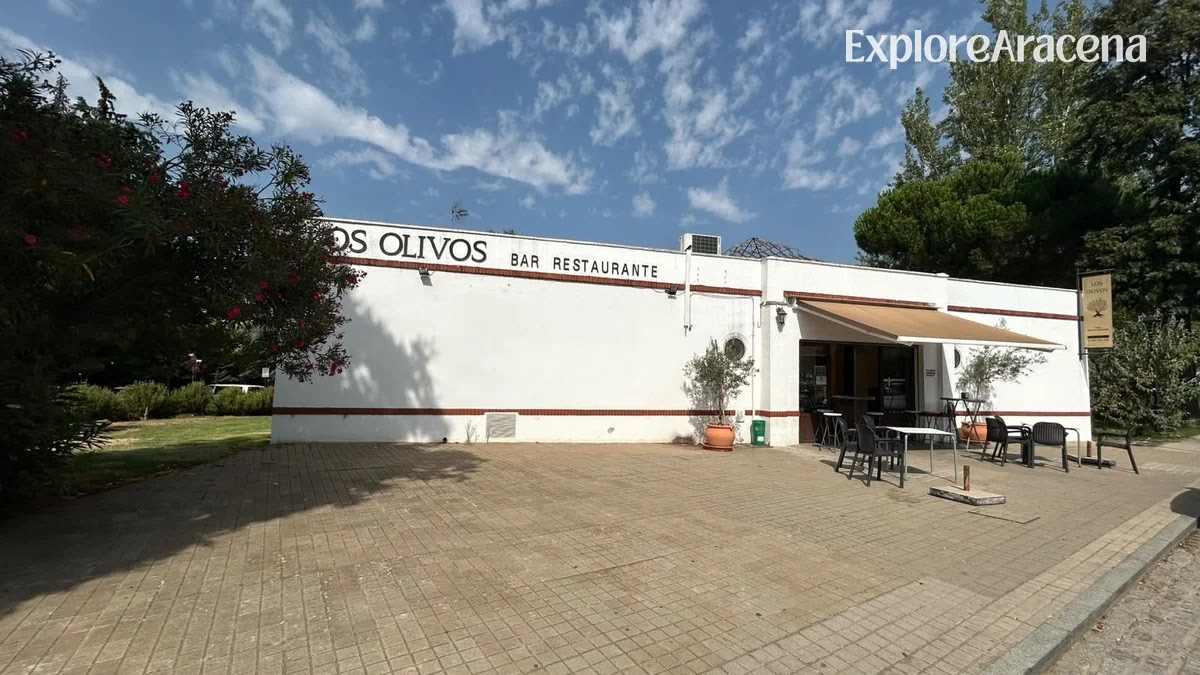
Online sources have shown conflicting versions of the address, including Calle José Andrés Vázquez, 1 and Pozo de Sevilla. Confirm the current Google Maps location for Bar Restaurante Los Olivos before navigating.
Listings have previously shown very early weekday opening and Sunday closure. Those hours should be checked again close to your visit, particularly if you plan to eat before a hike.
Taberna Rincón de Juan: Breakfast in the Middle of Town
At Taberna Rincón de Juan, breakfast unfolded among the ordinary comings and goings of Aracena.
At a nearby table, a father was having breakfast with his young daughter before school. They seemed comfortably settled into the familiar business of a weekday morning, sharing this small pocket of time before she had somewhere else to be.
A delivery arrived partway through breakfast. The person carrying fresh ingredients into the kitchen was greeted with the ease reserved for a familiar face, then disappeared through the bar to continue the day’s work. Breakfast at Rincón de Juan takes place alongside these ordinary town routines.
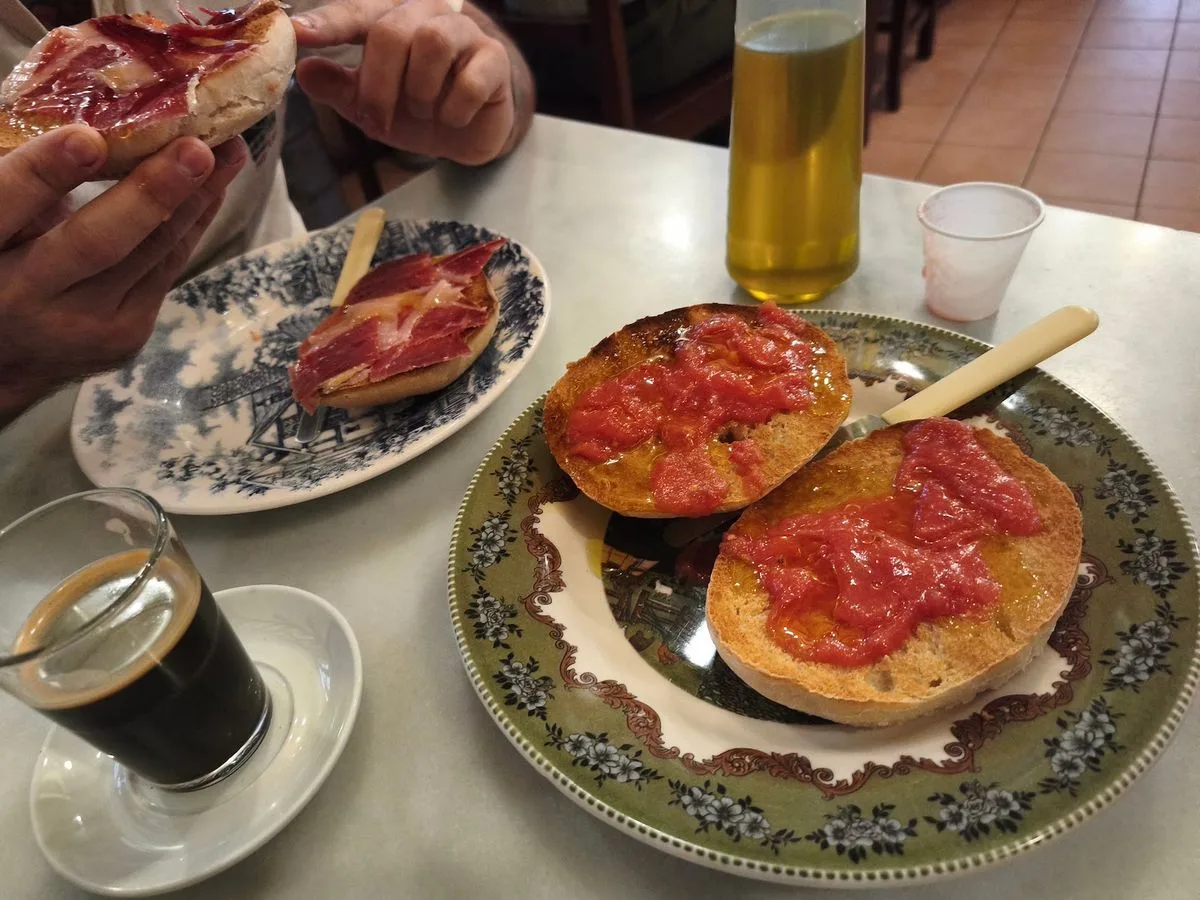
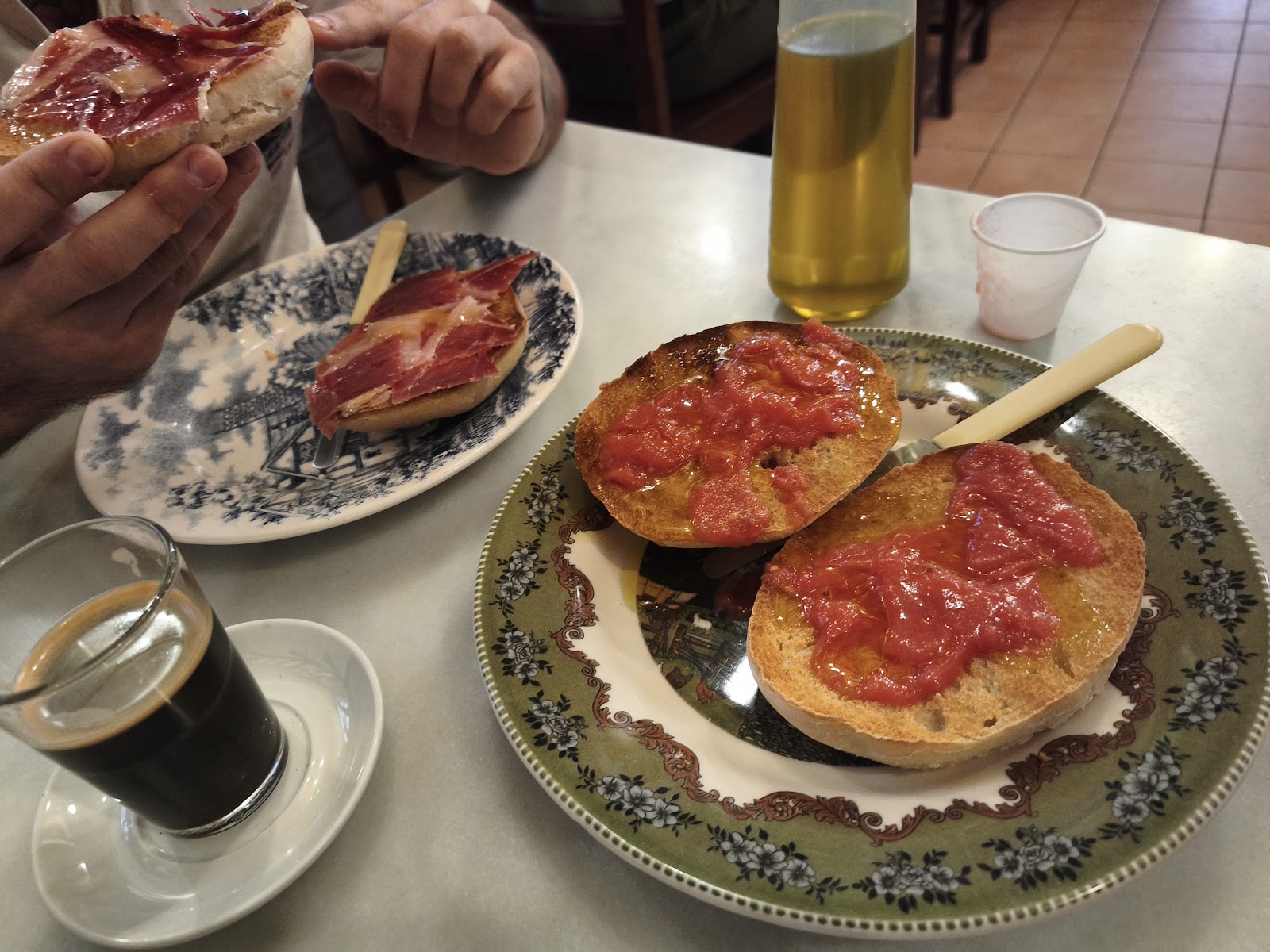
The interior has an old-fashioned handsomeness that extends all the way to the dishes. Our tostadas arrived on plates painted with tiny coloured houses, a charming detail that made even a simple breakfast look considered. There is seating outside too, making it easy to enjoy fresh air with your coffee on the patio when the weather cooperates.

What We Ordered
We ordered at the bar and found a table inside. Our Americanos arrived first, dark and full of flavour, served in the clear glass cups commonly used in traditional Spanish bars. If you are accustomed to receiving coffee in a ceramic mug, the presentation may be new, but equally as satisfying in taste.
The tostadas followed on mollete, a soft Andalusian bread with a pale, tender crumb. Mine was topped with tomato and olive oil. My partner chose the same base with jamón added across the top.
The tomate y aceite tasted exactly as this breakfast should: ripe grated tomato worked into the warm bread, with olive oil soaking into the surface. The mollete remained soft underneath, catching the juices without becoming difficult to pick up.
Earlier in the trip, my partner had admitted that jamón had never interested him very much, but through the gastronomy here in Aracena, he was quickly discovering that it is actually something worth making some noise about. After taking a few bites of his toast, he couldn’t have been more pleased:
“This jamón is another level. It’s amazing!”
Coming from a Sevillano, that was not casual praise. The tostada disappeared from his plate quicker than the blink of an eye.
We paid €8 for both breakfasts, including the two Americanos. Treat this as the price from our visit rather than a guaranteed current total.
Why the Location Works
Rincón de Juan sits on Avenida de Portugal, close to Plaza Marquesa de Aracena. Third-party listings currently place opening at 7:30 a.m. and show Sunday as the day of rest, although the business does not appear to maintain an official website. Confirm the hours before travelling specifically for breakfast.
Its central position lends itself to an unhurried morning in town. From here, you can begin our walking route through Aracena, continue towards the historic centre or tackle the climb to the castle before the day becomes warmer.
This is also a taberna in the full sense of the word. Breakfast gives way to tapas and lunch later in the day. The smaller interior and family-run atmosphere make much more sense once you understand that the room serves the town well beyond its first coffee.
Churrería Chocolatería Castillo: Something Sweet Near the Gruta
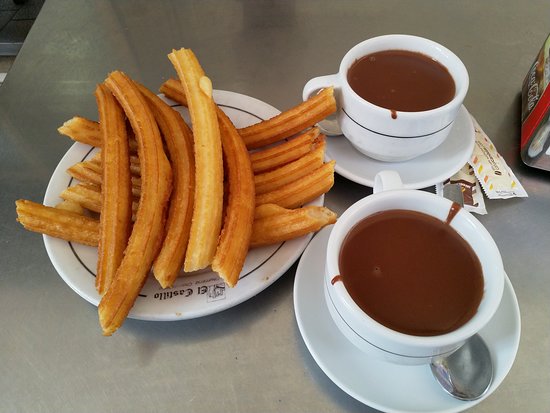
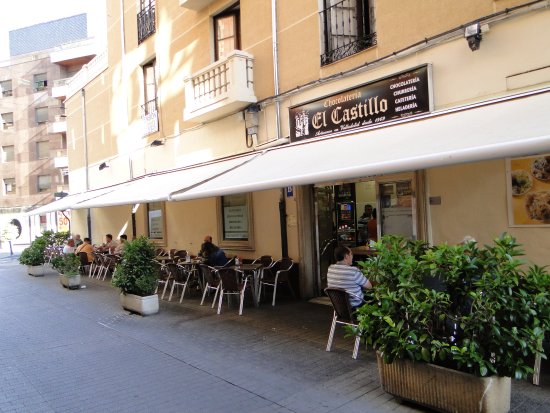
At Churrería Chocolatería Castillo, breakfast takes a sweeter direction. Churros arrive hot from the fryer, ready to be dipped into coffee or a cup of Spanish chocolate thick enough to cling to every ridge.
The churrería sits near Fuente del Concejo and the old public washhouse, only a few minutes on foot from the Gruta de las Maravillas. If your cave reservation falls in the morning, churros offer a lovely alternative to the usual tostada. Check the current opening hours before arranging your breakfast around the booking.
Your First Spanish Churrería Breakfast
Spanish hot chocolate bears little resemblance to the thin cocoa you may be used to drinking. It arrives dense and glossy, with enough body to coat a churro properly. Coffee is another common companion, but chocolate turns breakfast into the gloriously messy dipping exercise it was meant to be.
Ordering varies between churrerías. Some count the churros; others sell them by weight or group them into a ración. If the portion size is unclear, ask:
How many churros come in one portion?
You may also see porras, a thicker and often softer member of the same fried-dough family. The names and shapes change across Spain, so follow the language used on the menu rather than worrying about getting the classification perfect. Castillo’s current selection should be confirmed when you visit.
Churros are prepared in batches, and many churrerías concentrate their service around the morning crowd.
Something Sweet in the Morning
Across Spain, churros are eaten for breakfast or merienda, the late-afternoon meal that carries people through to Spain’s famously late dinner. They are especially welcome on weekends, during local celebrations, or after a night that has continued into the early hours. A churrería breakfast often feels social: the portions are made for sharing, and the chocolate tends to keep everyone at the table longer than an everyday coffee would.
Here in western Andalucía, you may hear churros called calentitos. The name is wonderfully literal, referring to the heat they carry straight from the fryer. It is widely used in Seville and parts of Huelva, although regional vocabulary shifts quickly; elsewhere in Andalucía, similar fried dough may be called tejeringos, jeringos or tallos. The official Sevilla gastronomy guide includes calentitos among the city’s classic breakfasts.
Their earliest history is less certain. Familiar stories credit Spanish shepherds or Portuguese sailors returning from China, but neither explanation has been established convincingly. Fried dough has appeared around the Mediterranean for centuries, and the churro we recognise today developed gradually; the mystery has done nothing to weaken the tradition.
Which Aracena Breakfast Should You Choose?
Each place fits a slightly different morning:
- Los Olivos suits an early start, particularly if you are driving or heading out for a day in the Sierra. Go for the bread choices, finely sliced jamón and the pleasure of dressing your own tostada.
- Rincón de Juan places you close to the centre and works beautifully before exploring Aracena on foot. Its traditional interior and weekday atmosphere made us feel part of the town’s morning for an hour.
- Churrería Chocolatería Castillo is the sweet option near the Gruta. Choose it when hot chocolate sounds preferable to tomato and oil, and check the opening hours first.
Three Breakfasts, Three Aracena Mornings
Where you eat can decide the direction of the hours that follow. Los Olivos places you well for an active start beyond the centre. Rincón de Juan opens directly onto the streets of Aracena, and Castillo sits within easy walking distance of the Gruta. These three itineraries build a morning around each one.
1. Los Olivos and a Morning on the Trails
Choose this plan when you want breakfast to prepare you for time outdoors. Los Olivos has traditionally opened early, although you should confirm the current hours before relying on it as your first stop.
- Order a substantial tostada. Jamón, salmorejo, and olive oil will give you more to work with than coffee alone once the path starts climbing.
- Fill your water bottles before leaving town. Mobile coverage can weaken in the countryside, so download your route at breakfast rather than waiting until you reach the trailhead.
- Choose a walk that suits the weather. Our Sierra de Aracena hiking guide covers route planning, trail etiquette and the seasonal conditions you are likely to encounter.
- Return to Aracena for lunch. Muddy boots and a healthy appetite are welcome at plenty of places, but it is worth checking where you plan to eat before setting out, especially on quieter weekdays.
If you are travelling by car, Los Olivos also works well before driving to Alájar or another village for a morning walk.
2. Rincón de Juan and Aracena on Foot
Rincón de Juan puts you close to Plaza Marquesa, so there is no need to move the car again once breakfast is finished. This is the best of the three plans for getting acquainted with the town itself.
- Begin with coffee and a tostada inside the taberna. Arriving earlier gives you a glimpse of weekday Aracena before the centre becomes busier.
- Walk towards Plaza Marquesa. From here, continue into the older streets rather than taking the most direct route uphill.
- Follow our Aracena walking tour. The route leads through the centre and towards the castle hill, allowing breakfast time to settle before the steepest part begins.
- Climb to the fortified enclosure. Comfortable shoes matter on the cobbles and inclines. Once above the rooftops, the views show you how Aracena sits within the surrounding Sierra.
Allow the morning to expand if the streets catch your interest. Our Aracena town guide can help you decide what deserves more time after the walk.
3. Castillo and the Gruta de las Maravillas
This itinerary should be built around your cave reservation. Entry to the Gruta is timed and capacity is limited, so secure the ticket before making promises to yourself about leisurely quantities of churros.
- Check Castillo’s opening hours against your ticket time. Leave enough room to order, eat and walk to the cave entrance without having to rush the experience.
- Share a portion of churros. Pair them with coffee or commit fully to thick Spanish hot chocolate. If the serving size is unclear, ask how many pieces come in a ración.
- Walk past Fuente del Concejo and the public washhouse. Both are located in the same part of town as the churrería and can be seen without creating a complicated detour.
- Arrive at the Gruta entrance ahead of your scheduled visit. Our guide to the Gruta de las Maravillas explains ticketing and what to expect underground.
The cave takes you beneath the castle hill, where water has been shaping the limestone for thousands of years. Emerging into Plaza de San Pedro after the tour gives you an entirely different appetite for the rest of Aracena.
Get to Know Aracena Over Breakfast
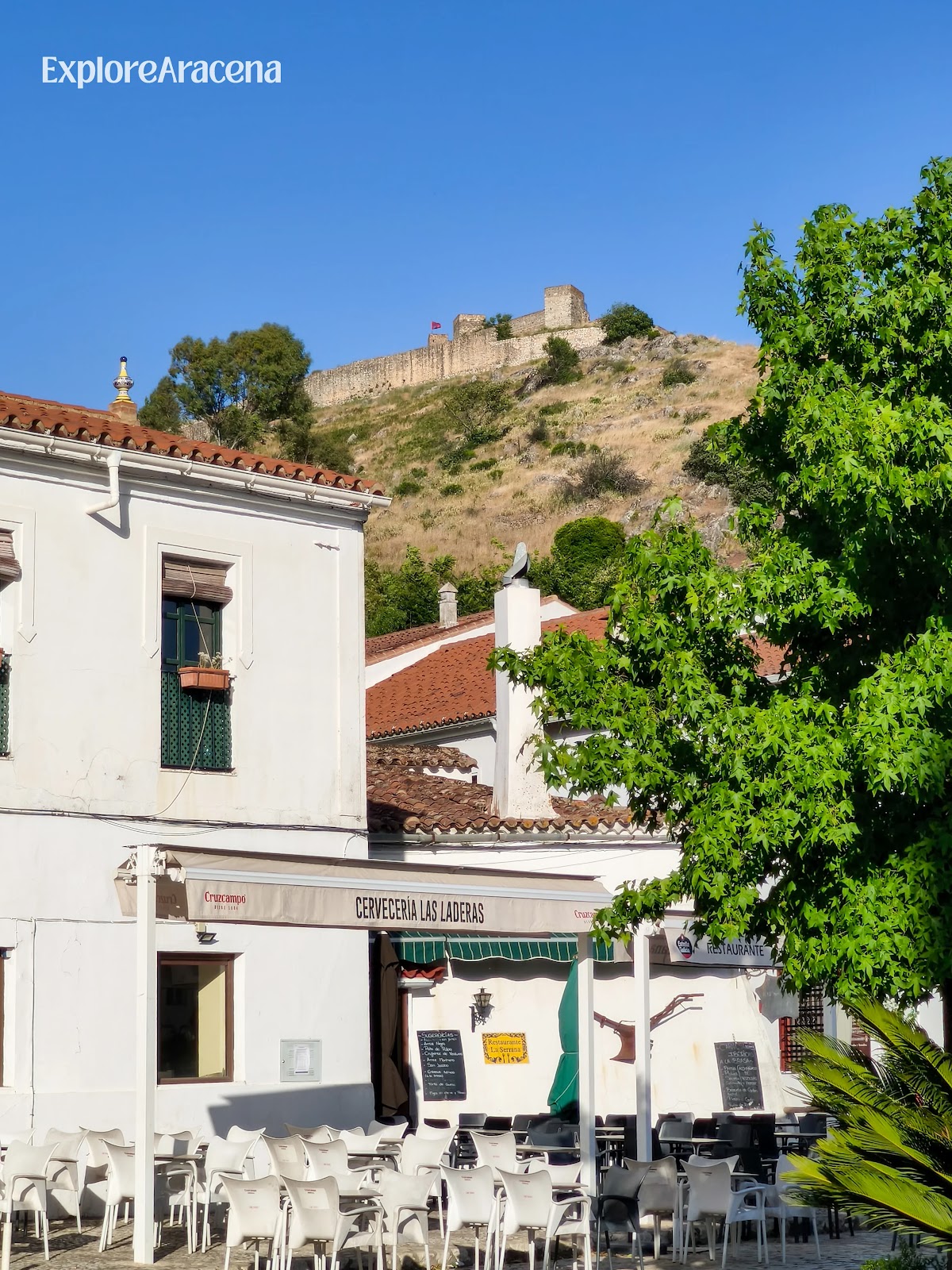
Breakfast menus in Aracena can look minimal to visitors accustomed to an elaborate page of options. A tostada carries most of the meal, so the quality of the bread and other ingredients becomes very apparent. When both are good, simplicity becomes the meal’s strength, instead of competing ingredients lost beneath layers of different flavours or sauces.
Churros offer another version of the local morning. Eaten hot and dipped into thick chocolate, they satisfy the sweeter appetite.
Breakfast also brings you into the daily life of the town. You learn how the bar works and taste ingredients connected to the surrounding Sierra. You leave the table well fed and off to a wonderful start in getting to know the town of Aracena.