What Is a Romería? A Traveler’s Guide to Andalusia’s Pilgrimage Festivals
What Is a Romería? A Traveler’s Guide to Andalusia’s Pilgrimage Festivals
A romería is part pilgrimage, part outdoor village festival, and one of the most distinctive traditions you can catch in rural Andalusia. Here’s what it is, what happens on the day, and where to see the most important romerías in the Sierra de Aracena.
The English word pilgrimage can sound rather solemn, as though sensible shoes and silent reflection are compulsory. An Andalusian romería refuses to fit so neatly into one category. It is certainly a journey of devotion, but it’s also a reunion, an outdoor feast, and one of the most expressive ways a village celebrates its relationship with the surrounding land.
This guide explains what you are looking at, which romerías matter most in the Sierra de Aracena, and how you can attend without feeling completely lost.
Romerías at a Glance
- What is a romería? A religious pilgrimage from a village to a rural hermitage or sanctuary.
- What happens after the journey? Families and brotherhoods gather for food, music, conversation and religious ceremonies.
- When do they take place? Most of the Sierra’s principal romerías fall between May and September.
- Which is the best known? The Romería de la Reina de los Ángeles, held at the Peña de Arias Montano on 8 September.
- Can you attend as a visitor? Yes. Arrive with curiosity, give the procession room, and remember that you are entering a local tradition rather than an organised attraction.
- Where should you stay? Aracena is the easiest base for accommodation, restaurants and journeys into the surrounding villages.
- Where can you confirm dates? Begin with the Explore Aracena events calendar, then check the relevant town council’s programme.
What Is a Romería?
A romería is a pilgrimage to a rural chapel or sanctuary, known in Spanish as an ermita. The route begins in a town or village and continues into the surrounding countryside. Some people walk. Others ride horses or follow the decorated carts carrying the religious image and supplies for the day.
The Virgin or saint associated with the pilgrimage remains its religious focus. In some processions, that presence is represented by a simpecado, an embroidered standard belonging to a local hermandad. You will find fuller explanations of these traditions below, but it helps to know from the beginning that the flowers and silverwork are meaningful. Families and brotherhoods care for them over many years, and their preparation forms part of the devotion.
Participants are known as romeros and romeras. The name comes from romero, once used for a pilgrim travelling to Rome.
The journey ends at the sanctuary, though the gathering continues around it. At the Reina de los Ángeles romería, we saw religious ceremonies taking place while families ate nearby and friends searched the crowd for familiar faces.
As a visitor, you may keep waiting for a clear division between the pilgrimage and the celebration, but there isn’t one. Faith is present in the journey, the shared food, and the hours spent together at the sanctuary. Part of the joy of the experience is that there is no boundary.
Romería or Feria: What Is the Difference?
Here is the short answer: a feria stays put while a romería travels.
A feria usually occupies a dedicated fairground with casetas, rides, concerts, and organised entertainment. Our guide to the Feria de Aracena shows how one afternoon can range from horses and lunch to sevillanas, DJs, and fairground rides at four in the morning.
A romería leaves town. Its route leads towards a particular hermitage, sanctuary, or rural gathering place. Horses and flamenca dresses may appear at both events, but the reason for bringing everyone together is different.
What You Will See Along the Way
Every village has its own customs, but these are some of the people, objects and traditions you are likely to encounter:
- The image or simpecado: The religious figure or embroidered banner at the centre of the pilgrimage
- Hermandades: Local brotherhoods that organise and preserve the tradition
- Carretas: Decorated carts pulled by oxen or horses
- Horses and riders: A large part of the procession and the Sierra’s equestrian culture
- Music: Pipes, drums, guitars, tambourines and singing that travel with the crowd
- Chozos and family tables: Gathering spaces where people eat, rest and spend time together
The Image, Banner or Simpecado
A romería gathers around a sacred image, usually the Virgin or a local saint. It may be carried on the shoulders of local people or travel in a cart drawn by oxen. You may also see a simpecado: an embroidered standard used by a hermandad to represent the Virgin. Calling it a banner hardly does it justice. These are intricate pieces of religious art, worked with metallic thread and surrounded by flowers, candles or silver ornamentation.
Watch the people nearby when it comes into view. Conversations stop halfway through a sentence and those seated along the route stand to see it pass. Some remove their hats. Others call out to the Virgin with an affection that feels deeply personal. During these moments, the romería’s religious meaning comes clearly to the surface.
You are welcome to photograph much of the procession, although it is worth looking beyond the screen before raising your camera. If a family is praying, someone is visibly emotional or the crowd has fallen silent, give the moment its space.
The Hermandades
A hermandad is often translated as a religious brotherhood, but membership is not limited to men. Women and children take part too, and it is common for several generations of the same family to belong.
These groups organise much of what you see during a romería. Members maintain the carts and banners, plan the route, and prepare the ceremonies. They teach younger participants the songs and customs they once learned from their own parents. By the time the procession sets out, months of work have already taken place.
At larger romerías, hermandades travel from several towns to join the host village. Each arrives as a group, bringing its own pilgrims and religious standard. Their arrival often prompts a noisy round of embraces as friends and relatives find one another beside the road.
The Carretas
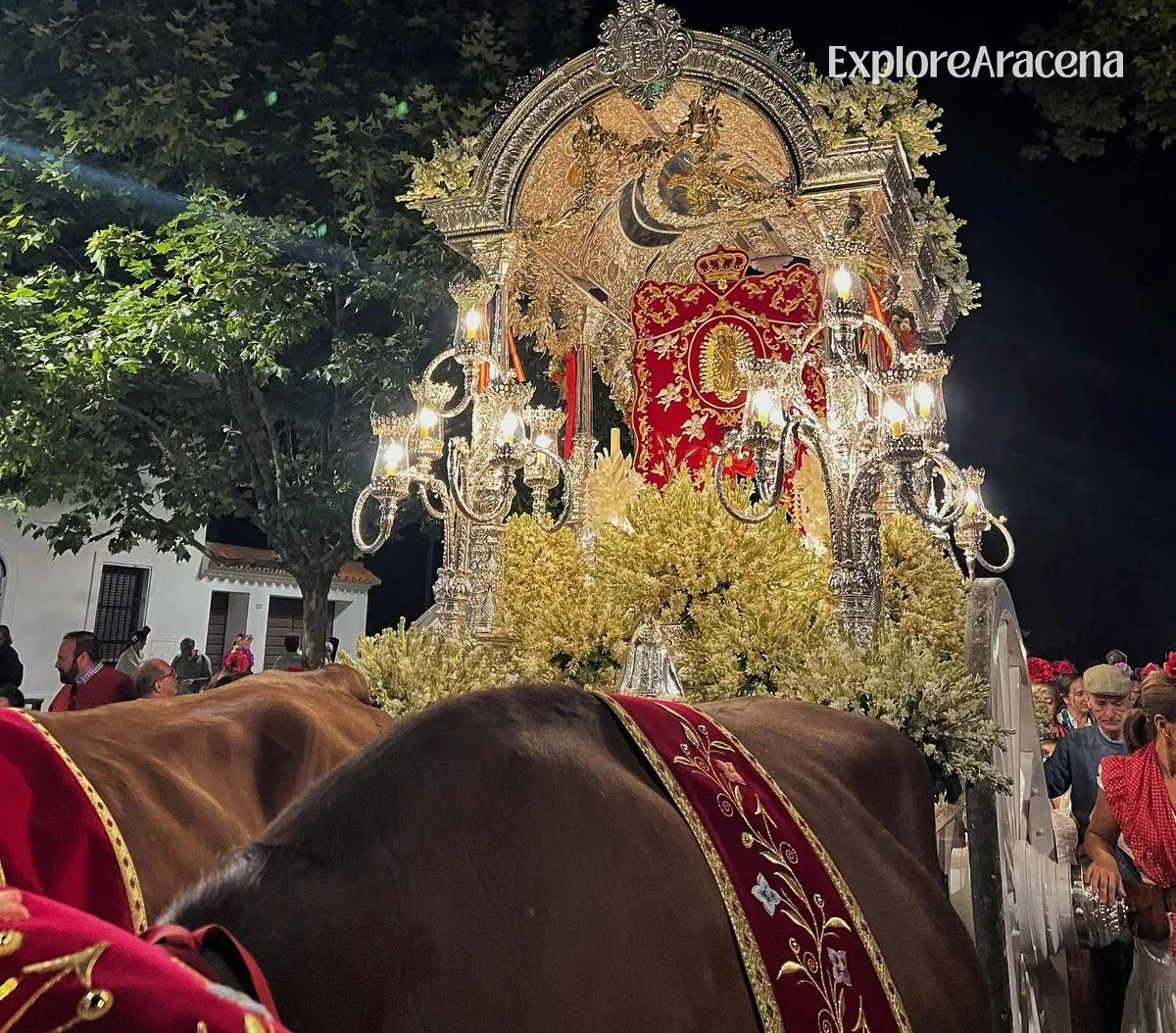
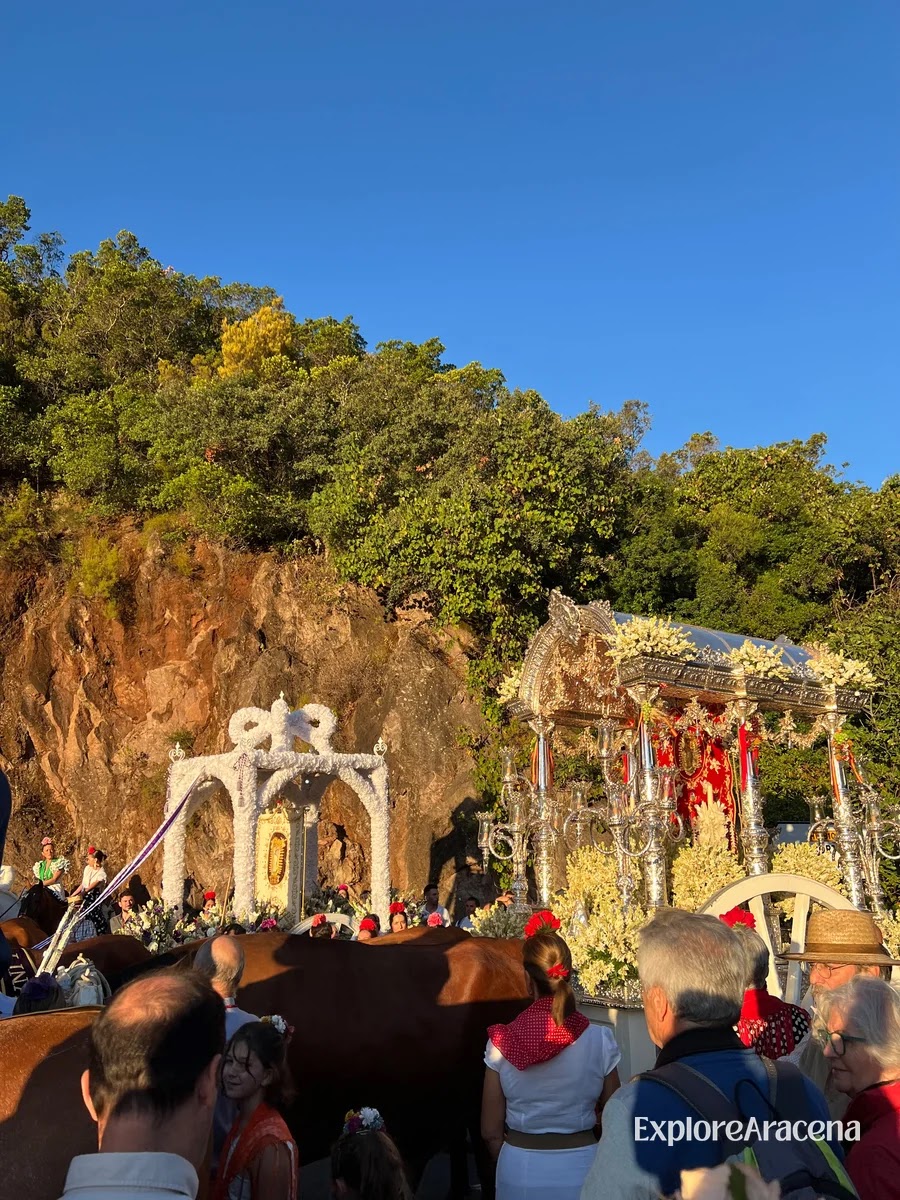
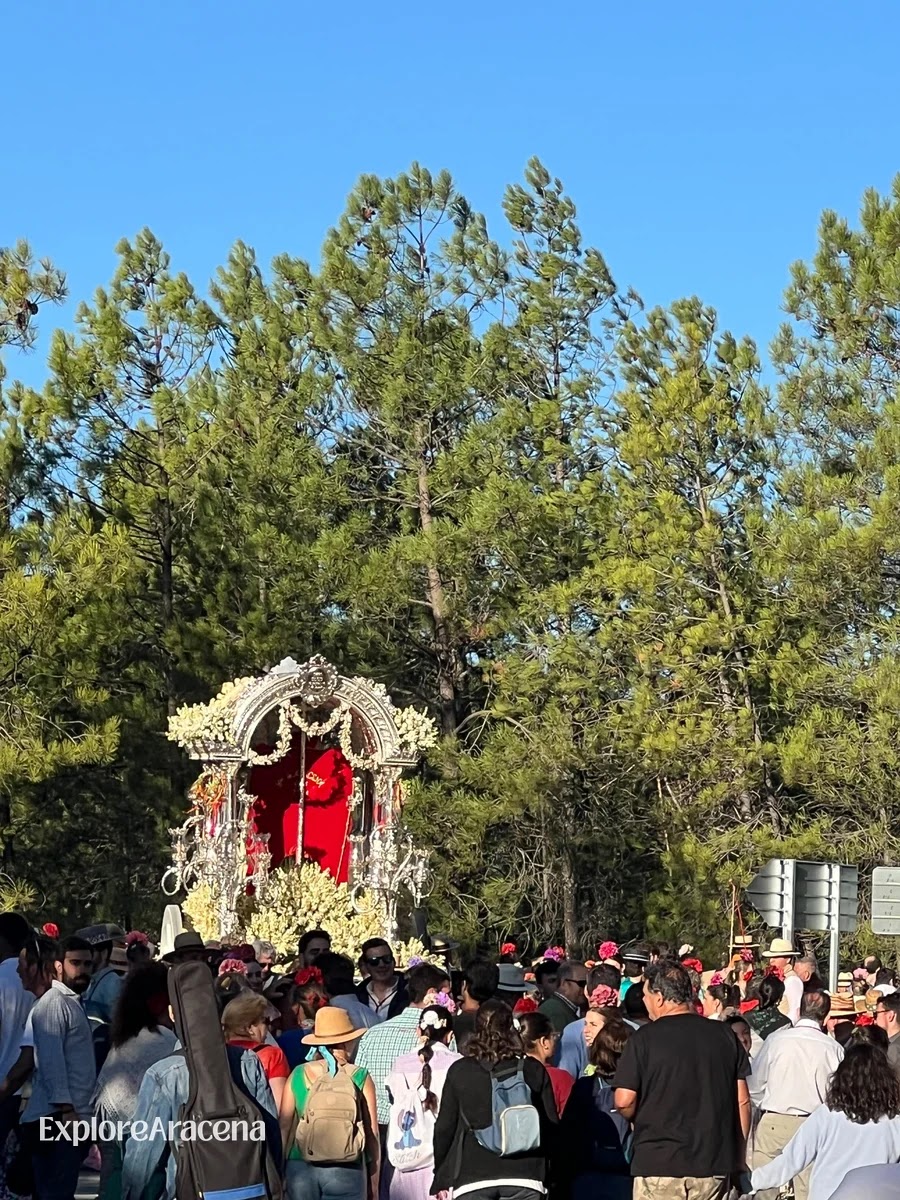
A carreta is a pilgrimage cart drawn by oxen or horses. Many transport people and everything required for a long day away from the village. Others carry a simpecado and are decorated as travelling shrines, with silver columns, embroidered fabric and fresh flowers arranged around the religious banner.
These carts travel at the pace of the animals pulling them. Wheels pass over rough country roads, dust rises behind the oxen and the procession adjusts accordingly. If the route takes several hours, then several hours it takes.
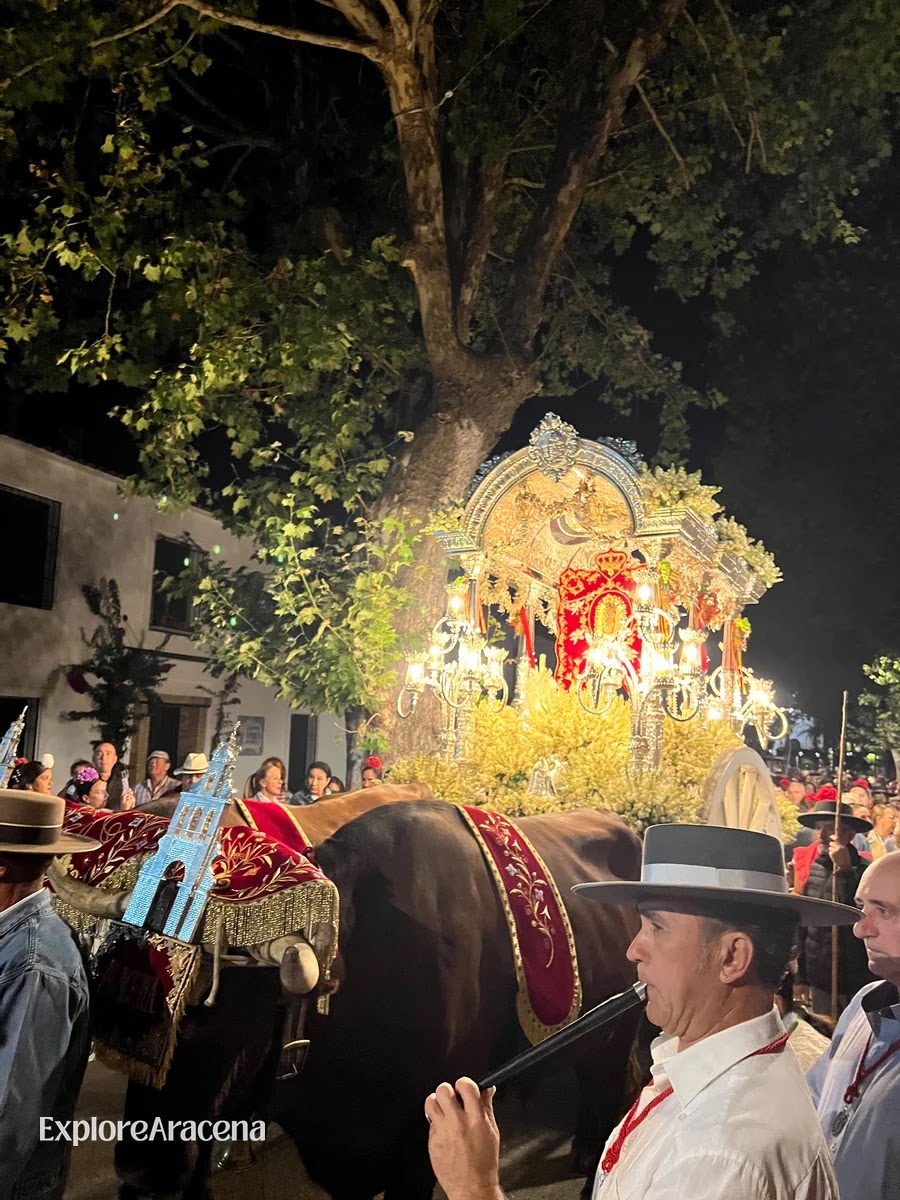
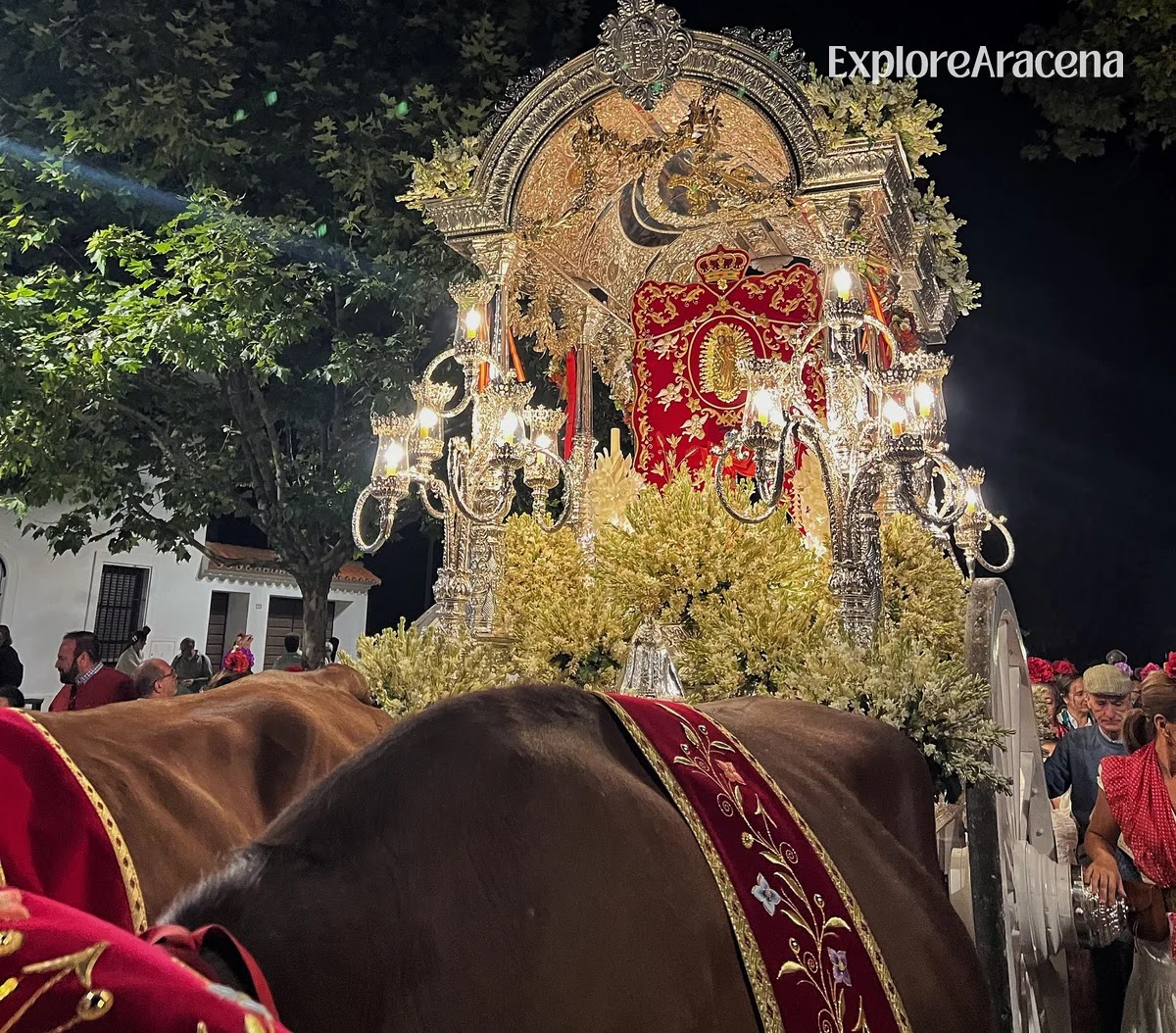
When we attended the Reina de los Ángeles romería, the silver carreta looked especially beautiful after dark.
Horses and Riders
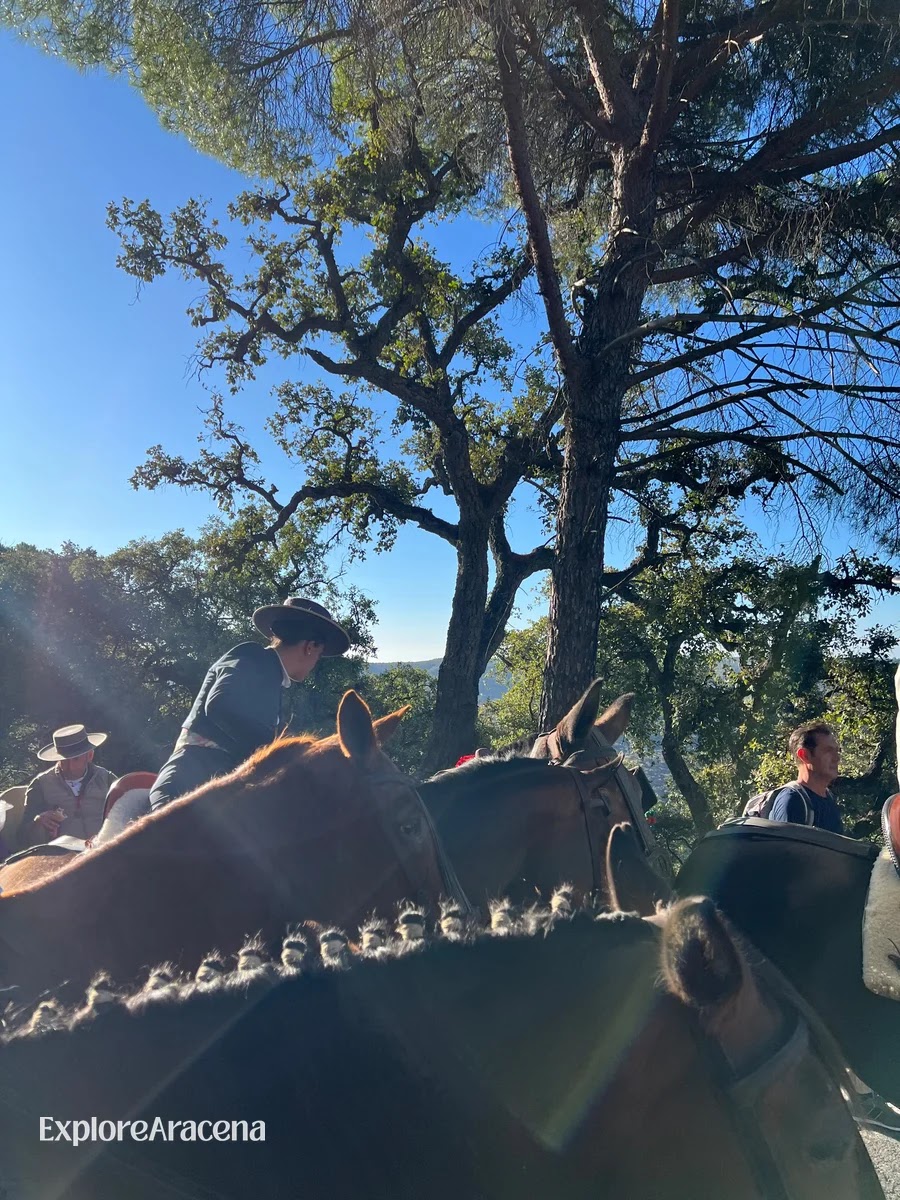
Horses appear throughout the procession. People ride alone, with children seated in front of them or alongside relatives and friends. For many local families, riding the romería route is a tradition passed from one generation to the next.
Clothing varies. Traditional Andalusian riding dress includes a short fitted jacket, high-waisted trousers, and a broad-brimmed hat. Women may wear long riding skirts, while many participants choose simpler country clothes that can withstand several hours of heat and dust. The saddles and horses are often prepared with just as much care as the riders.
Give them plenty of space, even when the procession appears relaxed. Horses can move suddenly, and riders may need more room than you expect. Stay beside the route, keep children close, and check behind you before stepping back to take a photograph.
Music Along the Route
Much of the music at a romería happens within the procession itself. Musicians walk beside the carts or play while groups rest beneath the trees. You may hear a pipe and drum leading the route, followed later by guitars, tambourines, and people singing together around a family gathering place.
The songs are often familiar to those taking part. One person begins and others pick up the words, sometimes continuing a verse while the musicians pause. Some songs address the Virgin directly; others belong to the later social hours.
Chozos, Tables and Family Gathering Places
A chozo was traditionally a small rural shelter built for shepherds or agricultural workers. At some romerías, the same word is used for the temporary structures where families and hermandades spend the day. Depending on the celebration, they may remain in place for an entire weekend.
Once people have reached the sanctuary, these gathering places become the setting for lunch and everything that follows. Families bring food from home, drinks are kept cold beneath the tables, and spare chairs are found whenever somebody new arrives. Children move between relatives and friends while the adults settle into conversations that may continue for hours.
To a visitor, the boundaries are not always obvious. A chozo may open directly onto a public path, but the table inside can still belong to a family or hermandad. Wait to be invited before joining them. Andalusian hospitality can be wonderfully generous, and an invitation may come with a plate already in someone’s hand, but it should never be assumed.
Bring your own picnic so you can enjoy lunch in the public areas regardless.
The Most Important Romerías in the Sierra de Aracena
If you would like to experience a romería during your visit, these are the principal dates and places to know. Alájar receives more space here because we attended the Reina de los Ángeles celebration ourselves.
Romería de la Reina de los Ángeles in Alájar
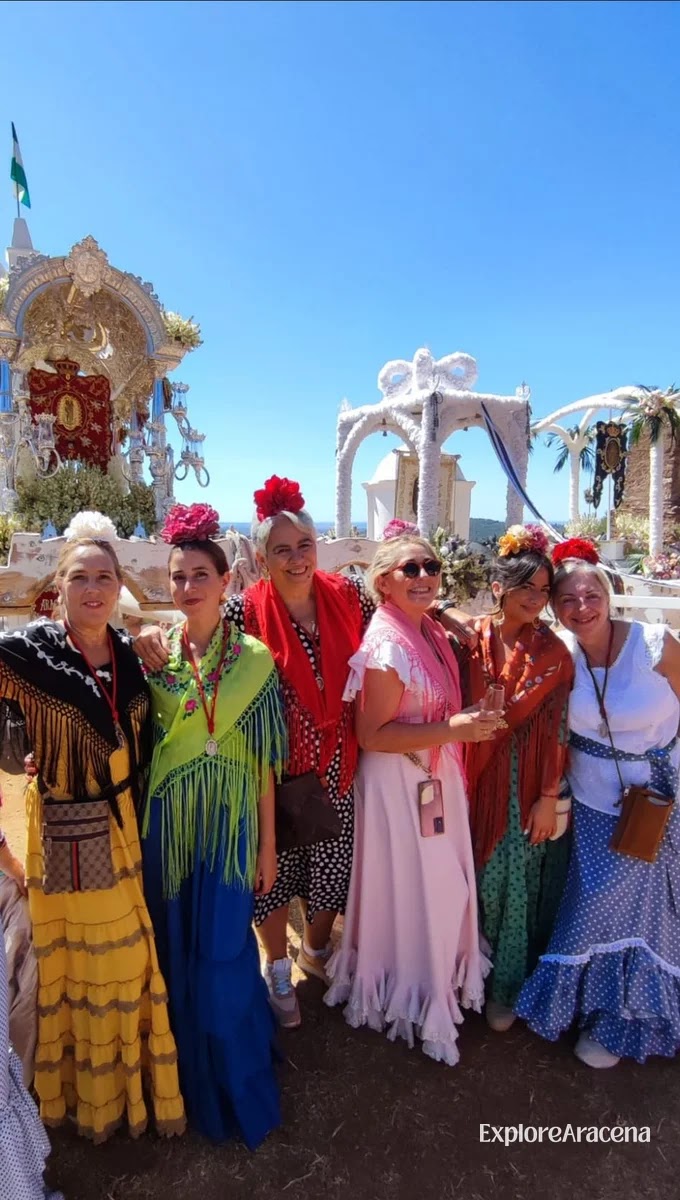
If your trip allows you to plan around one Sierra pilgrimage, we would choose the Romería de la Reina de los Ángeles. Its principal day is September 8th, when pilgrims travel to the Peña de Arias Montano, the sanctuary above Alájar.
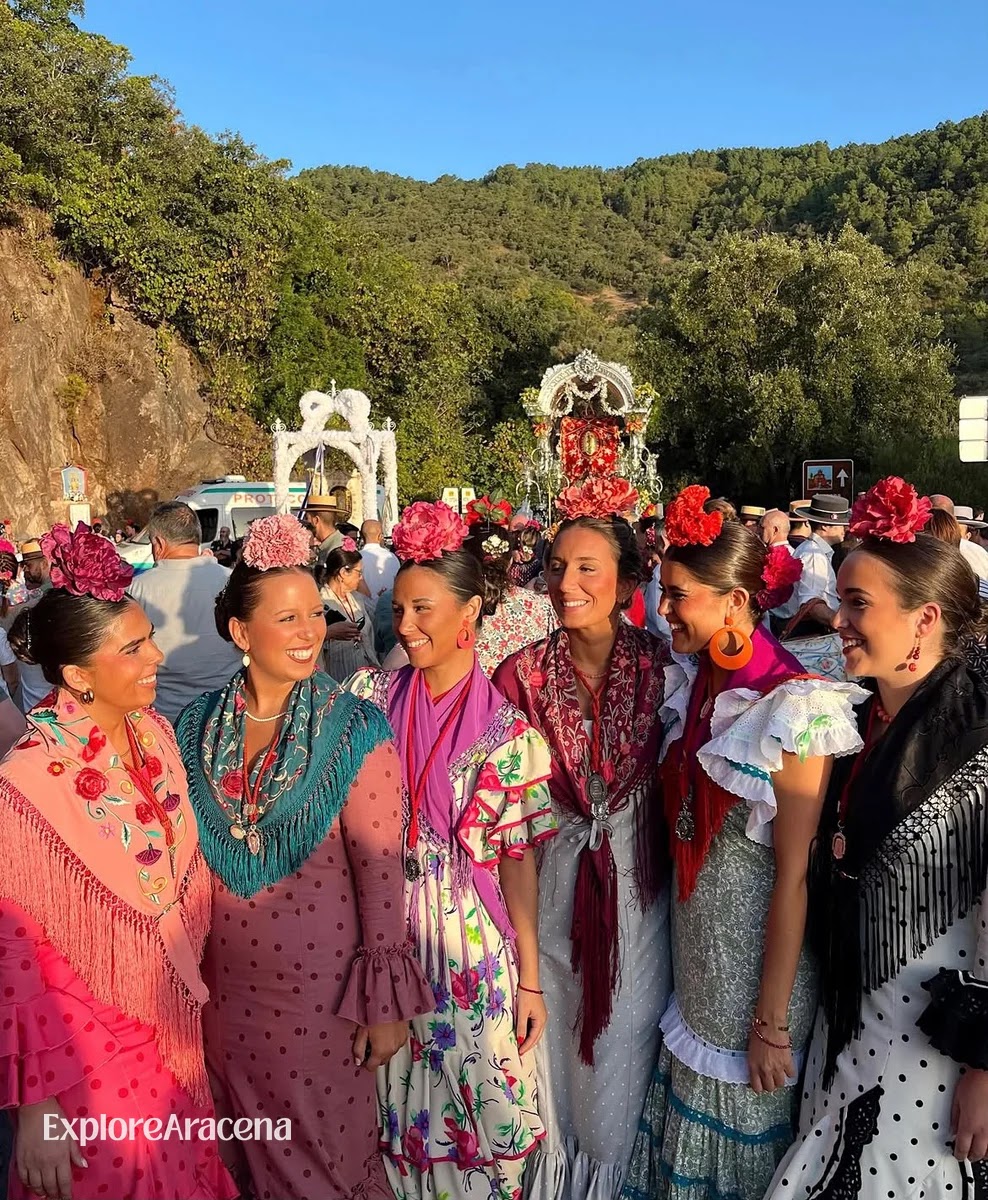
The Peña is known for its cliff face, caves, and views across the Sierra. During the romería, the same place looked almost theatrical. Floral arches framed the path beside the rock, and riders waited with their horses beneath the trees. Women crossed the plateau in bright trajes de flamenca.
The Reina de los Ángeles is honoured as the patron of the Sierra, so the gathering reaches far beyond Alájar. Hermandades arrive from towns across the region with their own pilgrims and banners. People scan the crowd for relatives, call out to friends and stop repeatedly for greetings on the way towards the sanctuary.
Novena services are held beforehand, followed by the arrival of different hermandades and ceremonies at the Peña. In 2026, the celebrations ran from September 6th-8th, and organisers expected approximately 8,000 people.
We saw how naturally people moved between reunion and worship. Conversations carried on around us until attention returned to the Virgin. Those who had been laughing together stood quietly, and we followed their lead. You do not need to know the prayers or understand every part of the ceremony to behave respectfully while it takes place.
If you plan to attend, check the latest programme through the Alájar Town Council. Confirm where vehicles can enter, where you should park and when the processions are expected to arrive. With thousands of people travelling towards a rural sanctuary, this is not a day to improvise the journey at the last minute.
Other Romerías to Know
- Romería de San Antonio de Padua, Cortegana — around June 13th: One of the Sierra’s busiest romerías. Pilgrims travel approximately six kilometres from the Ermita del Calvario towards La Corte, where many families spend the weekend eating and celebrating in casetas. Turismo de Cortegana has more information about the tradition.
- Romería de Santa Eulalia, Almonaster la Real — around Pentecost: The date moves with the religious calendar. Municipal records mention the romería as early as 1606, and the sanctuary lies roughly 20 kilometres from the village. The distance makes the journey a substantial part of the pilgrimage, so keep the day free rather than adding an ambitious walk or sightseeing schedule.
- Romería de la Virgen del Puerto, Zufre — late August and September: This celebration has two journeys. The Virgin is brought from her rural hermitage into Zufre on the final Sunday of August, then returned after the fair, usually on the second Sunday of September. Confirm both dates through the Zufre Town Council. If you visit from Aracena, leave time for Zufre’s steep white streets and reservoir viewpoints, and bring shoes that accept the village’s complete lack of interest in flat ground.
Dates and programmes can change, particularly when they follow the religious calendar. Check the Explore Aracena events calendar and the relevant town council before travelling.
Tips for How to Attend Without Becoming “That Tourist”
Visitors are welcome at the Sierra’s romerías. A little awareness will help you enjoy the day without getting in anyone’s way.
- Read the programme and arrive early. The procession, sanctuary, and gathering area may be several kilometres apart. Check departure times, access, and parking before you leave.
- Pay attention during religious moments. If people turn towards the image, remove their hats or fall silent, give them room and follow their lead. Keep photography discreet during prayers and blessings.
- Stay clear of horses and oxen. Remain beside the route, keep children close, and never step backwards into the procession for a photograph. Dogs should be securely controlled and kept away from the animals.
- Dress for the ground and weather. Comfortable shoes matter more than formal clothing. Expect dust, uneven paths, and several hours outdoors. Bring water and sun protection; at the Peña, a light layer can be useful after dark.
- Bring your own food unless you have other arrangements. Family and hermandad tables are private, even when they stand beside public gathering areas. Accept an invitation warmly if one comes, but arrive prepared with a picnic. For meals elsewhere, see our guide to restaurants in Aracena.
- Ask before taking close photographs. Take particular care around children, private chozos and people praying. Once you have the wider procession shots, lower the camera occasionally. We noticed far more when we stopped trying to photograph every part of the day.
Planning Your Romería Trip
We would stay in Aracena and travel to the romería from there. It gives you the widest choice of places to sleep and eat, and you can still drive to Alájar, Cortegana, Almonaster la Real or Zufre without changing accommodation. Our guide to getting to Aracena explains the routes from Seville and Huelva.
A car makes these events much easier to reach. Several take place at rural sanctuaries outside the village, and buses between Sierra towns are limited. They may also stop running hours before the celebration finishes. If you are travelling without a car, our car-free Aracena guide sets out the available options. Book a taxi in advance for both directions; finding one beside a crowded hermitage at the end of the night is unlikely.
On the day itself, expect road closures, slow traffic and a longer walk from the car than the map suggests. Follow the temporary signs and listen to the event stewards, particularly when horses or ox-drawn carts are using the same road.
Keep the rest of the day clear. We would not combine a romería with an early Gruta de Las Maravillas booking, a rushed village tour and a dinner reservation an hour away. The procession may leave late, lunch may last longer than expected and getting back to Aracena can take time.
Romería FAQs
Can tourists attend?
Yes. You are welcome to watch the procession and enter public gathering areas. Stay out of private chozos, avoid blocking religious moments and follow instructions from organisers.
Do you need to be Catholic?
No. You can appreciate the history, music and community without sharing the religious belief. Attend with the same respect you would bring to any sacred ceremony.
Are romerías suitable for children?
Local children grow up attending them, but visiting families should prepare for heat, crowds, animals, and long days. Choose a meeting point, carry water and keep younger children close beside the procession route.
Can you attend for only part of the day?
Of course. If your time is limited, use the current programme to choose the procession and arrival at the sanctuary. Those moments provide more context than attending only the later gathering.
Do the dates stay the same?
Not always. The Reina de los Ángeles centres on 8 September, while Santa Eulalia follows Pentecost and moves each year. Other programmes are arranged around a saint’s day or particular weekend. Confirm every edition before booking accommodation.
Is It Worth Planning a Trip Around a Romería?
Yes, especially if you want to meet the Sierra beyond its castle, caves, and beautiful walking routes.
At the Reina de los Ángeles romería, we spent part of the evening beside the road waiting with local families. People talked while the children watched for horses coming through the trees. Then we heard the piper, and the silver carreta appeared behind the oxen in the darkness.
It was late by then, but nobody around us seemed ready to leave. Neither were we.