Campanilleros in the Sierra de Aracena: The Songs That Wake October
Campanilleros in the Sierra de Aracena: The Songs That Wake October
Before sunrise on October Sundays, bells and voices move through Aracena as the campanilleros lead the Rosario de la Aurora. Learn the history, instruments and local customs behind one of the Sierra’s most distinctive religious traditions, plus how to listen respectfully.
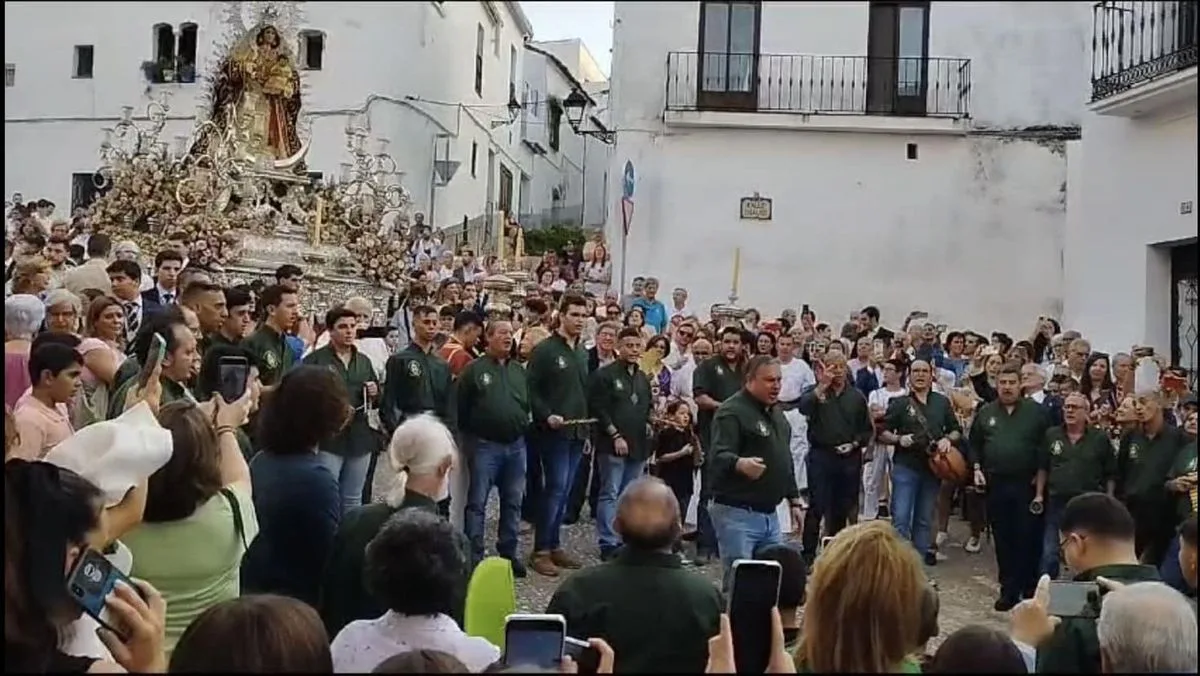
At an hour when most of Aracena is still asleep, a group of men walks through the streets singing with bells that sound beautifully haunting. Guitars, an empty anise bottle, and an espadrille used as percussion are also accompanied during this soulful walk.
These are Aracena’s campanilleros. They make their rounds before dawn every Sunday in October, carrying centuries-old religious verses from one part of town to another. Residents may listen comfortably from their beds or step outside to meet them.
The reason for this yearly ritual can be discovered in the Rosario de la Aurora, the town’s devotion to the Virgen del Rosario, and a musical tradition rooted in seventeenth-century Aracena. October has a different soundtrack than other months here in the region.
Campanilleros at a Glance
- What it is: A pre-dawn round of religious songs and bells linked to the Rosario de la Aurora, the dawn rosary.
- When in Aracena: The early hours of Sunday mornings in October. The Ayuntamiento’s 2026 festival calendar lists October 4, 11, 18 and 25, but confirm the current route and start time locally before travelling.
- Where to listen: Along Aracena’s streets before the 6:00 a.m. rosary. The final Sunday continues uphill towards the castle.
- What you will hear: Male voices, bells, guitars, bandurrias, triangle, a clay water jug, anise bottle and spoon, plus the percussive stamp of an espadrille.
- Good manners: Stand to the side, keep conversation low, ask before photographing people, and remember that this is worship rather than a scheduled show.
What Is a Coro de Campanilleros?
The Catholic feast of Our Lady of the Rosary falls on October 7th, and the entire month has long been devoted to this form of prayer. The feast developed from commemorations surrounding the Battle of Lepanto in 1571 and was later extended across the Catholic Church.
The origins of the feast may feel distant, but its influence can still be heard whenever the campanilleros set out on an October morning.
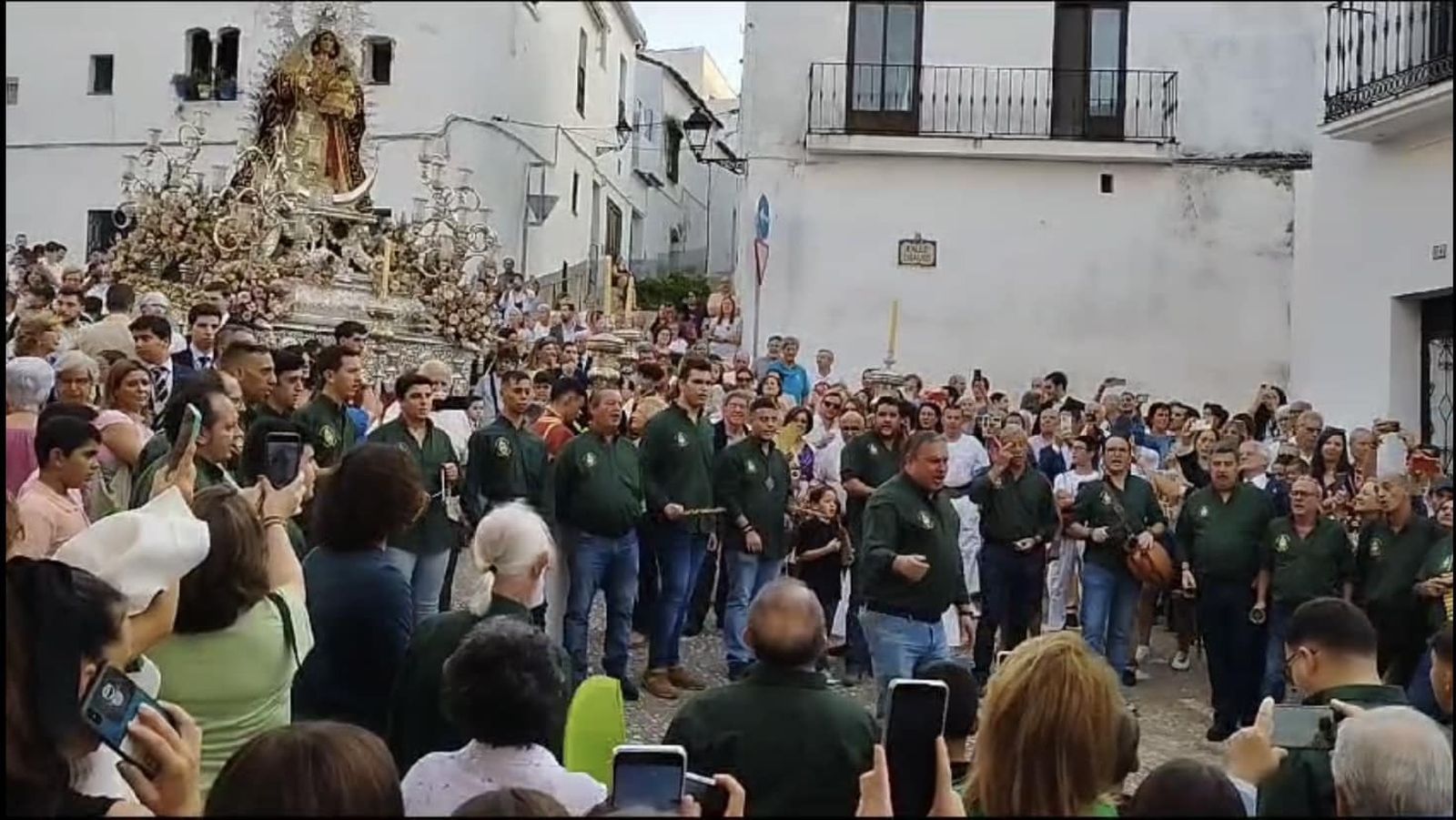
A coro de campanilleros is a group of singers who accompany religious rounds with bells and a collection of wonderfully homespun instruments. In Aracena, the choir is made up of men of different ages. Their songs are part of the Rosario de la Aurora, a devotional procession in which people pray the rosary in the early morning, traditionally in honour of the Virgen del Rosario, the Virgin of the Rosary.
For readers unfamiliar with the practice, the rosary is a Catholic prayer built around repeated prayers and meditations on events in the life of Jesus and Mary. The dawn version takes that prayer out into the town. The campanilleros provide the musical prelude, moving through the streets while the sky is still dark and residents are deciding if the noise is a sacred summons or a wake-up call they can’t ignore.
The Ayuntamiento of Aracena describes the ronda as the prelude to a rosary that begins at six in the morning. That time is part of the town’s established tradition; exact arrangements can change, so use the current municipal notice or parish information for the year of your visit. The official town information on Fiestas y Tradiciones explains how the street singing leads into the rosary and how the route changes on the final Sunday.
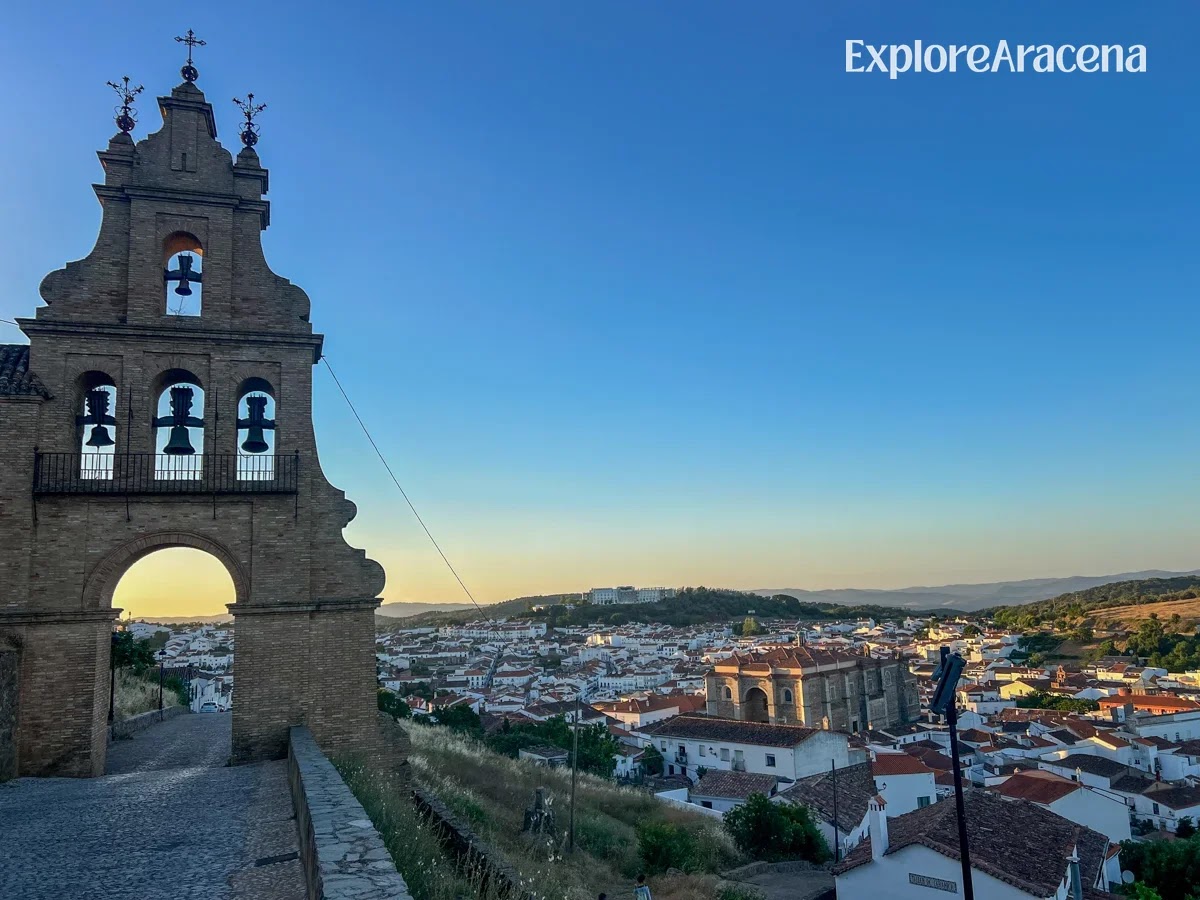
After spending the month carrying their songs through Aracena’s neighbourhoods, the campanilleros turn towards the castle hill. The congregation follows them up to the Iglesia Prioral, reaching the church as morning begins over the town below.
A Seventeenth-Century Aracena Tradition
Aracena’s campanilleros are associated with the seventeenth-century religious life of the town and with María Payán Valera, remembered as the Venerable Madre Trinidad. A religious woman and mystic from Aracena, she promoted praying the rosary in the streets. That practice forms an important part of the story told about the campanilleros today.
The repertoire carries its own local history. Some coplas preserve verses connected to old devotions and parts of Aracena that have changed or disappeared. A live recording catalogued by the National Library of Spain contains 48 songs, almost thirty of them credited simply to anonymous tradition.
Other lyrics entered the songbook within living memory. José Fernández Guerra, known locally as José Guerrita, wrote coplas for many years and passed his enthusiasm to his son José Ramón, who later directed the choir. The songs, therefore, hold several kinds of memory at once. Some have travelled through Aracena for generations.
Aracena’s choir goes out during the early hours of every Sunday in October. Returning to the streets each week is part of the devotion. The tradition endures because people continue to rise in the dark and carry its songs through the month.
Details Hidden Inside the Tradition
- The songbook is surprisingly large. A live recording held in the National Library of Spain’s catalogue contains 48 coplas: 19 original compositions and 29 traditional verses with no known author.
- The choir carries family histories too. Fathers have introduced sons and even grandsons to the group. Local reporting has described around thirty men of different ages singing together, allowing younger voices to learn directly from those who have walked the route for decades.
- Aracena once had several groups. Two or three campanillero choirs could once be heard in town. More recent accounts describe one remaining choir, which makes the involvement of younger members particularly important.
- The route has grown with Aracena. Different streets and neighbourhoods have traditionally been chosen each Sunday. As the town expanded, the singers had farther to walk if they wanted newer districts to hear the coplas too.
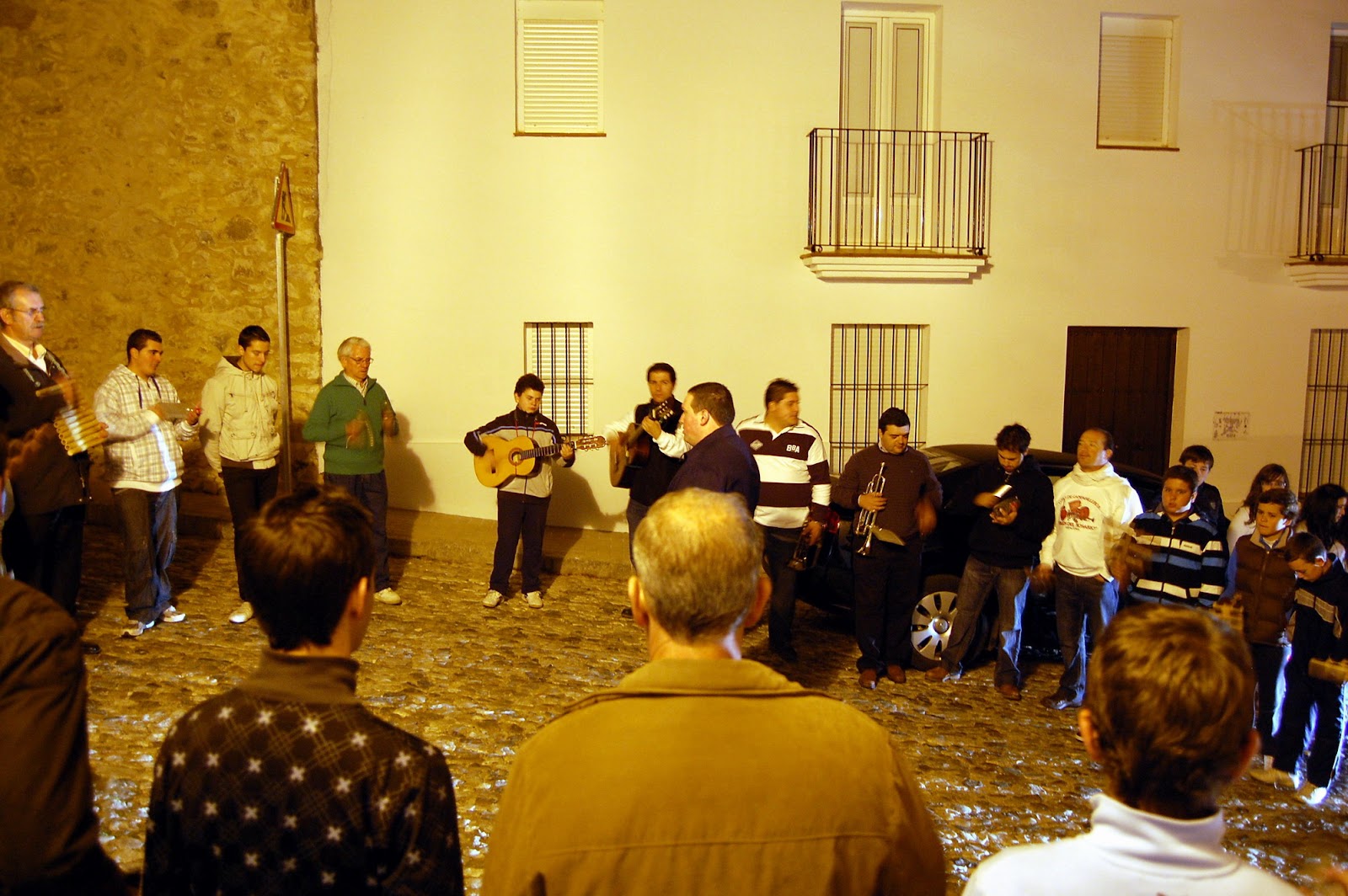
- The instruments have never been frozen in time. The older collection included bells, wooden rattles, the cántaro and the famous espadrille. Later generations introduced the bandurria and guitar, followed eventually by instruments as unexpected as the saxophone, trumpet, and timpani.
The Sound of Bells, Bottles, and an Espadrille
The bells give the campanilleros their name, but they are only one layer of the sound. You may hear guitars and bandurrias carrying the melody, with a triangle marking bright accents. The esquila is a small handbell. A clay water jug, or cántaro, produces a surprisingly deep note when used for percussion. An empty anise bottle has a sharper voice, fizzing beneath the scrape of a spoon.
Then there is the espadrille. Stamped against a suitable surface, it creates a blunt beat that would look slightly absurd in a concert hall and makes perfect sense in a narrow Sierra street. These objects belong to a rural musical tradition in which available household items become part of the arrangement. They also make the choir easy to identify from a distance: you may hear a spoon tap against a glass bottle, joined by the softer thud of an espadrille used for percussion.
The lyrics are usually religious, with references to Mary, the rosary, and local devotion. The copla is a short verse or song, and campanilleros’ coplas can carry a strong sense of place. Listen to how the voices, bells, and improvised percussion overlap instead of expecting every note to sound perfectly matched. A procession sounds alive because the sound changes as it passes through each street. Voices echo from the façades, and instruments drift in and out of earshot as the group moves on.
If you would like to hear the tradition before setting your alarm, the local broadcaster Televicos keeps an archive of campanillero footage recorded in Aracena across several decades. The changing picture quality has become part of its charm; the voices and instruments remain immediately recognisable.
If you are staying in town, you may hear the campanilleros from your accommodation. Imagine opening your window when the singing begins; neighbours may already be listening from their balconies, and some families will come down to meet the choir in the street.
Campanilleros Across the Sierra
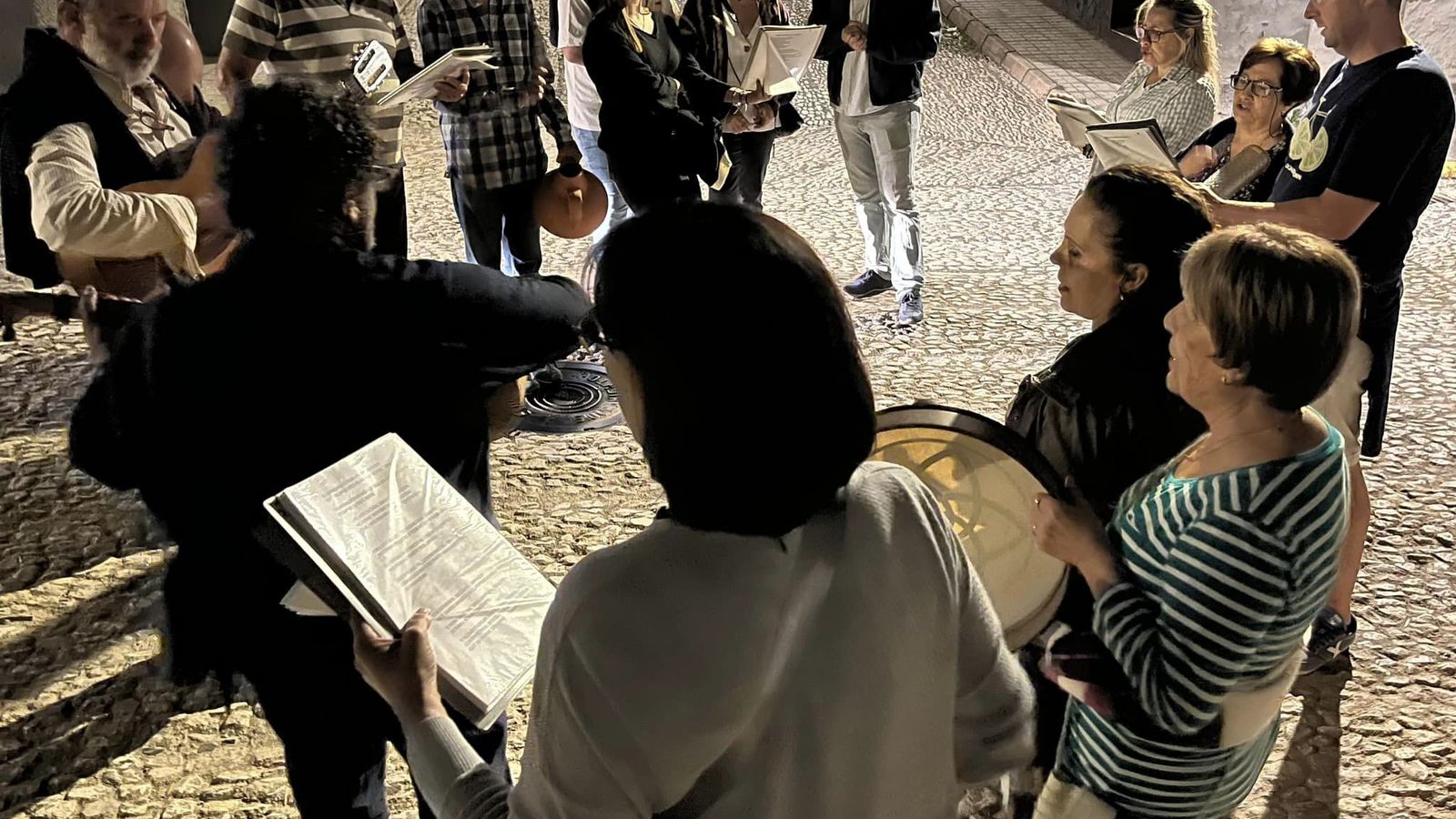
The calendar changes from village to village. In Aracena, the choir is formed by men of different ages and goes out before dawn every Sunday in October. Its accompaniment can include guitars and brass instruments alongside the traditional bells and household percussion.
Galaroza also keeps its campanillero tradition in October, but its choir brings women and men together. Some of its best-known coplas are stories tied closely to local folklore, including one about Philip II visiting Benito Arias Montano at the Peña de Arias Montano: a popular Sierra story that has never been historically confirmed.
Elsewhere, the same style of devotional singing takes place in a different season. Almonaster la Real’s campanilleros perform around the December weekend of the Immaculate Conception, and Corteconcepción’s choir is associated with Christmas. Los Marines and Fuenteheridos have their own groups and customs too. The Turismo Sierra de Aracena feature on campanilleros offers a useful introduction to these local variations.
The tradition extends well beyond the villages mentioned here. A Diocese of Huelva feature on rosaries and campanilleros traces similar groups across the province and describes the remarkable number of coplas preserved in local notebooks and devotional collections.
How to Listen Respectfully
The best approach is to behave like a considerate neighbour who happens to be visiting. Choose a spot at the edge of the street rather than standing in the middle of the route. Keep your voice down while the singers pass. Do not follow so closely that you become part of the procession unless the organisers clearly welcome that.
Photography needs similar care. A quick photograph from a respectful distance may be acceptable, but ask before making a close portrait or recording someone for a long stretch. Avoid bright lights and flash in the dark. If a service or prayer is taking place, put the camera away and let the religious moment take priority.
Wear proper shoes and a warm layer. October can feel cold in the hills, especially standing still before dawn. A waterproof jacket is sensible, and a small flashlight helps you walk safely without shining it into faces. Do not expect cafés or shops to be open at that hour; plan your return route and breakfast separately.
When and Where to Hear the Choir in 2026
The Ayuntamiento’s 2026 festive calendar currently lists the Ronda de Campanilleros and Rosario de la Aurora on October 4, 11, 18 and 25. Treat that as a planning reference, not a promise of an exact meeting point or departure time. Routes, parish arrangements, and weather responses can be updated.
Check the Ayuntamiento’s events pages and the parish or local brotherhood’s announcements shortly before your visit. The Explore Aracena events calendar may help you see how the dates fit with other October activities, while the October guide to the Sierra explains the wider seasonal context. The town’s guide to getting to Aracena is useful if you are arriving for a weekend.
The final Sunday traditionally has a particularly strong destination: the rosary climbs towards the castle and the Santa Misa is held at the Prioral church. That does not mean every visitor should race uphill behind the group. Look up the route in advance and arrive before the procession reaches the hill. You can then find a comfortable place to watch without blocking the people making the climb. If you are staying elsewhere in the Sierra, do not assume that Galaroza, Almonaster la Real, or Corteconcepción will follow Aracena’s October pattern.
Wherever you watch from, give yourself time to take in more than the procession itself: the sound of the bells, families gathering along the streets, and the castle above it all. These are deeply local traditions, and witnessing them with a little patience and respect is part of what makes an October visit to Aracena so memorable.
A Short Glossary
- Campanillero: A singer or member of a choir that performs the bell-accompanied devotional rounds.
- Rosario de la Aurora: A dawn rosary prayed in procession through the streets.
- Copla: A short traditional verse or song; campanillero coplas often carry religious and local references.
- Esquila: A small bell used to mark the rhythm and announce the choir.
- Bandurria: A small, high-pitched Spanish plucked string instrument, related to the lute family.
Find your corner before dawn and wait beneath the nearest streetlamp. In the darkness you will hear bells ringing as the choir approaches. Between verses, you can hear the singers drawing breath before sending the next copla along the street.
After dawn, the town will start its normal routine; cafés begin serving coffee and shutters rise across the town.
You will leave knowing Aracena will never sound quite the same to you again.
FAQ’s About Aracena’s Campanilleros
What are the campanilleros of Aracena?
The campanilleros are a traditional male choir that sings religious coplas through Aracena’s streets before dawn. Bells accompany the voices alongside guitars, homemade percussion and instruments associated with the Sierra’s rural musical heritage.
When can you hear the campanilleros in Aracena?
They traditionally make their rounds during the early hours of every Sunday in October. In 2026, the published dates are October 4, 11, 18 and 25. Check the Explore Aracena events calendar and current municipal announcements before travelling, as routes and arrangements may change.
What time does the Rosario de la Aurora begin?
The Ayuntamiento describes the campanillero round as the prelude to the Rosario de la Aurora, which begins at approximately 6:00 a.m. The choir starts singing earlier, so confirm the expected route and meeting details locally if you hope to hear the full round.
Where is the best place to hear the campanilleros?
The route passes through different streets and neighbourhoods rather than remaining in one fixed location. Ask locally where the choir is expected that Sunday and arrive before it reaches your chosen corner. On the final Sunday of October, the procession traditionally climbs towards the Iglesia Prioral del Castillo.
Can visitors attend the Rosario de la Aurora?
Yes. Visitors may listen respectfully from the side of the street or attend the rosary and subsequent service. Remember that this is an active religious devotion rather than a performance arranged for tourists.
Can I photograph or record the campanilleros?
Discreet photography from a respectful distance may be acceptable. Ask before taking close portraits, avoid flash and do not obstruct the singers or congregation. Cameras should be put away during prayers or any moment when the people around you clearly turn their attention towards worship.
Are campanilleros found elsewhere in the Sierra de Aracena?
Yes, although each community follows its own calendar and customs. Galaroza has a mixed choir of women and men, and traditions also continue in Fuenteheridos, Almonaster la Real, Corteconcepción and Los Marines. Do not assume that every village performs in October or follows Aracena’s route.
Is the tradition suitable for children?
Families can attend, but the hour requires some preparation. Dress children warmly, bring a small torch for walking and choose a safe place away from the procession route. The unusual instruments can make the experience particularly memorable for younger listeners.
What should I wear to hear the campanilleros?
October mornings in Aracena can be cold or damp before sunrise. Wear comfortable shoes and bring a warm layer or waterproof jacket. You may spend a considerable amount of time standing outdoors before cafés begin to open.