Aracena Feria del Jamón 2026: Our First-Hand Review
Aracena Feria del Jamón 2026: Our First-Hand Review
We spent a lively day at Aracena’s 2026 Feria Regional del Jamón, from the Cruzcampo pouring competition to the jamón pavilion and family tables outside. Here is what we found, what we tasted and the practical advice that would make our next visit easier.
Traffic is one of the first signs that feria weekend has arrived in Aracena. The town is normally easy to approach by car, but that changes when thousands of people arrive with plans to eat jamón, meet producers and spend the afternoon together.
We attended the 2026 edition of the Feria Regional del Jamón y del Cerdo Ibérico, held across two weekends from October 16th to 18th and October 23rd to 25th. It was busy, delicious, and deeply connected to the food culture of the Sierra.
We also learned a few things for next time. Plan to arrive earlier than expected, as traffic and parking will add time to the journey. Read the programme beforehand and choose the activities you most want to see. Although we were very happy with our lunch reservation, we fully intend to rent a table at the feria next year and join the feast.
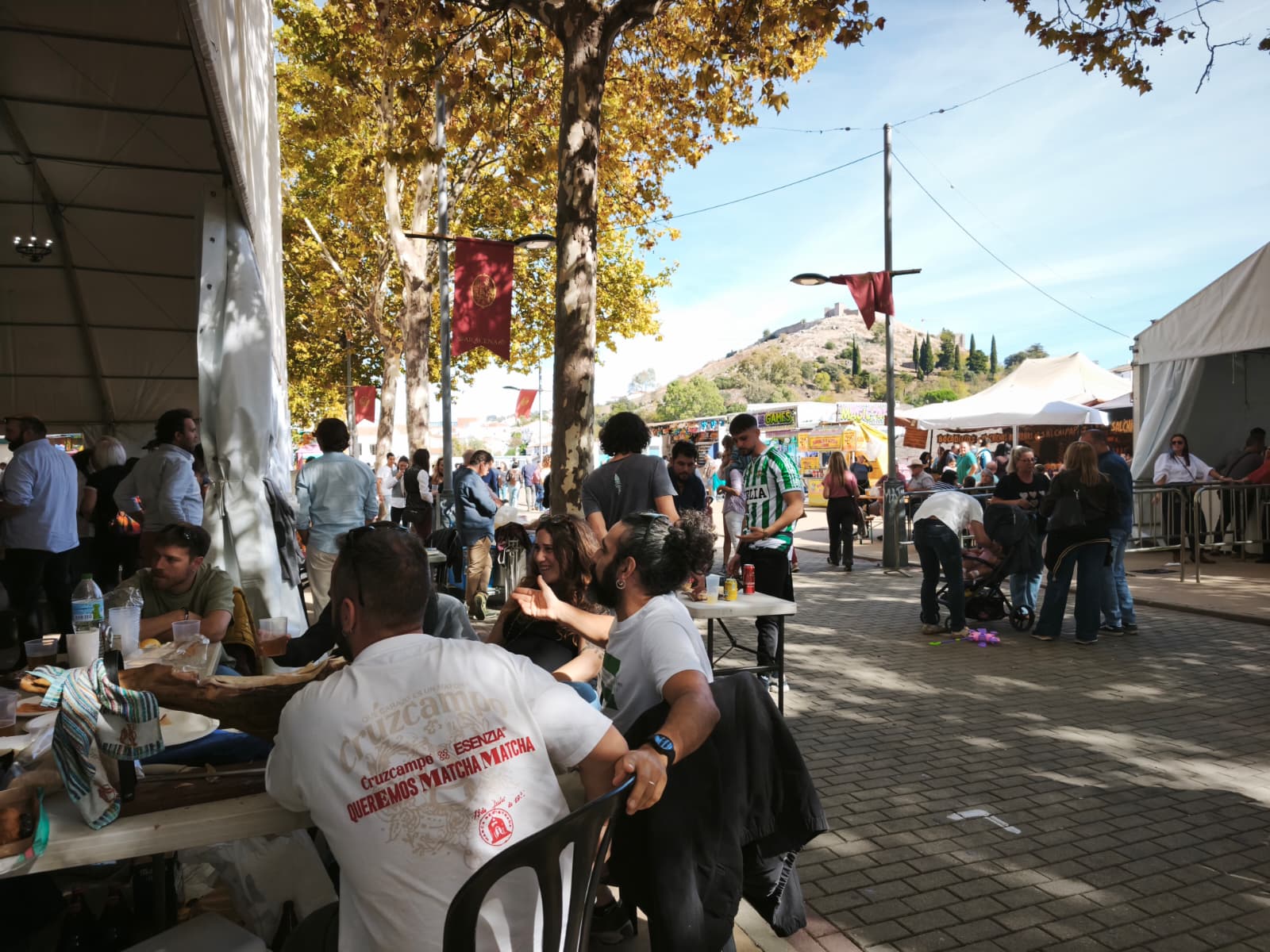
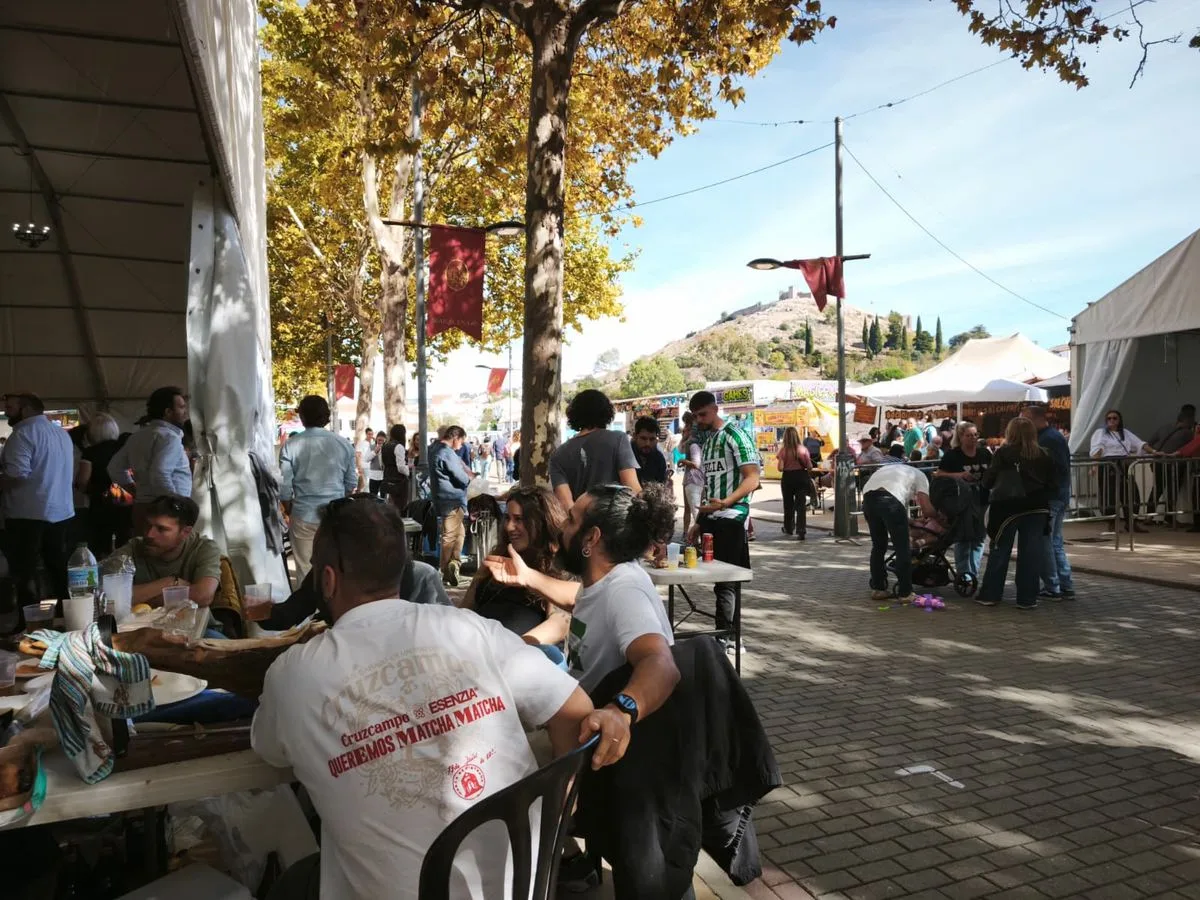
Aracena gathers around the table for the Feria del Jamón. Producer tents line the street, families share food at rented tables and the castle remains visible above the celebration.
The Feria at a Glance
When: Two weekends in late October; confirm each year’s dates before planning your visit
Where: Recinto Ferial de Aracena
What you’ll find: Jamón and regional food producers, tastings, demonstrations, competitions and family activities
When to arrive: Earlier than your first scheduled activity to allow time for traffic and parking
Where to park: Outside the busiest central streets, then continue to the fairground on foot
Food plans: Reserve a restaurant or check the current arrangements for renting a table at the feria
Before you go: Read the official programme and event information and choose the activities you most want to see
Good to know: Bring a bag for purchases and ask vendors about refrigeration or vacuum packing
The 2026 feria took place over two weekends. Here's a look at what was scheduled throughout the celebration:
First Weekend: October 16–18, 2026
Friday, October 16
12:00 — Fairground opens and official inauguration
19:00 — Food stalls and exhibitors close
23:00 — Fairground closes
Saturday, October 17
11:00 — Fairground opens and Canal Sur Radio begins its live broadcast
13:00 — Jamón-slicing demonstration by Miguel Prieto Mora
19:00 — Live music from Komando Solera
20:00 — Food stalls and exhibitors close
22:00 — Traditional pork-product tasting at Plaza de San Pedro
00:00 — Fairground closes
Sunday, October 18
11:00 — Fairground opens
12:00 — DOP Jabugo sensory tasting at the Museo del Jamón
12:00 — Traditional Iberian pig butchery demonstration
13:00 — XXIX Jamón Slicing Competition
18:00 — Fairground and exhibitors close
Second Weekend: October 23–25, 2026
Friday, October 23
12:00 — Fairground opens
12:00 — Livestock industry conference and live cooking demonstrations
19:00 — Food stalls and exhibitors close
21:00 — Iberian Jamón Gala at Teatro Sierra de Aracena
23:00 — Fairground closes
Saturday, October 24
11:00 — Fairground opens
13:30 — Cruzcampo’s Cañón Perfecto beer-pouring competition
19:00 — Live music from The Vampiro’s Rock Band
20:00 — Food stalls and exhibitors close
22:00 — Traditional pork-product tasting at Plaza de San Pedro
00:00 — Fairground closes
Sunday, October 25
11:00 — Fairground opens
12:00 — DOP Jabugo sensory tasting
12:00 — Traditional Iberian pig butchery demonstration
13:00 — Jamón-slicing demonstration by Miguel Prieto Mora
17:30 — Su Peso en Jamón prize draw
18:00 — Fairground and exhibitors closeWhy Aracena Has a Feria del Jamón
Jamón holds an important place in the Sierra because the entire landscape participates in its production. Iberian pigs are raised across the dehesa, the open woodland of holm and cork oaks surrounding Aracena. During the montanera, pigs destined to become jamón de bellota forage beneath the trees as the acorns fall.
The industry has supported families across the Sierra for generations. Knowledge of the animal continues through the curing houses, where salt, temperature and time determine the final product. Towns including Jabugo, Cortegana, and Cumbres Mayores have built international reputations around this work, and the protected DOP Jabugo preserves its connection to the region.
Aracena’s first Fiesta del Jamón took place in 1967 in Plaza Marqués de Aracena. The regional feria in its current form began in 1996, created to support the ibérico sector and bring greater recognition to the businesses behind it. The 2026 event marked thirty years since that first modern edition.
This history explains why the feria attracts visitors from well beyond the Sierra. It places numerous producers within the same fairground and gives you the chance to compare their work directly. Our full visitor guide to the Feria del Jamón explores the dehesa, jamón classifications and the wider programme in more detail.
Parking in Aracena During the Feria
The traffic entering Aracena was noticeable rather than overwhelming, but it was enough to alter the usual arrival.
We followed the advice we regularly give our readers and left the car farther out from the centre. Aracena is compact enough to continue on foot, and walking saved us from circling streets that were already filling quickly.
If you are planning to attend a future edition, look through the programme before leaving home. Demonstrations and competitions take place at specific times, so it helps to know which ones you would be disappointed to miss. You can then wander through the rest of the feria without worrying about the time and simply enjoy the atmosphere.
The main activities take place at the Recinto Ferial, on Avenida Reina de los Ángeles.
Watching Aracena Compete for the Perfect Pour
We arrived in time to catch part of Cruzcampo’s Cañón Perfecto competition. Representatives from local bars and businesses stepped forward to pour their best glass of beer, with each establishment introduced before its turn.
The competitors were representing places that people in Aracena actually visit. Every name carried its own local familiarity, and the audience followed along with real interest. It was fun, slightly competitive and an excellent way to spotlight the businesses serving the town throughout the year.
Long tables filled the tent in front of the competition area. People had already settled in with food and drinks, so the contest became part of a much larger lunch rather than an isolated performance.
At the far end, several cortadores worked continuously. Fresh plates of jamón left their knives almost as quickly as they could prepare them. Two bar areas served additional food and drinks, which made it very easy to claim a seat and remain there for the afternoon.
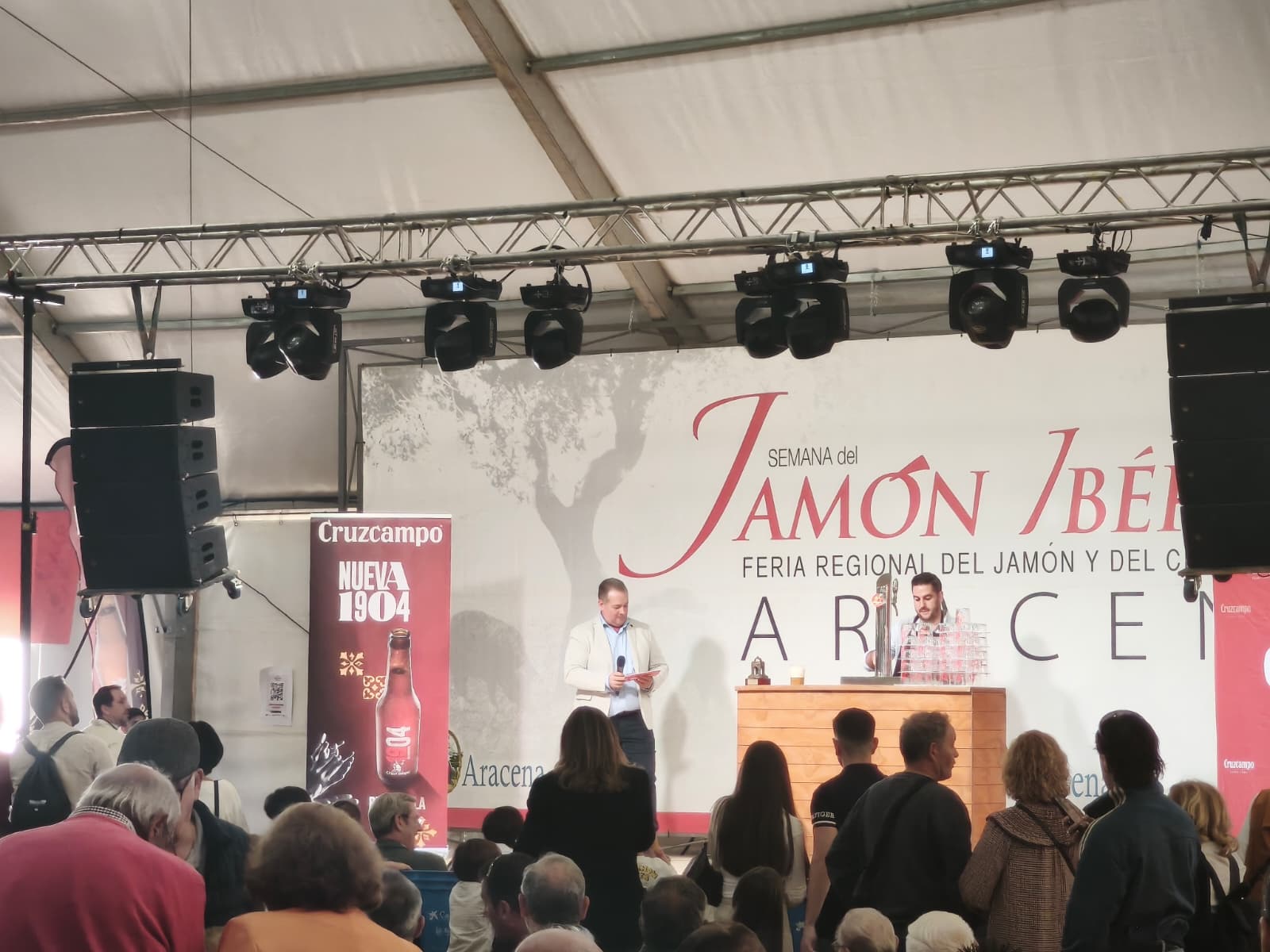
A local competitor puts their pouring skills to the test during Cruzcampo’s Cañón Perfecto competition.
The Producers Who Made An Impact
One section of the feria was devoted to artisan producers. This became one of our favourite parts of the day.
Samples may draw you towards a stand, but conversation keeps you there. The producers we met were eager to explain where their ingredients came from and how their businesses began. Their pride was infectious, particularly when a question gave them the chance to discuss an unusual flavour or a family tradition.
Finca El Fresnal
Finca El Fresnal gave us one of the warmest encounters of the day. The couple behind the project invited us to sample several of their artisanal drinks and spoke openly about the business they have built together.
They are veterinarians, and what began as a personal passion has developed into a range of wines and spirits inspired by the Sierra. We tried their gin and almond liqueur, passing small tasting cups between us as they talked through the different bottles on the table.
Their wider project began with a family chestnut grove. After unexpectedly losing their chestnut production, the founders brought their drinks to Aracena’s feria and found their first enthusiastic audience there. Their return as exhibitors, therefore, has a meaningful connection to the event itself. It now includes chestnut liqueur and cream, citrus-infused spirits, and aromatised sweet wines. Part of the business also supports the care of black Merino sheep, an endangered native breed.
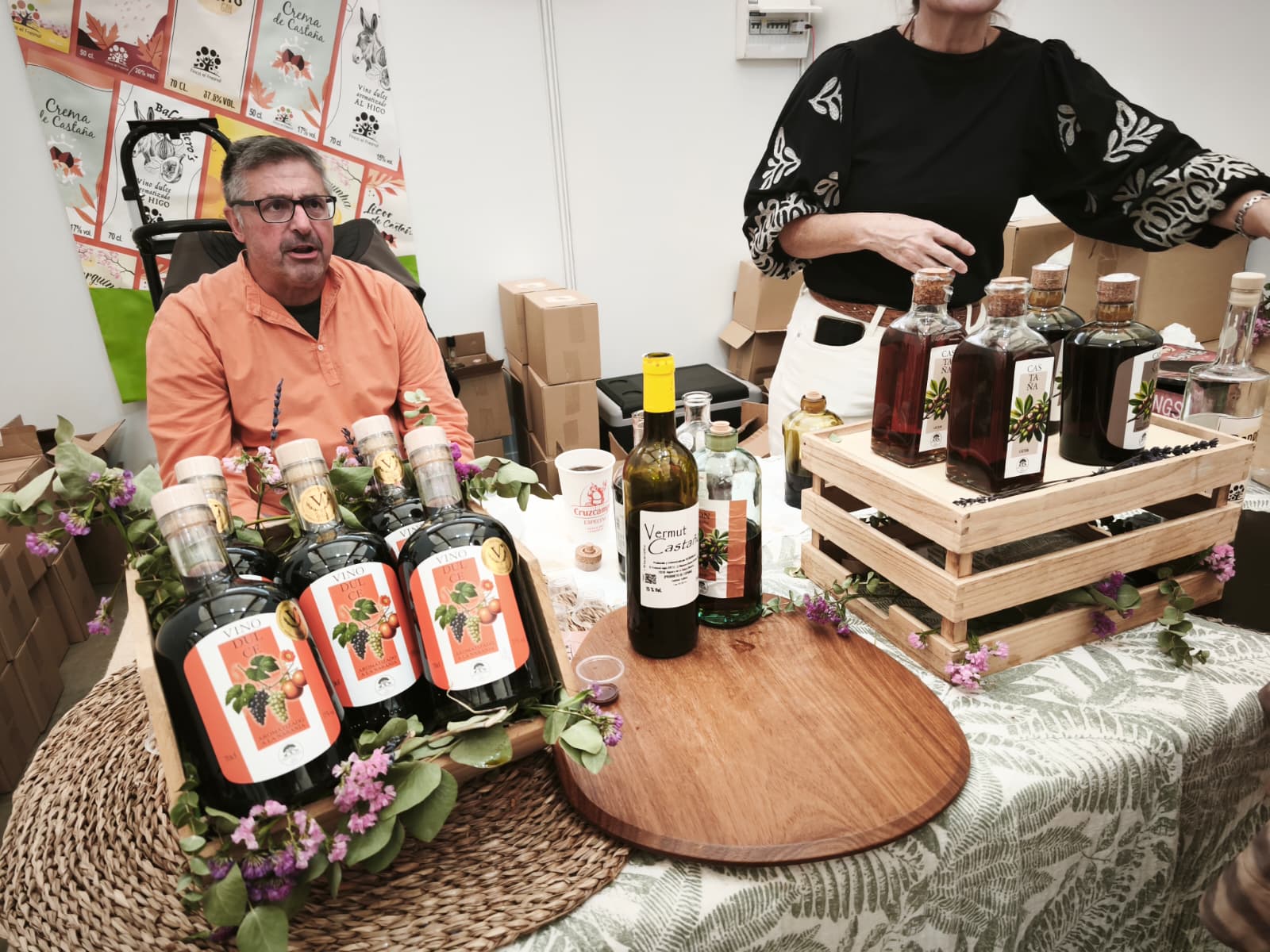
The couple behind Finca El Fresnal introduced us to their wines and spirits, sharing the story of a project that began with their family chestnut grove.
There is a special connection made when you hear these stories face-to-face. A bottle you may have otherwise bought for its flavour now carries the history of the people who made it and the animals their work helps protect. The purchase feels personal, rooted in a genuine exchange between producer and visitor.
AOVE Hojanegra
The Hojanegra stand turned olive-oil tasting into a wonderfully uncomplicated pleasure: small pieces of bread and several oils to compare.
We tried a picante oil and loved the peppery warmth that followed the first taste.
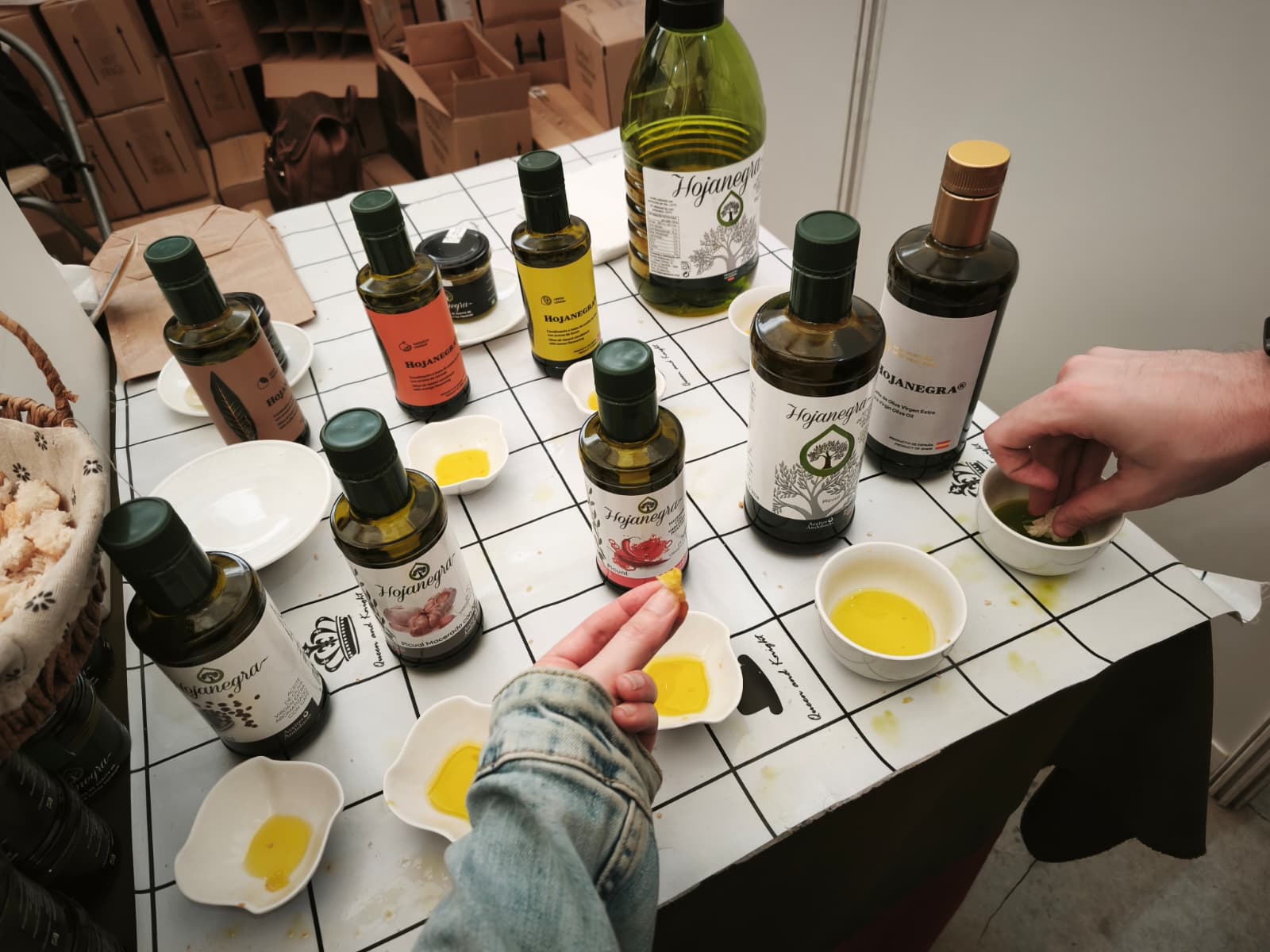
Comparing olive oils at the Hojanegra stand, where pieces of bread made it easy to notice the differences between each variety.
Hojanegra is produced by Aceites Andolucas, a family business based in La Carolina in Jaén. Its presence also showed that the feria reaches beyond Aracena, bringing other producers into the wider conversation around Andalusian food.
Monte Robledo
We were also delighted to find María Jesús Rodríguez and Monte Robledo among the exhibitors. Their family-run business produces goat cheese in Aracena, and its roots reach back through generations of cheesemaking in the Sierra.
Having already explored their work for our guide to the Monte Robledo farm and cheese workshop, it was wonderful to find such an important part of the region’s food story at the feria. María Jesús remembered us, and we had the chance to catch up with her at the stand. Encounters like this are part of what we love about returning to Aracena: with each visit, you recognise more faces and feel your connection to the town taking root.

María Jesús Rodríguez and her family surrounded by Monte Robledo cheeses. It was wonderful to find familiar faces and catch up with them at the feria.
The artisan area gave us time to meet the people behind the products. Tasting was only the beginning. Every conversation taught us something about the ingredients and the work required to bring them to the table.
Inside the Jamón Pavilion
The pavilion was where jamón reclaimed the full attention of the feria.
Counters were lined with jamones, paletas and cured meats from different producers. Cutters worked in full view, their knives moving through one leg after another as plates and packets were prepared.
We were happy to find the team from Jamones y Embutidos Niño Manuel among them. We first met them during the day recorded in our walking tour from Aracena’s market to the castle, when the owner noticed us taking photographs outside and invited us into the shop. At the feria, we had another chance to speak with them and see their work represented among producers from across the region.
We bought sliced jamón in vacuum-packed portions to take home. It was easy to carry and gave us the opportunity to compare producers before choosing. If you are travelling, ask how the product should be stored and how long it can remain unrefrigerated.
You do not need to arrive already fluent in classifications and curing methods. Ask where a jamón comes from or how long it has been cured. A good producer will help you understand what you are tasting without making the conversation feel like an examination.
Our guide to jamón ibérico in Aracena explains the coloured seals and production terms in more detail. Reading it beforehand will make those conversations easier, although tasting several options remains the most enjoyable form of research.
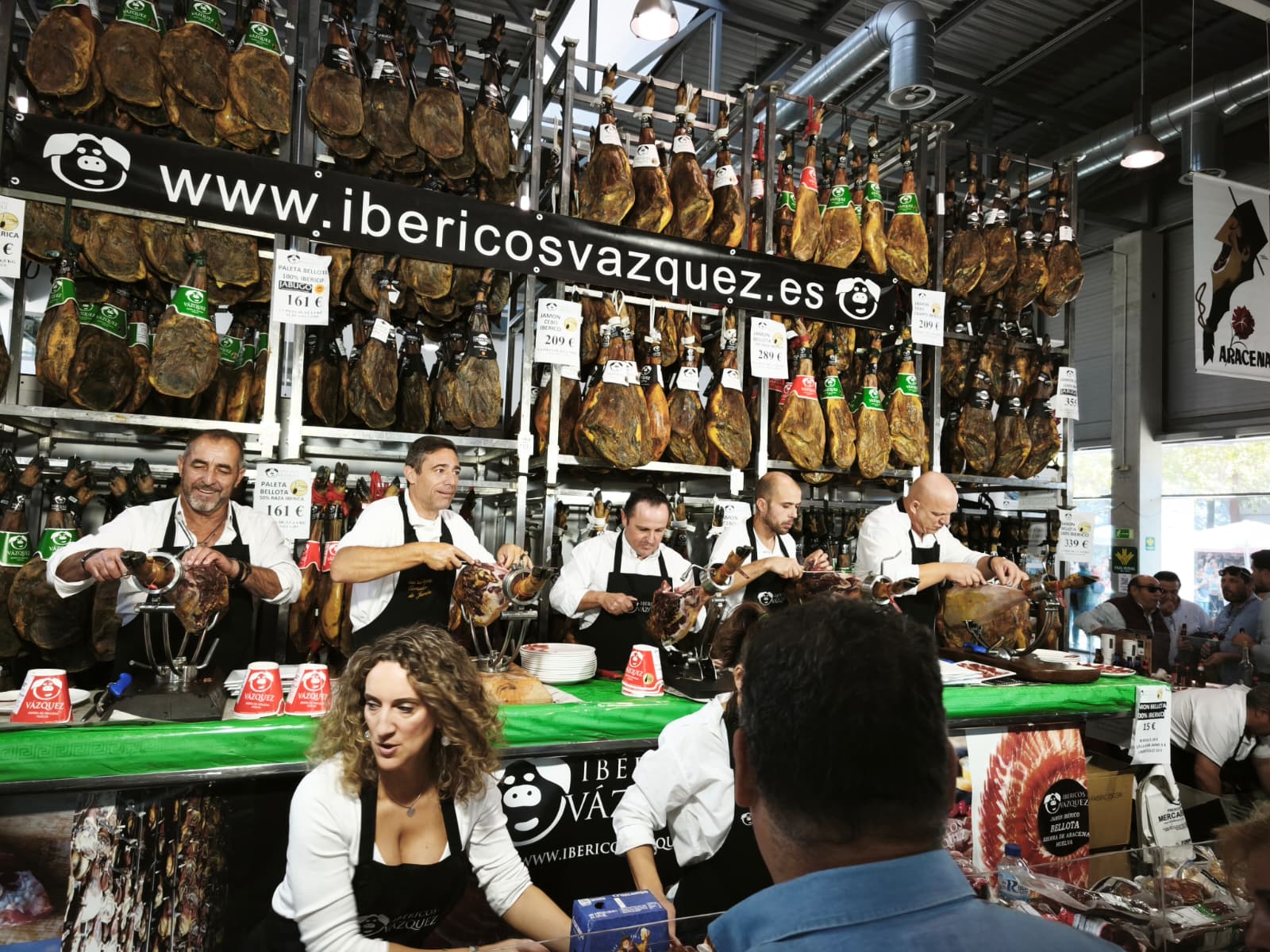
Five cortadores work side by side inside the jamón pavilion, preparing a continuous stream of freshly sliced plates.
Around the Feria Grounds
The atmosphere outside the pavilion was joyful and exciting. Food and drink moved freely between the stalls and the gathering areas, where rented tables filled the nearby streets. People stopped to greet friends on their way through, often with a plate or cold beer in hand.
Families and groups of friends bought food inside the feria and brought it back to the table. Some had an entire leg of jamón or paleta, secured in its stand and ready to be carved throughout the afternoon.
At the 2026 event, a table could be rented for just one euro. Check the current arrangements before attending a future edition, but we loved how much freedom this gave everyone. You could pick up jamón from the pavilion, add something from the food counters, and return to your table whenever you were ready.
We had already reserved lunch elsewhere and were very happy with that decision. Still, the tables gave us an immediate plan for next time: rent one, choose our food as we walk through the feria, and spend the entire day there.
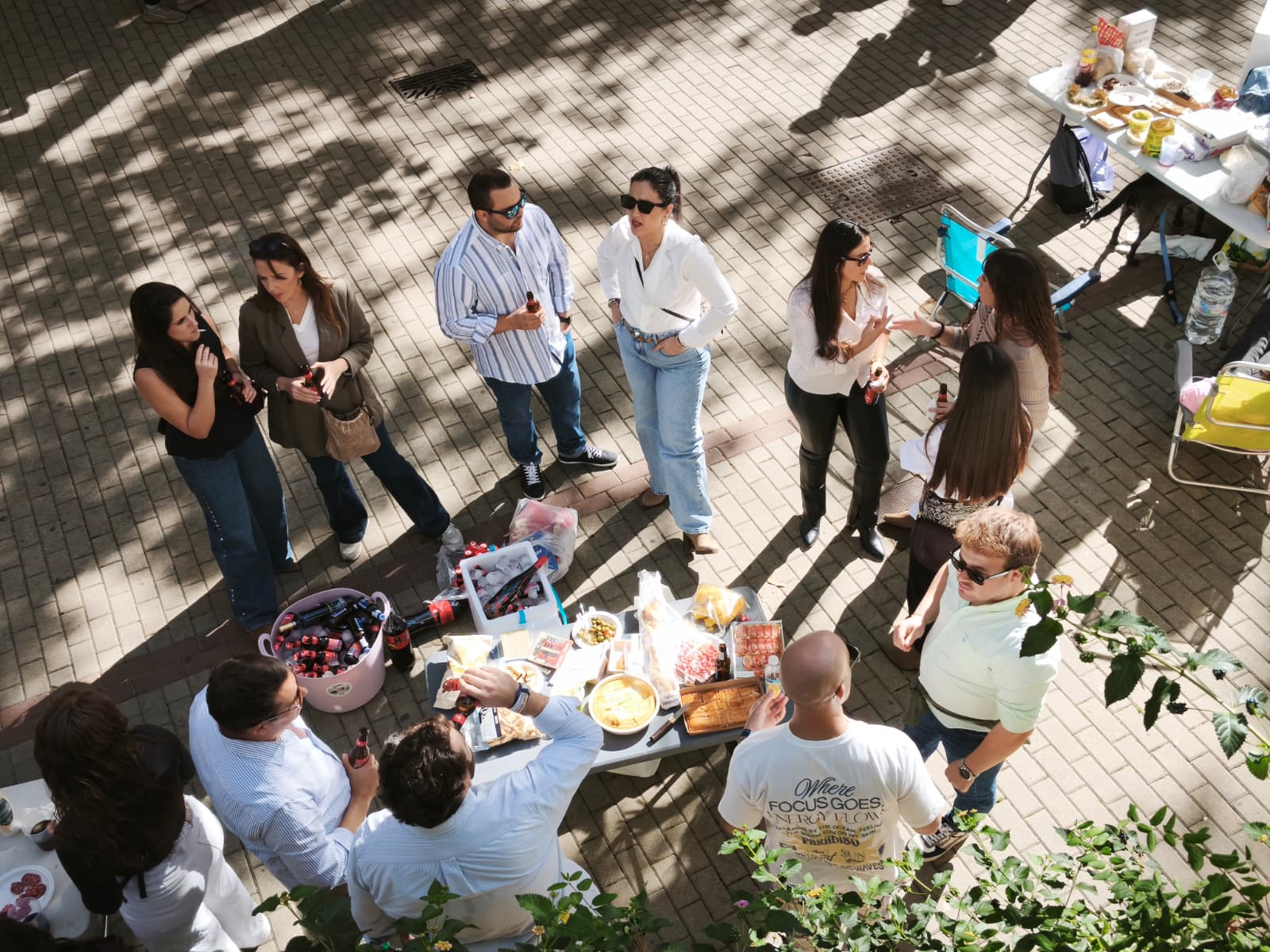
The rented tables were one of our favourite discoveries. Groups arrived ready to share jamón, cheese and empanadas over buckets of cold beer.
Is the Feria del Jamón Family-Friendly?
Very much so. Children were included in the event rather than simply expected to follow their parents between food stands.
A large area had been set aside for inflatable castles, games, and fairground-style attractions. It gave children somewhere to play and made it easier for families to spend a substantial part of the day at the recinto.
The shared tables are especially useful when visiting with younger children. Families can bring familiar food, sit down whenever needed, and return to the activities at their own pace.
We would recommend arriving earlier in the day. The grounds are easier to navigate before the largest crowds gather, and you will have a better chance of finding a table. Check the annual programme for children’s activities and confirm whether the attractions require separate payment.
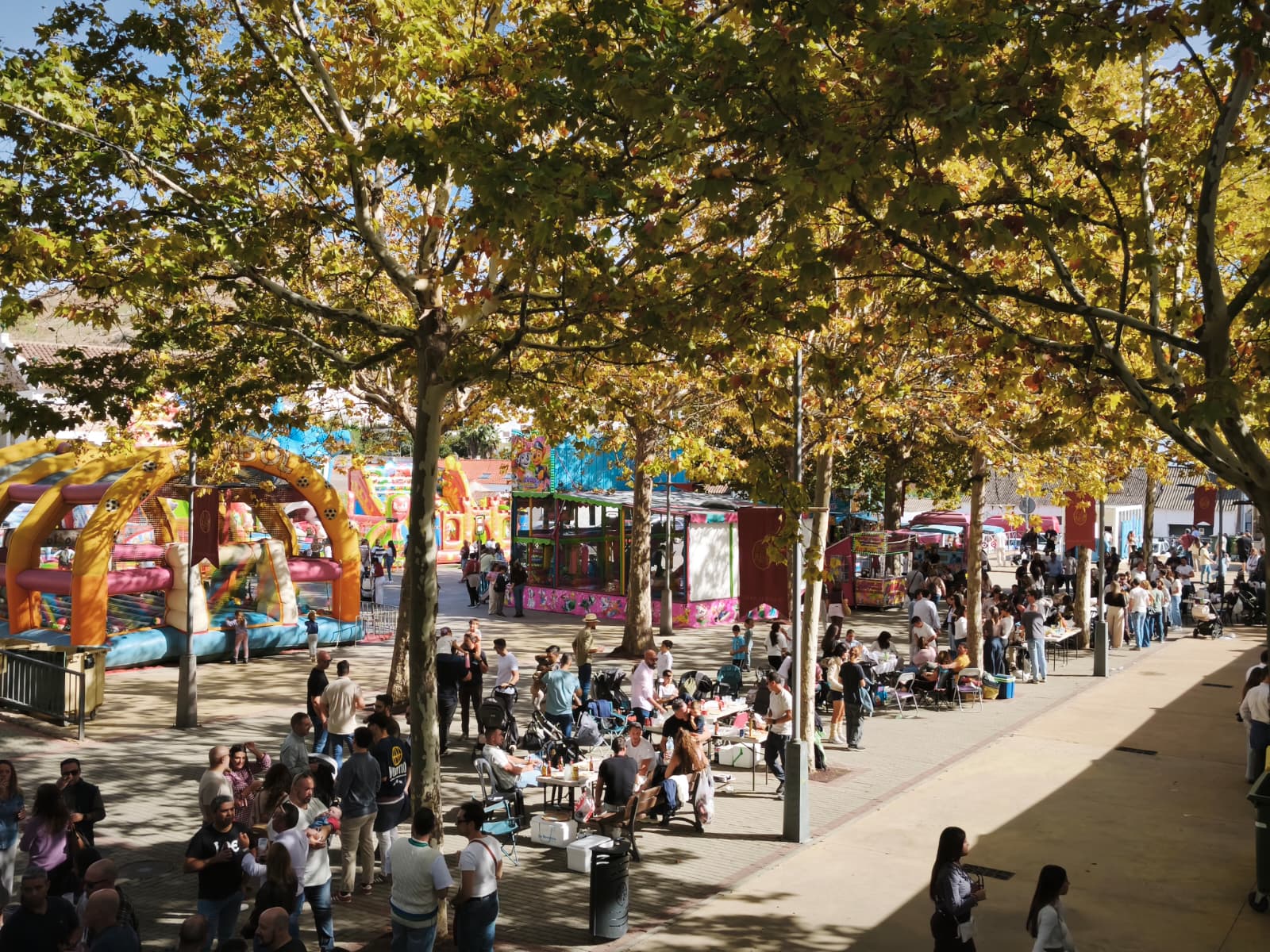
The feria makes room for the whole family, with children’s games and inflatable attractions beside the streets of shared tables.
What We Would Recommend for Your Visit
Arrive early. Allow extra time for traffic and leave the car outside the busiest streets.
Read the programme first. Choose the competitions or demonstrations you most want to see and plan your arrival around them.
Make a lunch decision in advance. Reserve a restaurant or check the current arrangements for renting a table at the feria.
Spend time with the producers. The conversations at the artisan stands were among the most memorable parts of our visit.
Bring a bag for purchases. Ask vendors about vacuum packing, refrigeration and how to transport food safely.
Accept that you will not see everything. The feria is far more enjoyable when you are free to stop for a tasting or remain at a table longer than expected.
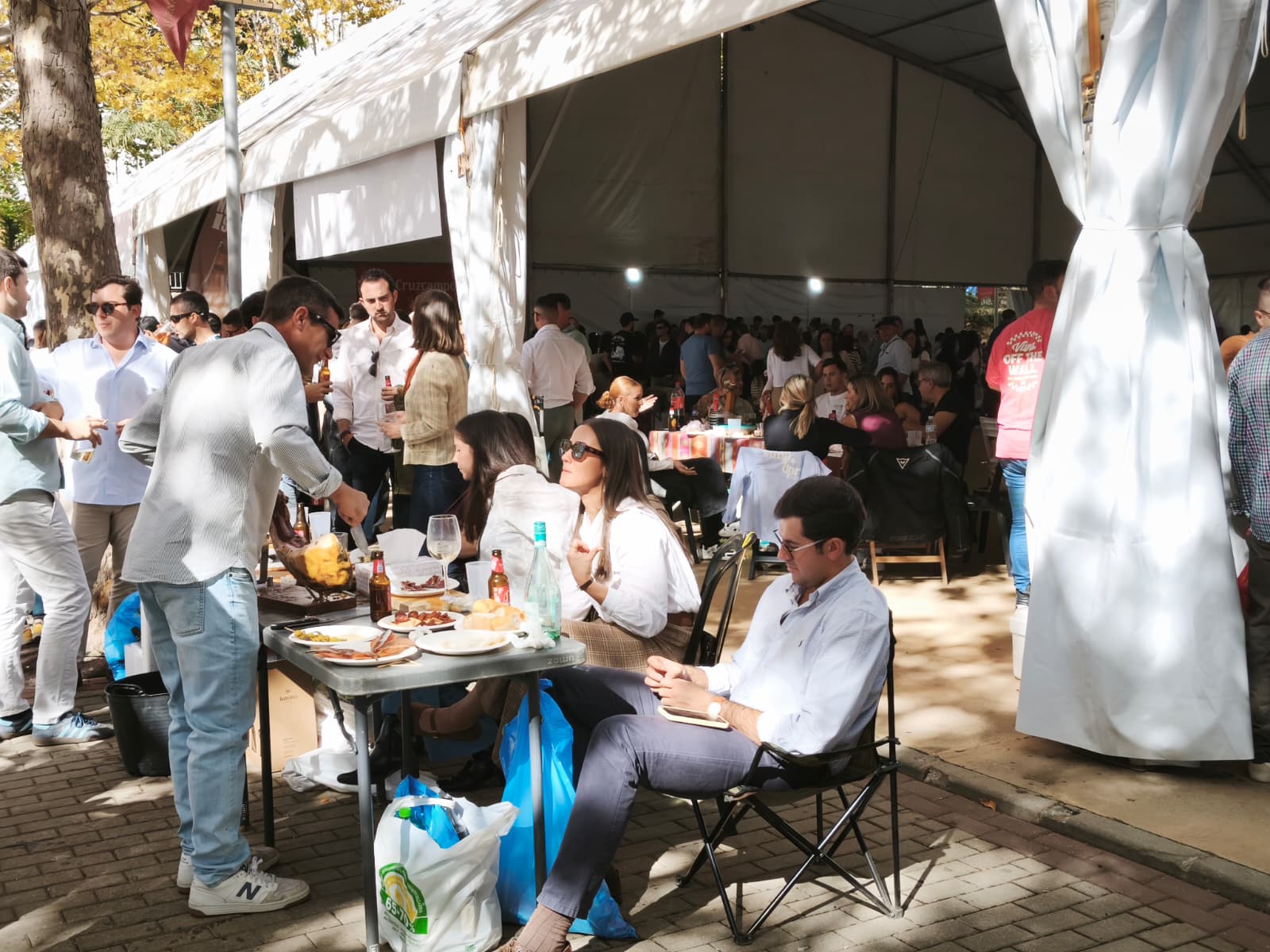
A final view of the feria as we experienced it: jamón being carved at the table and friends settling in to enjoy the celebration together.
Would We Return?
Without hesitation, and next time, we are renting that table.
The traffic and parking need some forethought, but the rest of the day is remarkably easy to enjoy. Food is everywhere. Producers are ready to talk, and the public areas are arranged for people who intend to stay for more than a quick circuit of the stands.
The local community among the feria grounds was something magical to observe.
Jamón is the reason thousands of people come to Aracena for the feria. Once you enter the fairground, the celebration grows around it. Producers meet the people buying their work, and families make themselves comfortable around tables filled with food from home. Visitors are welcomed into that same atmosphere. Next year, we will be back with a rented table of our own.