Secret Nature Spots Near Aracena Locals Love
Secret Nature Spots Near Aracena Locals Love
Want the quieter side of the Sierra de Aracena? These low-key nature spots near Aracena are local favourites — shaded stream paths, chestnut woods, peaceful viewpoints, and easy valley walks that fit into half a day.
Secret Nature Spots Near Aracena Locals Love
Aracena’s best-known attractions deserve their reputation. The Gruta de las Maravillas is extraordinary, the castle offers some of the finest views over the town, and no visit feels complete without experiencing the region’s deep connection to jamón ibérico.
But these celebrated landmarks only tell part of the story.
The Sierra de Aracena is a landscape you come to understand in time, and the curiosity of getting to know the region. It reveals itself along old walking paths, beneath chestnut trees, beside seasonal streams and in peaceful clearings where local families have gathered for generations.
Some of our most memorable moments here haven’t involved a major attraction at all. They have been simple afternoons spent beneath the trees, picnics beside the water and walks where the only sounds were birds, distant livestock and the movement of leaves overhead.
If you want to discover the quieter side of the Sierra, these are some of the nature spots near Aracena that we recommend slowing down for.
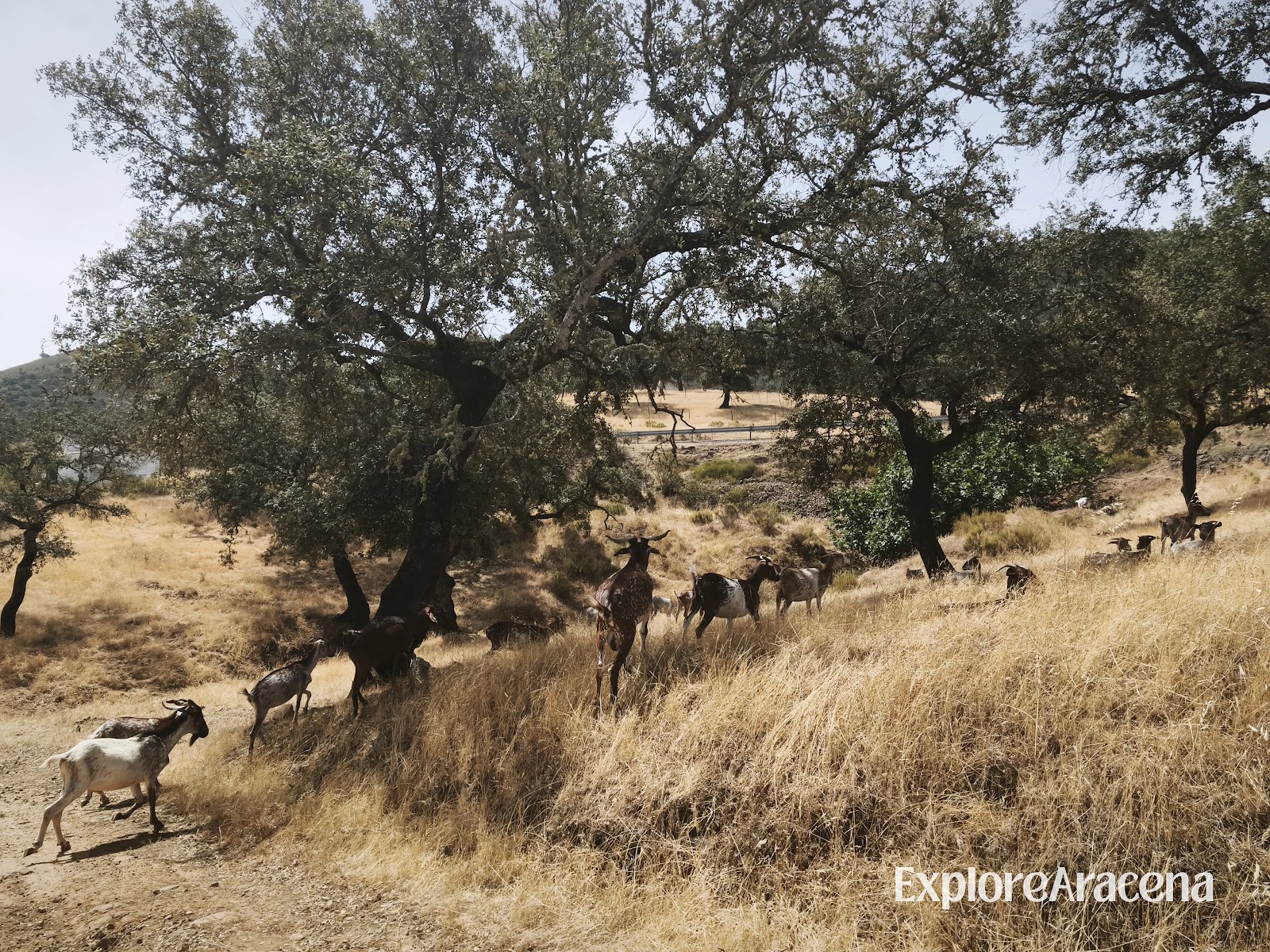
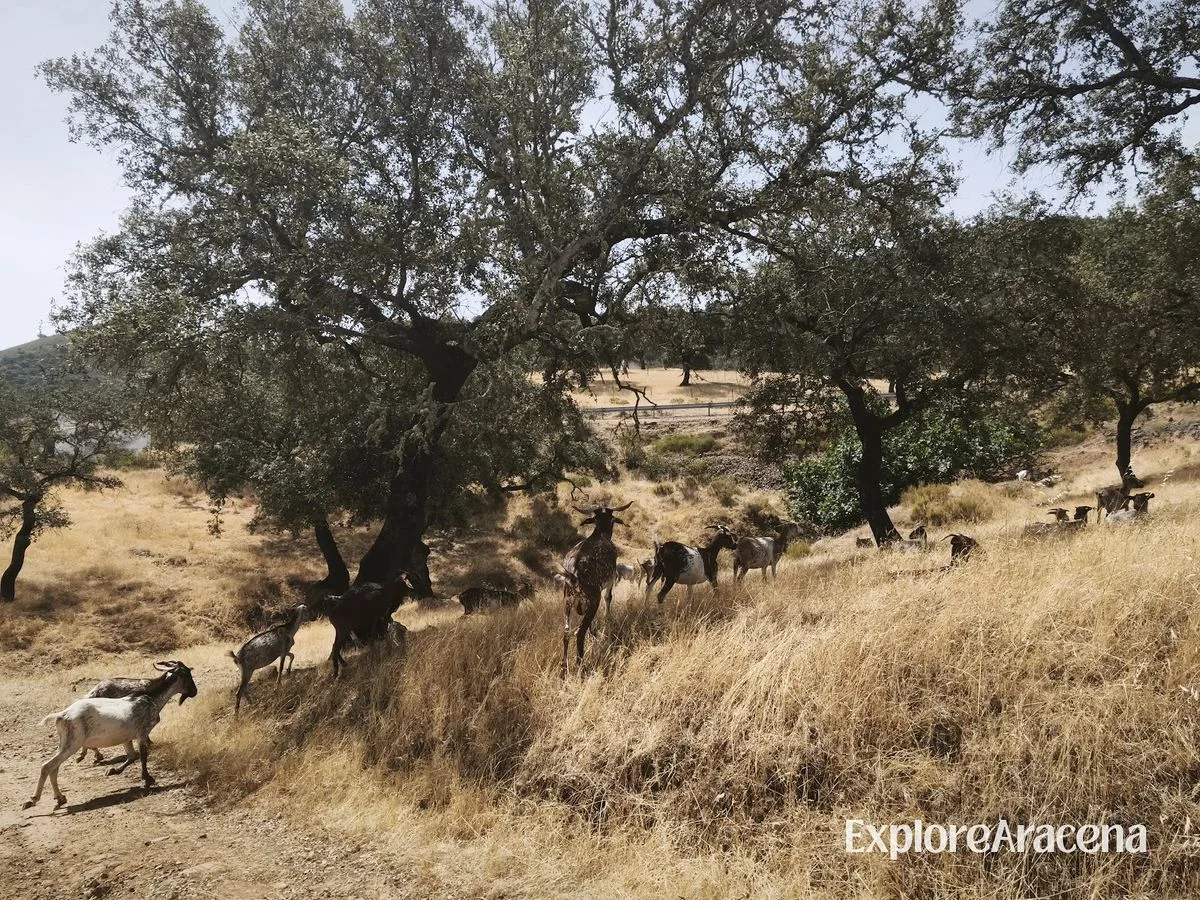
Goats wander freely through the golden landscape, offering a glimpse of rural life in the Sierra de Aracena.
Descansadero de Marimateos: Our Favourite Place for a Picnic Near Aracena
If you’re looking for an easy nature escape without committing to a long hike, the Descansadero de Marimateos is one of the most enjoyable places to begin.
Located around three kilometres outside Aracena, this traditional resting place occupies approximately two hectares beside the Arroyo de Marimateos. Historically, a descansadero was a place associated with livestock routes where animals and the people moving them could pause during a journey. Marimateos is connected to the Vereda de Sevilla, an old livestock trail running between Fuenteheridos and Aracena.
Today, the area continues to serve much the same purpose, although now it is walkers, families and groups of friends who come here to rest.
When we visited, we brought a picnic and allowed the afternoon to unfold without much of a plan. That is exactly how we think Marimateos is best experienced. You don’t come here to rush between sights. You come to find a place beneath the trees, unpack some local bread, cheese, fruit or pastries and enjoy being outside.
The recreational area has picnic tables, benches, a children’s play area and waste containers. A wooden barrier separates the visitor area from the stream, making the space feel organised without taking away from its natural setting.
The presence of the Arroyo de Marimateos makes the area especially pleasant. This is also where the source of the Río Odiel has traditionally been identified, emerging through a small stone-protected spring before feeding into the stream. The water brings an added sense of life to the landscape, particularly during greener periods of the year.
Marimateos also has an interesting connection to Aracena’s local traditions. Until relatively recently, it hosted the Quema de la Cebolla, an annual event marking the end of Carnival. This history helps explain why the area feels less like a formal tourist attraction and more like a place that belongs to the community.
Why we recommend Marimateos:
It’s only a short drive from Aracena.
Picnic tables and benches make it easy to stay for an afternoon.
The stream and surrounding trees create a peaceful natural setting.
It works well for families and travellers who don’t want a long hike.
You can bring local bread, cheese, fruit and pastries for an easy Sierra picnic.
Planning your picnic
Spring and autumn are particularly beautiful here, when the surrounding landscape is green and temperatures are comfortable enough to linger. In summer, when finding cooler places near Aracena becomes part of planning the day, we recommend arriving early or later in the afternoon and choosing a well-shaded table.
Bring drinking water rather than relying on the natural source, as water from springs and fountains in rural areas may not be treated. We would also bring everything needed for the picnic itself; Marimateos is somewhere to arrive prepared rather than expecting cafés or shops nearby.
Although the area was historically equipped with barbecues, fire restrictions apply throughout the Sierra. The use of fire is prohibited during periods of very high or extreme wildfire risk and, at minimum, between June 1st to October 15th. A cold picnic is the simplest and safest choice.
Most importantly, take everything away with you or use the containers provided. Marimateos remains special because it is still treated as a shared local space rather than a heavily managed attraction.
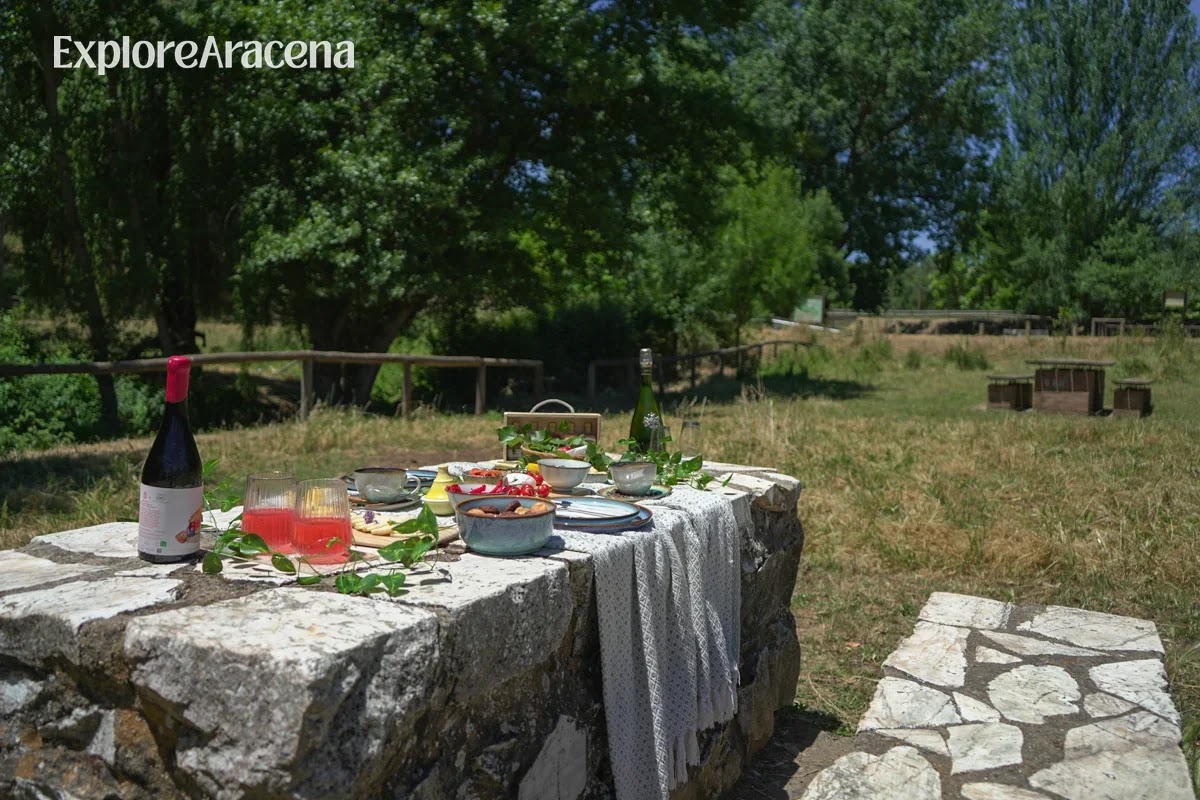
A peaceful picnic at the Descansadero de Marimateos, where stone tables and surrounding greenery invite you to slow down and stay awhile.
Fuente del Rey: Following the Water Beyond Aracena
For a walk that begins close to town but quickly feels rural, the route towards Fuente del Rey is one of our favourite options.
The spring lies along the traditional path connecting Aracena and Corteconcepción. From the edge of Aracena, the route leads you gradually into a landscape shaped by water, stone walls, cultivated land and woodland.
The full trail between Aracena and Corteconcepción is a proper walk rather than a short urban stroll. The marked section is approximately 4.4 kilometres each way and is generally considered low difficulty. However, you don’t need to complete the entire route to enjoy it. If you only have an hour or two, you can follow the path as far as feels comfortable and return the same way.
What makes this walk especially rewarding is the contrast with central Aracena. Within a relatively short distance, the sound of traffic fades and the landscape begins to close around you. Depending on the season, the Arroyo de Fuente del Rey accompanies sections of the route, bringing water sounds, greener vegetation and cooler pockets of air.
After sustained rain, you may also encounter the small cascades that appear across this part of the Sierra. They are not dramatic waterfalls, nor are they permanent attractions. Their beauty comes from their seasonality: moss-covered stones, newly moving water and the feeling of seeing the landscape briefly transformed.
This route is at its best from late autumn through spring. After rain, wear shoes with reliable grip and expect muddy sections. In summer, begin early; the shade helps, but the Andalusian heat still catches up with you.
The Bosque Encantado Between Fuenteheridos and Galaroza
The chestnut forests surrounding Fuenteheridos and Galaroza offer a completely different experience of the Sierra.
One of the best introductions is the aptly named Bosque Encantado, or Enchanted Forest. This signposted, low-difficulty trail climbs from Galaroza towards Fuenteheridos beneath an impressive tree canopy. Much of the route is shaded, making the forest feel enclosed and surprisingly cool compared with the open hills elsewhere in the region.
The name may sound fanciful, but it begins to make sense once you’re walking beneath the trees. The light glitters through the leaves, the ground softens underfoot, and the noise of the outside world seems to disappear.
This is also a working landscape rather than an untouched wilderness. Chestnut cultivation has shaped the identity and economy of the Sierra for centuries, and the appearance of the forest changes dramatically with the agricultural calendar.
In spring, the woodland is intensely green and filled with birdsong. Summer brings deeper shade and some relief from the heat, although you should still walk early. Autumn is perhaps the most atmospheric season, when fallen leaves cover the path and chestnut burrs gather beneath the trees.
You may see chestnuts on the ground, but remember that many of these forests are privately managed. Fallen produce should not automatically be treated as free for visitors to collect. Staying on the marked path allows you to enjoy the landscape while respecting the people who work it.
What the forest feels like throughout the year:
Spring: Green, fresh and filled with birdsong.
Summer: Deeply shaded, although mornings are still best.
Autumn: Atmospheric, with fallen leaves and chestnut burrs covering the ground.
Winter: Quiet, damp and peaceful, with fewer walkers.
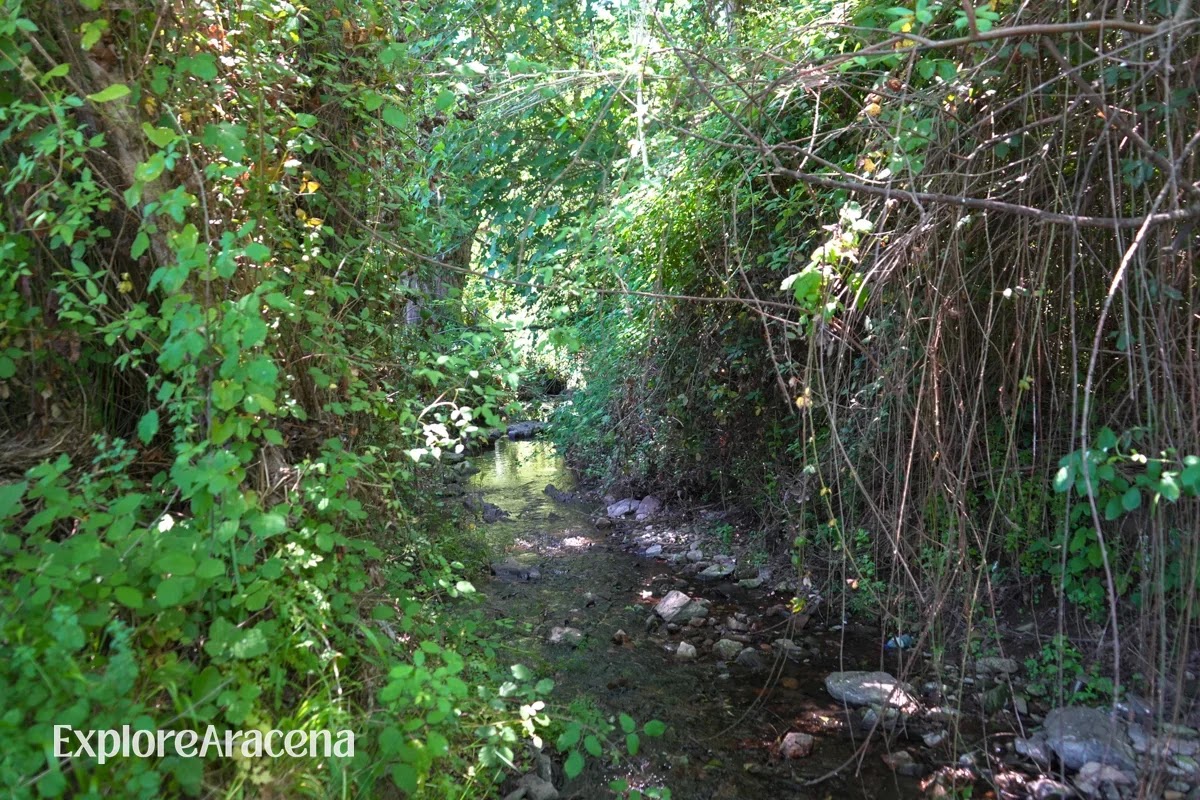
The Arroyo de Marimateos flows quietly beneath the trees, bringing water, shade and life to this favourite local picnic area.
The Quieter Side of Alájar and the Peña de Arias Montano
The Peña de Arias Montano is not exactly a secret. Its elevated position, religious significance, and views over Alájar make it one of the Sierra’s best-known landmarks.
However, many visitors drive directly to the viewpoint, take photographs, and leave. We think the surrounding landscape deserves more time.
The signposted PR-A 434 route begins in Alájar’s Plaza de España and climbs through narrow lanes and between traditional stone walls towards the Peña. The full circular route is approximately 9.7 kilometres, but you can experience its atmosphere without completing the entire circuit.
Walking up from the village changes the relationship you have with the viewpoint. Instead of appearing suddenly at the end of a drive, the landscape opens gradually. You move from whitewashed streets into old paths, woodland, and higher clearings before reaching the broad views above Alájar.
The area is particularly beautiful in the morning, when the paths remain cool, and the village is just beginning to stir. Late afternoon brings warmer light across the hills, although you should leave enough time to descend safely before dark.
The Peña itself offers expansive views and is also a rewarding place for birdwatching. Raptors use the rising air currents above the surrounding hills, so it is worth looking beyond the immediate viewpoint and spending a few quiet minutes watching the sky.
Once you return to Alájar, the village is an ideal place for a slow lunch or drink. This combination of walking, scenery, and village life is one of the experiences the Sierra does particularly well.
Linares de la Sierra: Where the Village Ends and the Countryside Begins
Linares de la Sierra is often celebrated for its whitewashed houses, cobbled streets and decorative llanos, the patterned stone entrances traditionally found outside local homes.
But what we love most about Linares is how naturally the village merges into the surrounding countryside.
You can spend time wandering through its streets, and then you gradually find yourself following an old path between stone walls. The transition from village to landscape is gentle, which makes Linares especially appealing when you want a relaxed walk rather than an ambitious hike.
Several routes connect Linares with neighbouring towns and villages, including Aracena and Alájar. These complete trails require more time and preparation, but shorter out-and-back sections allow you to experience the same landscape at your own pace.
The countryside around Linares feels hushed and enclosed. Stone walls frame the paths, trees provide intermittent shade, and the village slowly disappears behind you.
Our preferred way to experience Linares is simple: arrive in the morning, explore the village, follow one of the paths for as long as you feel comfortable, and return for a drink or lunch. You don’t need to transform every walk into a challenge; sometimes an hour in the countryside is enough to change the mood of the entire day.
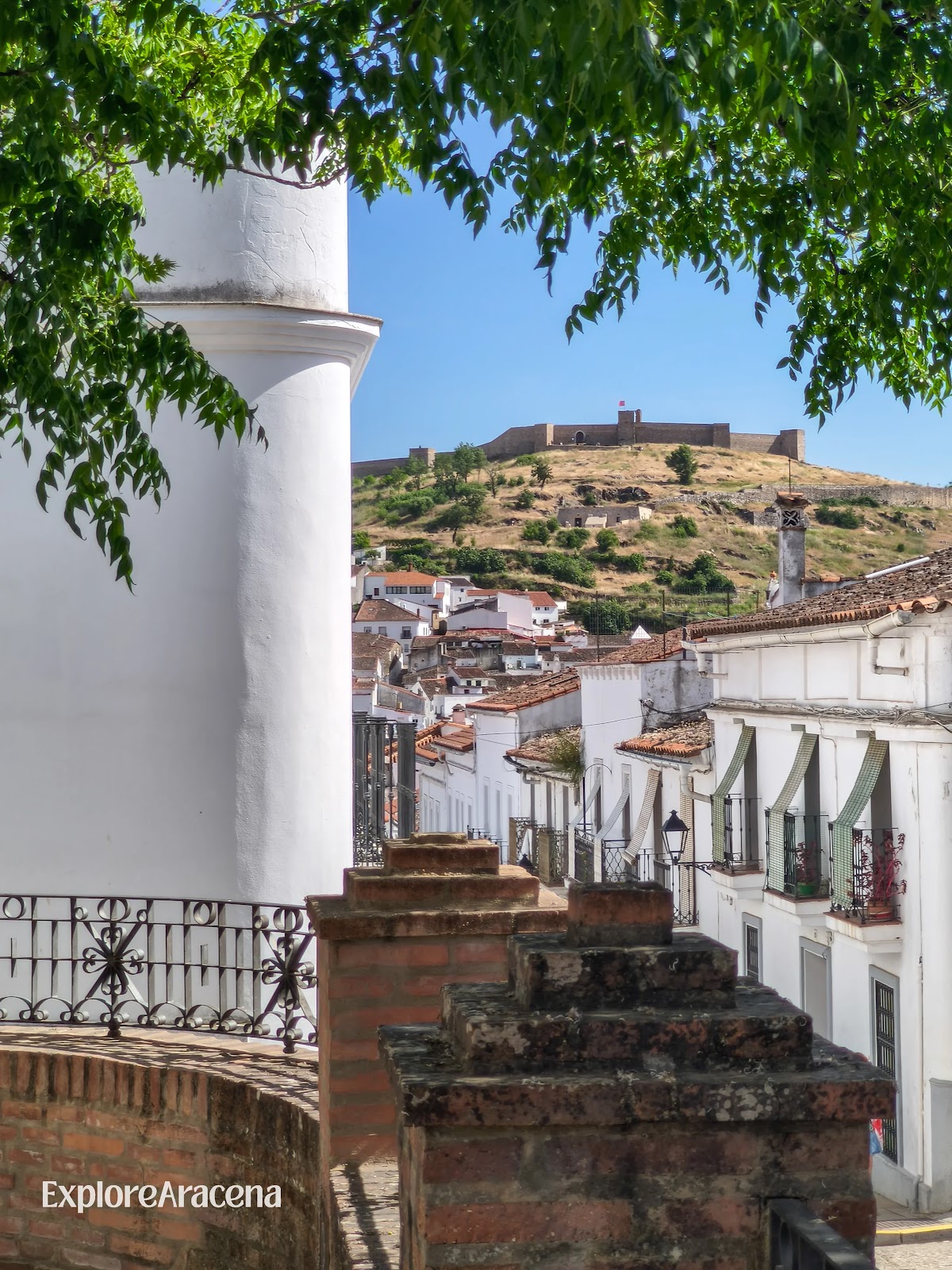
Aracena Castle rises above the town’s whitewashed buildings, framed by the shade and greenery of the Sierra.
The Dehesa: Finding Views Without a Formal Viewpoint
Some of the most beautiful views in the Sierra de Aracena aren’t found at named miradores.
They appear unexpectedly as rural lanes climb above a village or a woodland track reaches the edge of the dehesa. Suddenly, the landscape opens into wide pastureland dotted with cork oaks and holm oaks, with layer after layer of hills beyond.
The dehesa is more than gorgeous scenery; it is a carefully managed landscape where agriculture, livestock, and woodland coexist. It supports grazing animals, cork production, and the acorn-rich environment central to the region’s jamón ibérico culture.
Understanding this makes the scenery feel more meaningful. What appears at first to be an untouched oak-dotted wilderness is actually a landscape shaped by generations of human knowledge and work.
We have found that the best dehesa views often happen while travelling between villages or walking the higher sections of established trails. You do not need to search for a single “secret” viewpoint. Leave space in your day to stop when the landscape opens up and surprises you with its beauty.
Golden hour is especially beautiful when the oak trees cast long shadows, and the hills take on warmer tones. If you are driving, only stop where you can pull off the road completely without blocking gates, tracks, or access for agricultural vehicles.
Learning to Sit Still in the Sierra
There is a temptation when travelling to turn every hour into an activity. The Sierra gently pushes against that instinct.
Once you have walked for a while, find somewhere appropriate to pause. Sit beneath a tree, beside a picnic table, or on a dry stone where you are not blocking the path. Give the landscape ten quiet minutes before reaching for your phone.
Perhaps you pack along a journal to write in, a book to read, a notebook to sketch in. The Sierra is a magnet for dreamers and creators, artistic souls in any capacity: a place to let your imagination run free!
With patience and a curiosity to understand the environment, details begin to emerge: woodpeckers moving through the oaks, smaller birds crossing the undergrowth, bells from animals you cannot yet see, and raptors tracing circles high above the hills.
These moments are not pauses between the “real” attractions. They are an essential part of experiencing the Sierra de Aracena.

The quiet of the Sierra creates space to write, imagine and reconnect with the parts of ourselves that everyday life can push aside.
When to Explore the Sierra’s Quieter Nature Spots
The landscape changes considerably throughout the year.
For green landscapes and running water: Visit from late autumn through spring.
For chestnut forests: Visit in autumn, preferably on a weekday.
For wildflowers and birdsong: Choose spring.
For summer walks: Start early and stay beneath the woodland canopy.
For seasonal cascades: Visit after rain, but expect mud and slippery paths.
What to Know Before You Go
Carry drinking water and don’t rely on natural springs.
Save your route or map before leaving town.
Wear shoes with grip, particularly after rain.
Stay on recognised public paths around private fincas.
Leave gates exactly as you find them.
Keep dogs controlled around livestock.
Never use fire during restricted periods.
Take all rubbish away with you.
Experiencing the Sierra Without Leaving a Trace
The Sierra de Aracena feels wonderfully unforced because so much of it remains part of everyday local life. These are not landscapes created solely for visitors. They are working farms, traditional paths, shared picnic areas, and forests that continue to support the surrounding communities.
Take all rubbish with you, avoid picking wildflowers or collecting crops, keep noise low around animals and houses, and never light fires outside the rules established for recreational areas.
If you approach these places with care, you’ll experience the side of Aracena that stays with many visitors longest: not one dramatic landmark, but the slower accumulation of shade, water, woodland, birdsong, and time spent connecting to the part of yourself that gets lost in the business of everyday life.
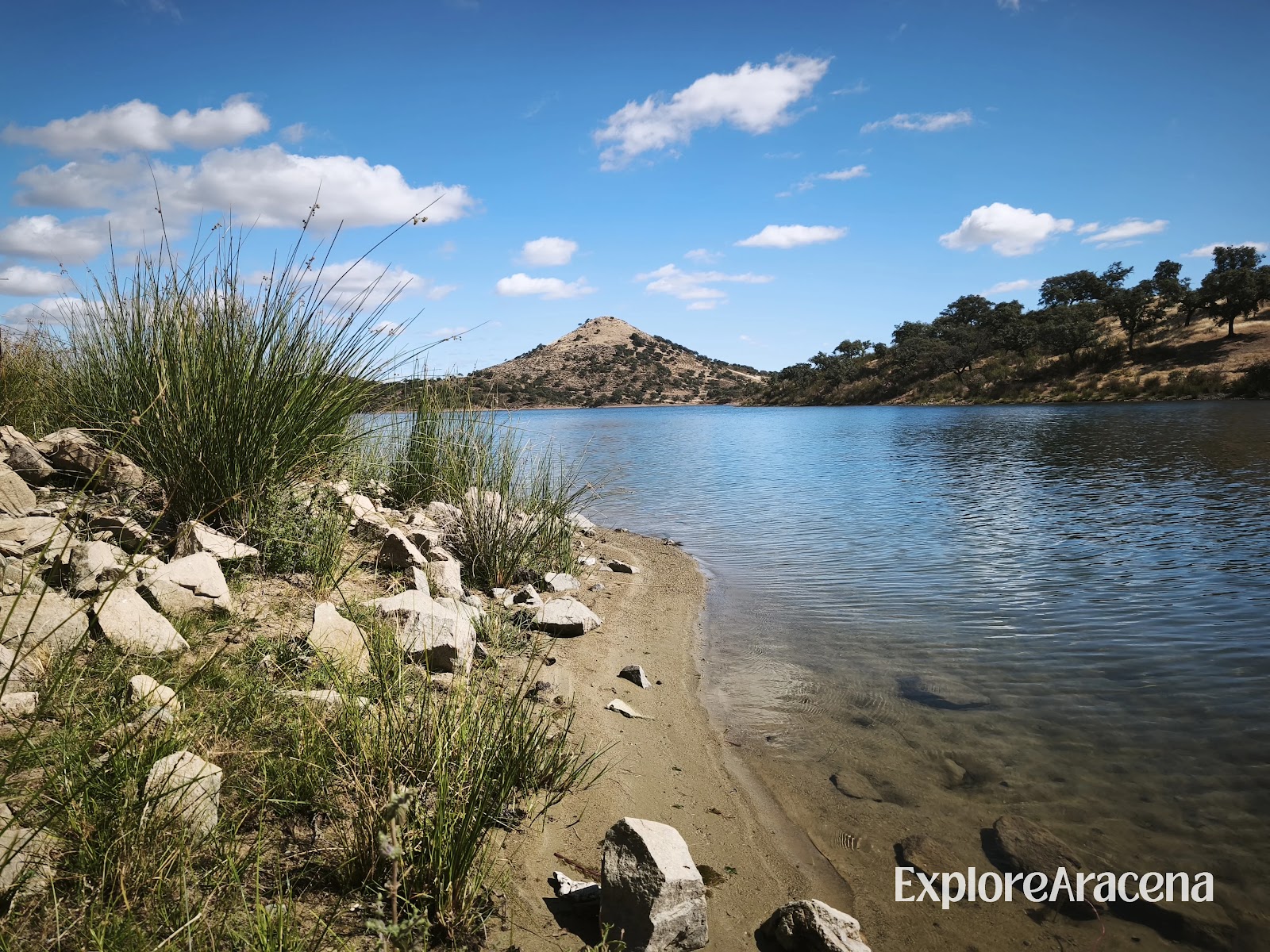
Along the reservoir’s shoreline, water and rolling hills reveal another peaceful side of the Sierra de Aracena.