Ultimate Guide to Aracena – Best Things to Do in Sierra de Aracena, Spain
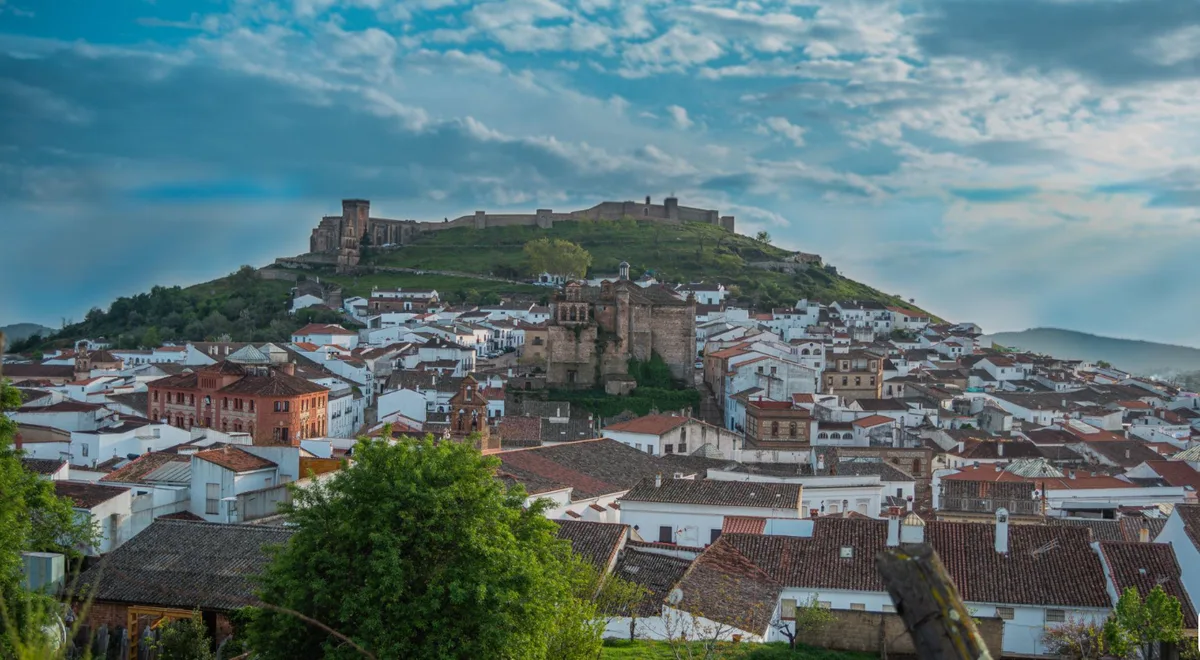
Ultimate Guide to Aracena – Best Things to Do in Sierra de Aracena, Spain
A complete guide to Aracena, Spain. Learn what to see, where to eat, hiking routes, nearby villages, and how many days you need in Sierra de Aracena.
Quick Facts Before You Visit
Detail | Information |
|---|---|
Province | Huelva |
Natural Park | Sierra de Aracena y Picos de Aroche |
Population | 8,000 |
Elevation | 700m |
Famous For | Caves, jamón ibérico, hiking |
Ideal Stay | 2–3 nights |
Aracena, Spain, is one of the most authentic mountain towns in Andalusia. Located in the province of Huelva, within the protected landscape of the Sierra de Aracena y Picos de Aroche, it offers caves, gastronomy, hiking, and traditional white villages without mass tourism.
If you are researching Aracena, Spain, this guide answers everything you need to know.
What Are the Best Things to Do in Aracena?
Despite its modest size, Aracena offers a surprisingly rich mix of experiences. Everything sits within walking distance, and the town moves at a pace that invites you to slow down and explore.
Some of the most memorable things to do in Aracena, Spain include:
Visiting the extraordinary Gruta de las Maravillas beneath the castle hill
Climbing to the ruins of Castillo de Aracena for wide views across the surrounding hills
Wandering through the historic centre, where whitewashed streets curve quietly around the slopes
Tasting authentic Jamón Ibérico in the region where it is produced
Walking or hiking through the oak forests of the Sierra de Aracena
Visiting nearby white villages scattered throughout the hills
What I came to appreciate most is how naturally these experiences fit together. Nature, food culture, and local history aren’t separated into attractions here; they blend into everyday life. You might spend the morning underground in the cave, the afternoon wandering the old streets, and the evening enjoying a simple plate of jamón in a family-run bar.
Is Aracena Worth Visiting?
Yes. In my experience, absolutely.
Aracena is particularly rewarding for travellers who are drawn to rural Spain: mountain landscapes, traditional gastronomy, and places where daily life still unfolds at a slower rhythm. It works beautifully as a countryside escape from Seville, or as part of a broader journey through western Andalusia.
It may not be the right destination if you are looking for beaches, nightlife, or major urban monuments.
But if you’re curious about the quieter side of Andalusia, the one shaped by oak forests, small plazas, and long-standing food traditions, Aracena offers something deeper. The more time I spent here, the more I understood why so many visitors arrive for a short stop and end up staying longer than planned.
Where Is Aracena in Spain?
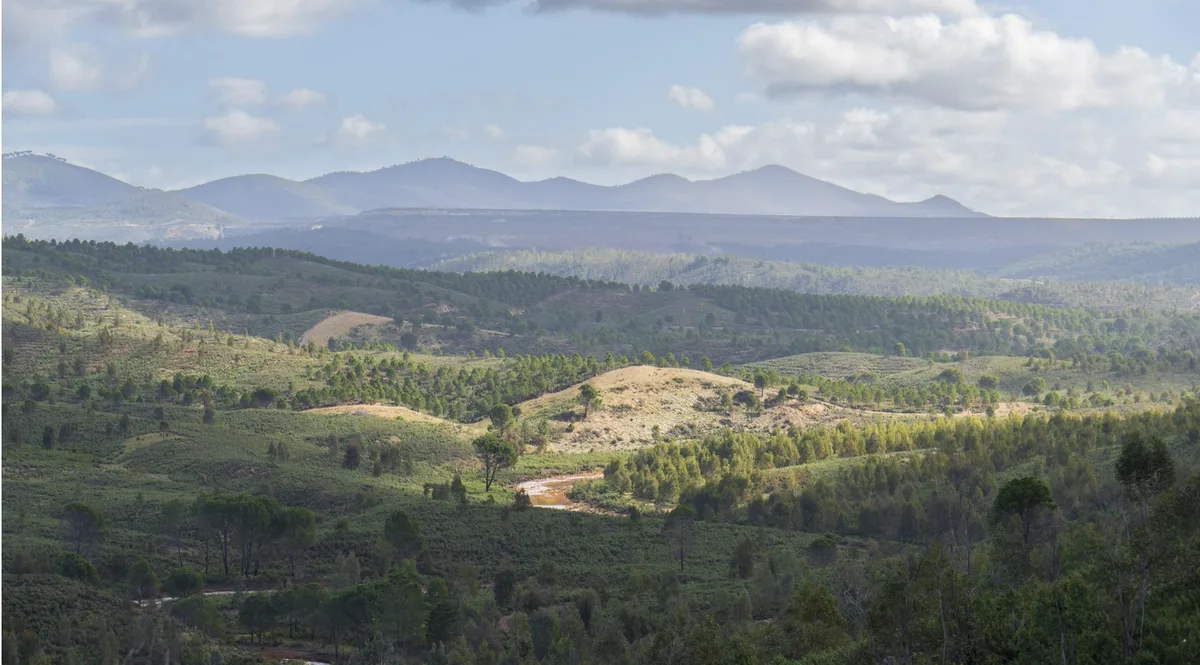
Aracena sits in western Andalusia, within the province of Huelva. It lies in the hills of the Sierra de Aracena, a protected natural park known for its oak forests, traditional villages, and long-standing jamón culture.
When I first drove into the area, the shift in landscape was immediately noticeable. The flat plains of lowland Andalusia gradually give way to rolling hills, dense woodland, and small white villages scattered across the slopes.
For travellers planning their journey, Aracena is relatively easy to reach from several major cities:
Seville - approximately 95 km (around 1 hour by car)
Huelva - approximately 100 km
Faro - around 2 hours by car
Madrid - roughly 4.5–5 hours
The nearest airport is Seville Airport, which makes the town an easy countryside escape for visitors already travelling through southern Spain.
One of the reasons the area feels so different from the rest of Andalusia is its elevation. Aracena sits at roughly 700 metres above sea level, and that extra height brings noticeably cooler temperatures. Even in summer, the air here feels fresher than the hotter lowland cities.
Top Things to Do in Aracena (Detailed Guide)
1. Visit the Gruta de las Maravillas

Almost everyone who comes to Aracena begins here, and after visiting, it’s easy to understand why.
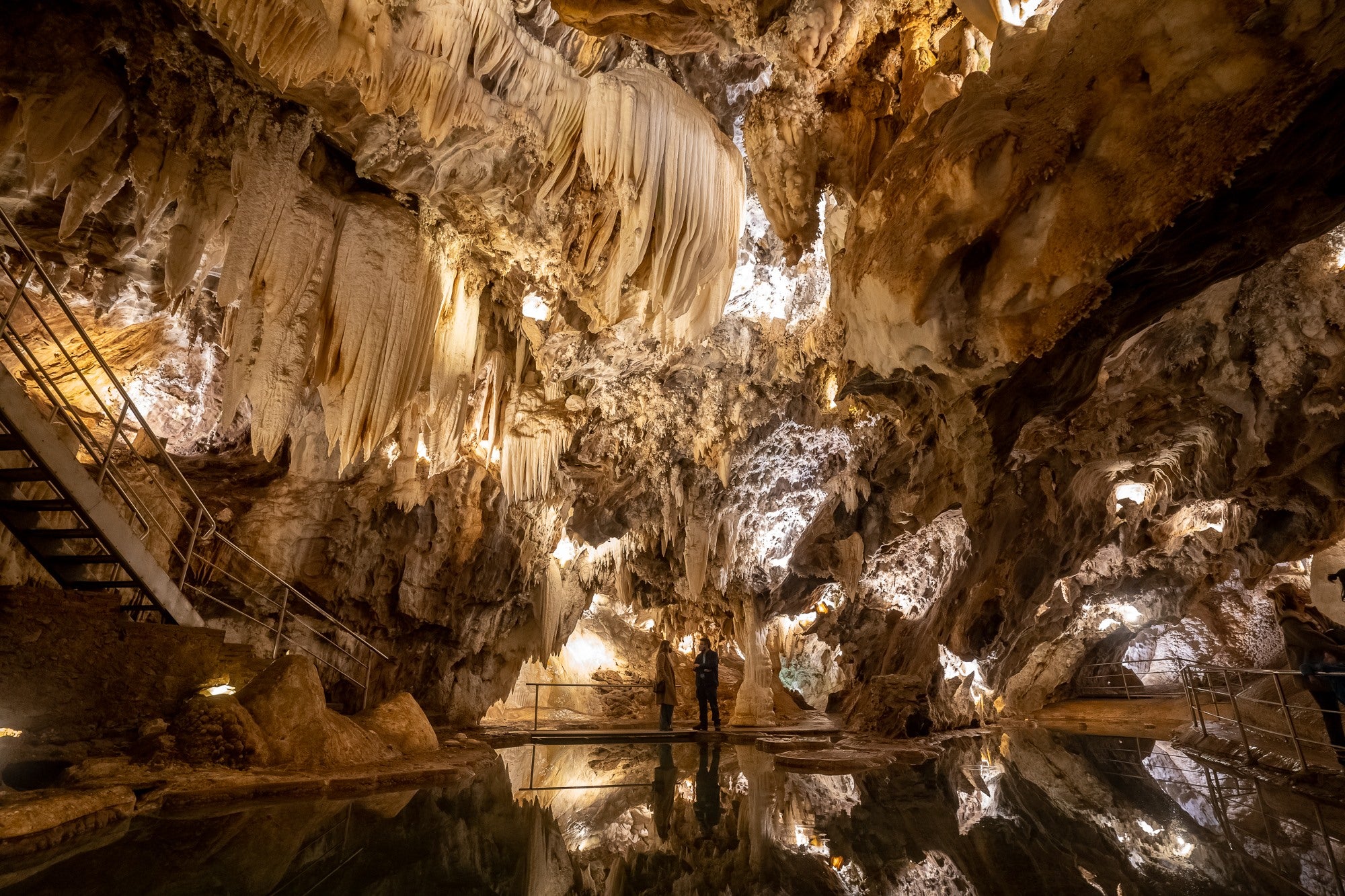
The Gruta de las Maravillas sits directly beneath the castle hill, hidden underneath the centre of town itself. From the streets above, nothing prepares you for the scale of the underground world below.
What stayed with me most were the lakes. Perfectly still water reflects the cave formations so clearly that the chambers appear to double in size. Stalactites and stalagmites stretch both upward and downward in the reflection, creating a depth that feels almost surreal.
A few practical things to know before visiting:
Tours are guided only
Photography is not permitted inside the cave
Advanced booking is recommended, especially in spring and weekends
For many visitors, this alone justifies the trip to Aracena
For ticket details and practical advice, see our complete Gruta de las Maravillas guide
2. Explore the Castillo de Aracena
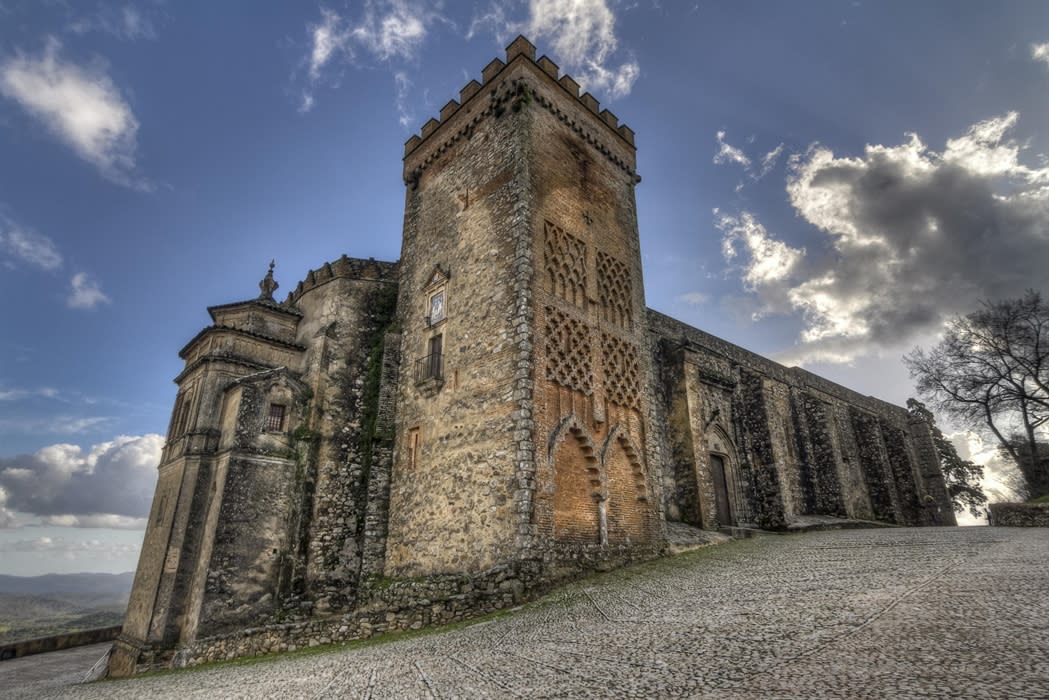
The Castillo de Aracena castle is impossible to miss. Wherever you are in town, its walls rise above the rooftops on the hill.
Climbing up there is one of the simplest and most rewarding things you can do in Aracena. The walk winds past white houses and narrow streets before opening onto wide views across the surrounding hills of the Sierra de Aracena.
The fortress itself dates back to the Islamic period and was later expanded after the Christian reconquest. Inside the defensive walls, you’ll also find the historic Church of Nuestra Señora del Mayor Dolor, which adds another layer to the site’s long history.
If you can, come up in the late afternoon. The light softens, the hills glow slightly golden, and the town below becomes wonderfully quiet.
3. Walk the Old Town
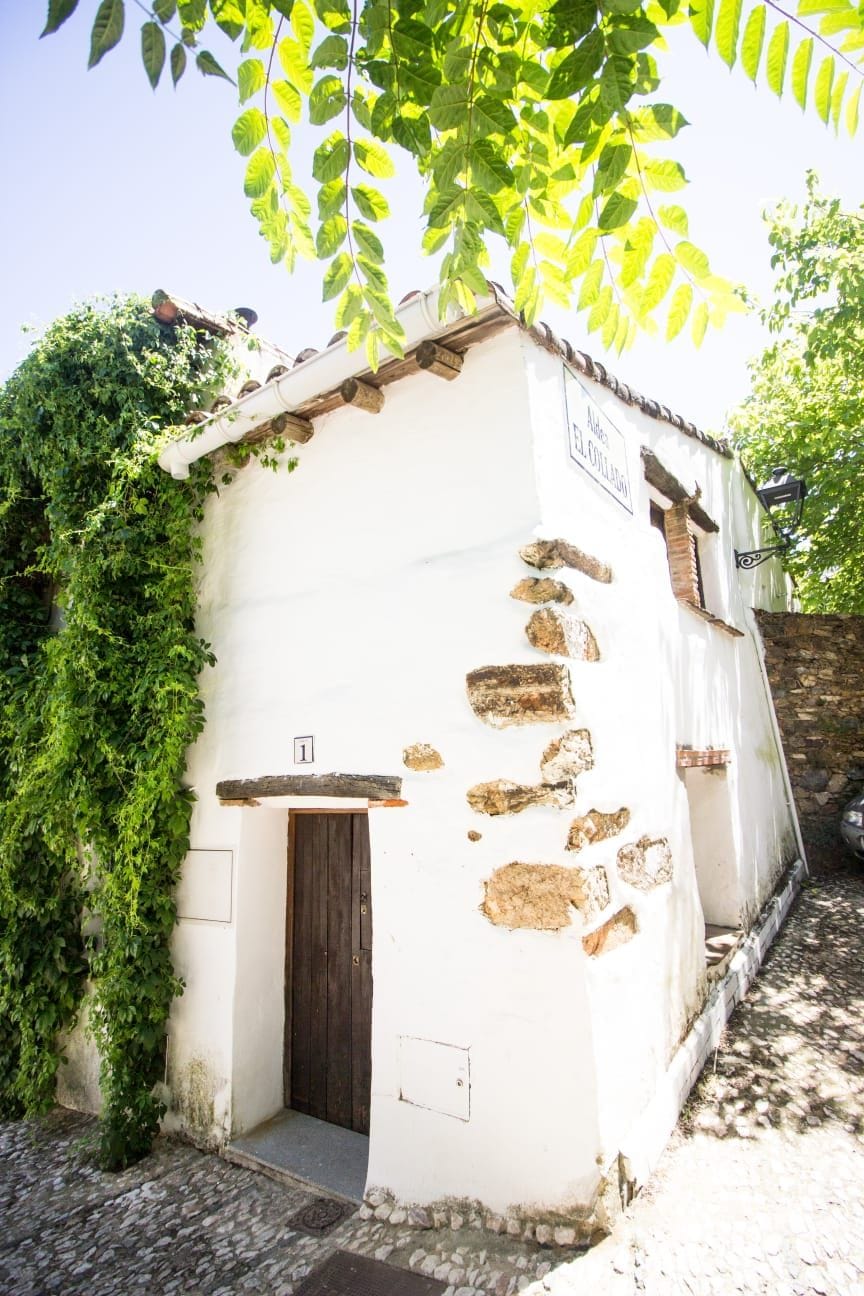
The historic centre of Aracena is compact enough to explore entirely on foot, and that’s really the best way to experience it.
What I appreciated most is that this isn’t a staged historic village; It’s a living Andalusian town. People live here, shop here, meet friends in the plazas, and participate in their daily routines.
As you wander, you’ll naturally come across:
Whitewashed homes with iron balconies
Plaza Marqués de Aracena
Traditional bakeries
Small artisan shops
Quiet residential streets
Hidden little plazas where locals gather
There isn’t a strict itinerary for the old town. The pleasure is simply in wandering slowly and letting the streets lead you.
4. Experience Jamón Ibérico in Its Homeland

Sierra de Aracena is one of Spain’s most important jamón-producing regions, known internationally for its exceptional Jamón Ibérico de Bellota. See more on our guide to Jamón Ibérico
The first time I saw the landscape properly, it altered my understanding of what I was eating.
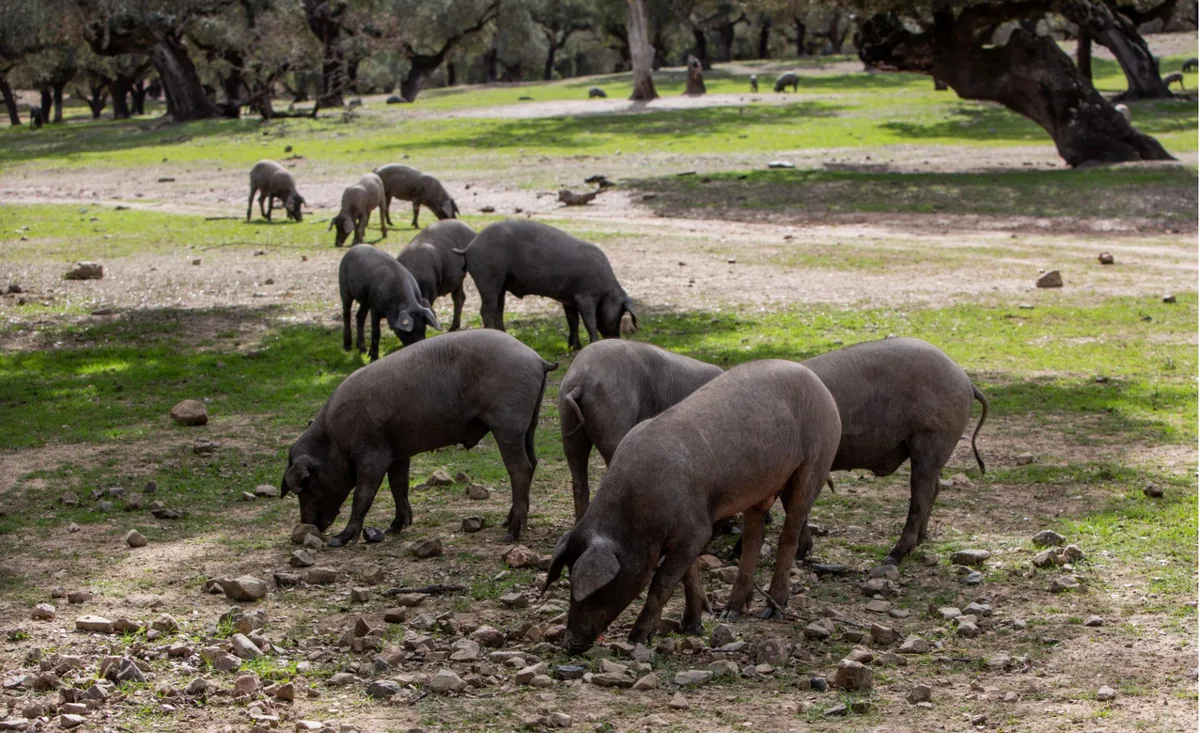
Across the rolling hills, Iberian pigs roam freely through the Dehesa**.** The Dehesa is a unique ecosystem of open woodland scattered with ancient oak trees. During the montanera season, the pigs feed almost entirely on fallen acorns, slowly gaining weight as they wander.
It’s not farming in the industrial sense; it feels closer to a rhythm that has existed here for centuries.
If you’re buying jamón, look for the DOP Jabugo label as it guarantees origin, breed, and traditional curing methods. When it arrives at the table, the ritual is simple: thin slices at room temperature. It’s that simple and that exceptional.
Beyond Jamón - Enjoy Aracena’s gastronomy
What surprised me most about Aracena was how the food never felt like a single story.
Yes, jamón is central, but it’s only the beginning.
Influenced by the seasons, the cuisine shifts alongside the natural changes in landscape:
wild mushrooms gathered in autumn forests
chestnut-based desserts in the cooler months
lesser-known cuts of Iberian pork, grilled or slow-cooked
local goat and sheep cheeses from nearby villages
traditional stews that feel deeply rooted in the countryside
and regional wines that reflect the character of Andalusia
Meals here are intentional and shaped by what’s available rather than what’s expected.
Food in Aracena isn’t curated for visitors; rather, it simply continues, as it always has.
5. Visit the Museo del Jamón
To understand jamón in Aracena, I found it helps to step back and see the full picture. The Museo del Jamón de Aracena offers exactly that.
Inside, the experience is more thoughtful than you might expect. It walks you through:
Iberian pig breeds and classifications
the montanera feeding cycle
traditional curing techniques
the historical importance of pork in the region
It gave context to everything I had tasted up to that point. After visiting, jamón stops being just a product and starts to feel like part of a much larger cultural landscape.
6. Hiking in Sierra de Aracena
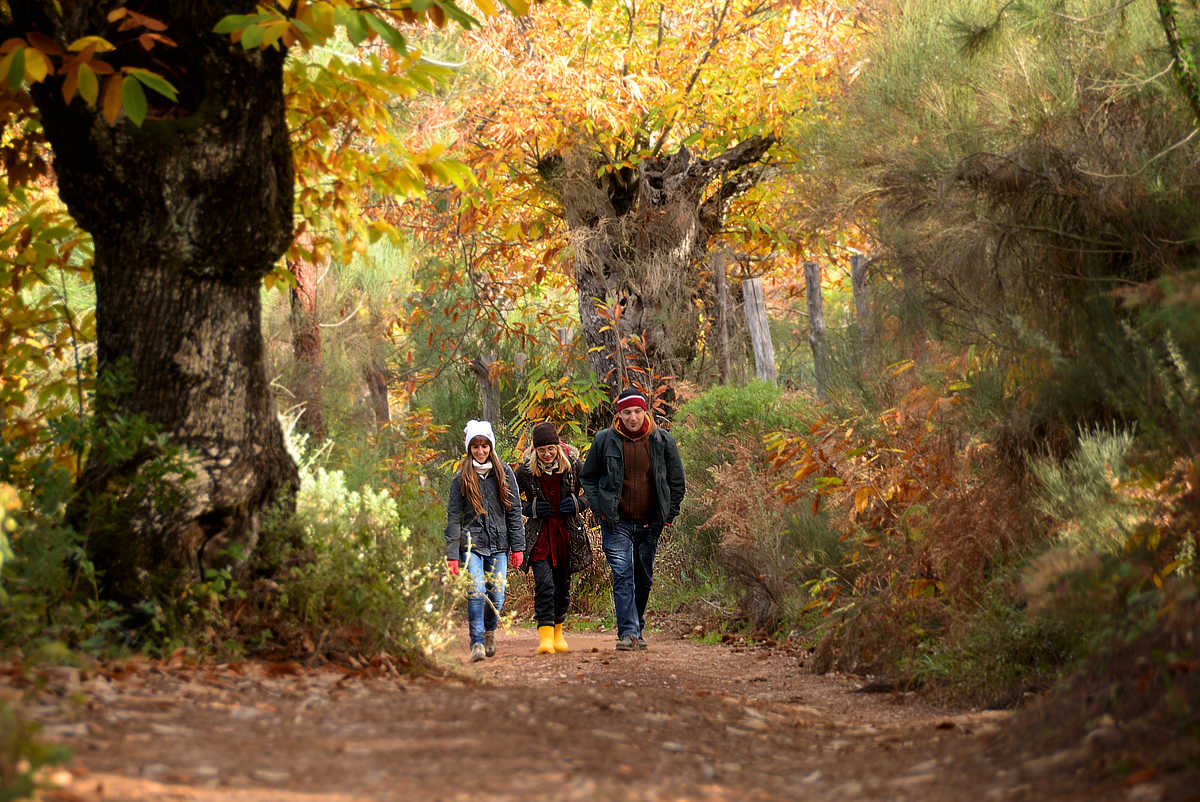
Walking through the Sierra de Aracena Natural Park was one of the most grounding parts of my time here.
The terrain isn’t extreme or dramatic. It’s something softer: imagine rolling hills, shaded paths, and long stretches of silence.
Some of the most memorable routes include:
Aracena to Linares de la Sierra
circular walks around Fuenteheridos
ridge views near Alájar
chestnut forests surrounding Galaroza
Spring and autumn are the most rewarding times to walk, when the landscape feels alive and green. Even in the heat of summer, early mornings and evenings remain comfortable thanks to the elevation.
7. See the Cork Oak Trees and the Bark Harvest
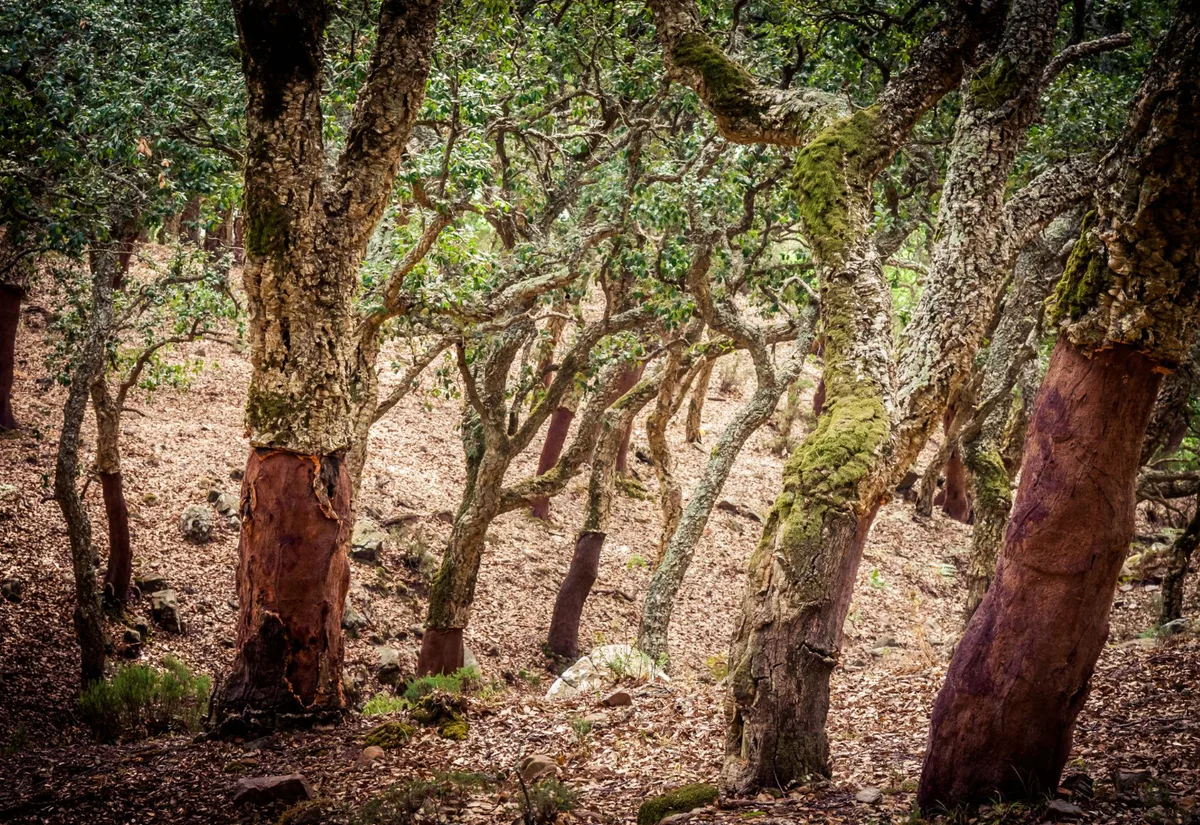
One of the most distinctive features of the landscape is the presence of Quercus suber aka the cork oak.
It’s easy to overlook the distinguishing qualities at first, but then you begin to see trees with deep reddish trunks, stripped of their outer bark.
Every 9 to 12 years, this bark is carefully removed by hand in a process that evokes an almost ceremonial sensation. The tree isn’t harmed, and it regenerates naturally, continuing the cycle.
It’s a signal, a ritual, and a reminder that this landscape isn’t untouched wilderness. It’s lived in, worked, and sustained over generations.
8. Nearby Villages Worth Visiting

One of the things I loved most about staying in Aracena was how easily the surrounding villages became part of the experience.
Within 20 minutes, the landscape shifts subtly, and each village offers something different.
Linares de la Sierra
Quiet and beautifully preserved, with cobbled streets and traditional architecture that feel untouched by time.
Alájar
Whitewashed and open, with sweeping views from the nearby Peña de Arias Montano.
Fuenteheridos
Centred around a natural spring, with a relaxed, almost sleepy atmosphere that invites you to linger.
Together, these villages form the slow and gentle rhythm of the Sierra.
2–3 Day Aracena Itinerary
Day 1: Arriving in Aracena
Morning
Visit the Gruta de las Maravillas (book tickets in advance)
Wander slowly through the old town
Afternoon
Long lunch centred around Iberian pork
Explore the hilltop Castillo de Aracena
Evening
Drinks in the plaza
A relaxed dinner with local wine
Day 2: Landscape and Villages
Morning
Hike from Aracena to Linares de la Sierra
Afternoon
Visit Alájar and the Peña viewpoint
Late lunch in Fuenteheridos
Optional Day 3: Slow Exploration
This was my favourite kind of day.
A quiet forest walk
Visiting small artisan shops
A long, unhurried lunch
Returning to the castle at sunset
Where to Stay in Aracena
Accommodation in Aracena tends to reflect the character of the region.
You’ll find:
small rural boutique hotels
restored farmhouses set in the countryside
family-run guesthouses
quiet villas surrounded by nature
Staying in town makes everything walkable, while staying outside town brings a deeper sense of stillness.
I recommend two nights minimum to really settle into the rhythm here.
When Is the Best Time to Visit Aracena?
From my experience, spring and autumn are when Aracena feels most alive.
The landscape is green, the temperatures are mild, and the pace of life feels perfectly balanced.
Summer is warmer, but still noticeably cooler than the lowlands of Andalusia.
Winter is quieter, a good time if you’re looking for fewer people and a more reflective atmosphere.
How Many Days Do You Need in Aracena?
I would recommend two to three days to get an authentic experience of Aracena.
One day gives you a glimpse as you explore the cave, the castle, the centre.
But with two or three days, the experience evolves into something else, something deeper. You begin to explore the landscape, the villages, and the slower rhythm that defines the region.
Practical Travel Information
A car makes exploring the Sierra much easier
Book tickets in advance for the Gruta de las Maravillas
Bring comfortable walking shoes
Evenings are cooler year-round due to elevation
Frequently Asked Questions About Aracena
Is Aracena in Seville?
No. Aracena is in the province of Huelva, approximately one hour from Seville.
Is Aracena a day trip from Seville?
Yes, Aracena can be visited as a day trip from Seville (around 1 hour by car), but staying overnight allows you to experience the town at a slower pace and explore the surrounding countryside.
What province is Aracena in?
Aracena is in Huelva province, Andalusia.
Is Aracena worth visiting compared to other towns in Andalusia?
Yes, especially if you're looking for a slower, more immersive experience. Unlike places such as Ronda or Grazalema, Aracena offers a combination of nature, gastronomy, and local life rather than just scenic viewpoints
What is the closest airport to Aracena?
Seville Airport is the nearest major airport.
Is Aracena expensive?
Aracena is generally affordable compared to major Andalusian cities.
Is Aracena good for families?
Yes, especially for families comfortable with walking and nature activities.
What is Aracena known for?
Aracena is best known for the Gruta de las Maravillas, its production of Jamón Ibérico, and its location within the Sierra de Aracena Natural Park.
Can you visit Aracena without a car?
It is possible to reach Aracena by bus from Seville, but having a car is strongly recommended if you want to explore nearby villages and hiking routes in the Sierra.
When is the best time to see Jamón Ibérico production in Aracena?
The best time is during the montanera season (typically October to February), when Iberian pigs feed on acorns in the dehesa.
Final Thoughts
Aracena represents a quieter side of southern Spain.
It isn’t coastal, it isn’t urban, and it isn’t rushed.
It’s slow living, a place shaped by forests, food, and long-standing traditions.
For travellers seeking a more grounded and authentic experience of Andalusia, Aracena offers something that stays with you long after you leave.
quick facts, jamon, things to do, caves, castle, old town, hiking, itinerary