Brioso Restaurante Aracena: A Family-Run Lunch Worth Slowing Down For
Brioso Restaurante Aracena: A Family-Run Lunch Worth Slowing Down For
A first-hand review of Brioso Restaurante in Aracena, formerly Restaurante José Vicente, where a long family-run lunch revealed far more than a good meal. We look at what we ate, the family continuity behind the restaurant, practical details, and why this is one of the best places in Aracena to let lunch become the experience.
Olives landed on the table first, followed by a bottle of red and a chilled bowl of gazpacho bright with colour. Then came tomatoes, asparagus, artichokes, and croquettes; plates passed from hand to hand as the conversation lengthened and lunch mischievously took possession of the afternoon.
This was not a meal squeezed between Aracena’s castle, caves, and cobbled streets. There was no glance at the clock and no pressure to move things along. At Brioso Restaurante, lunch WAS the afternoon plan.
That is how we recommend experiencing this family-run restaurant on Avenida de Andalucía. Come hungry, but also come with time. Order for the table and allow the afternoon to unfold one scrumptious plate at a time. The food is generous and rooted in the Sierra, but what made our visit particularly memorable was the family behind it.
A restaurant with two names and one long history
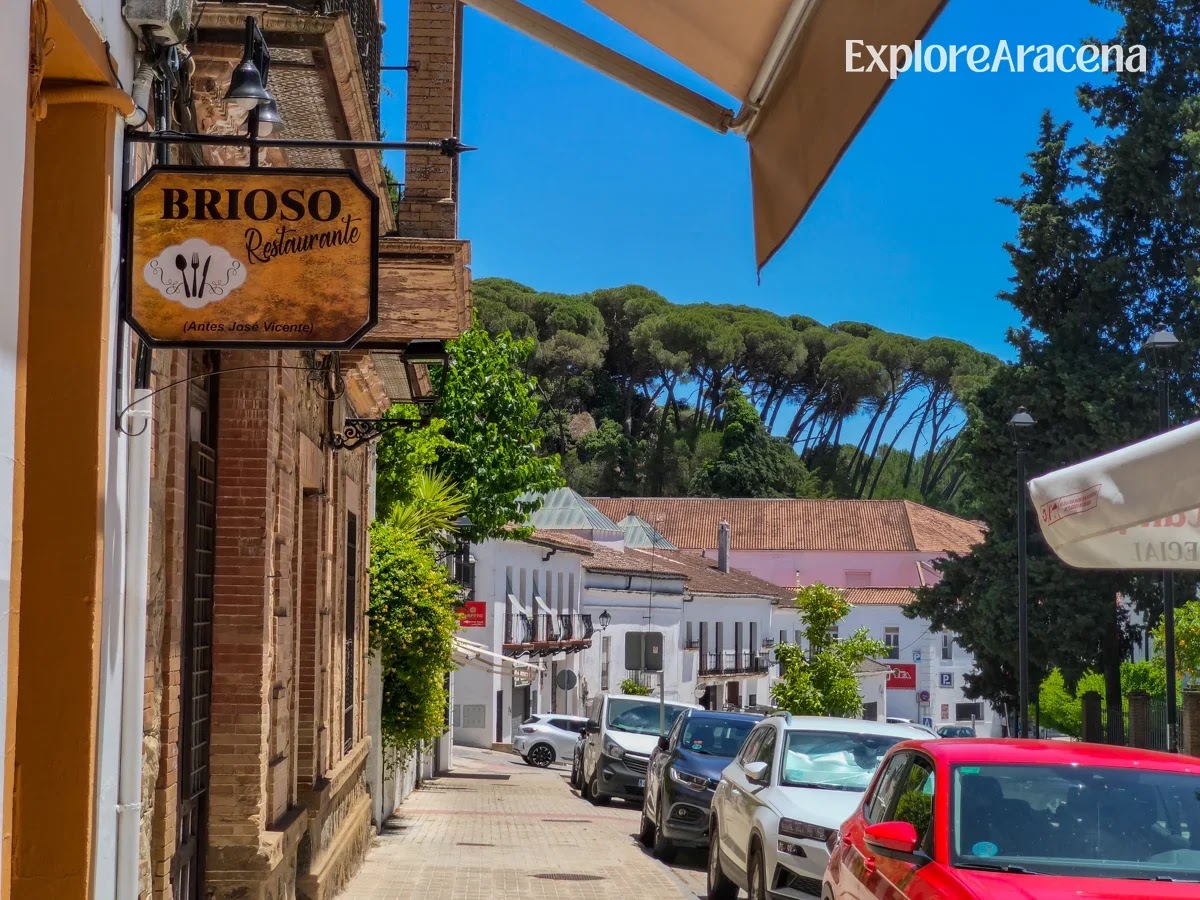
If you search for Brioso Restaurante before your visit, you may also find the name Restaurante José Vicente. Both lead you to the same dining room opposite Parque Arias Montano, and the overlapping identities tell an important part of its story.
The restaurant was founded in 1994 and was long run by José Vicente. José Manuel Brioso Ballesteros joined the team and remained for 25 years, learning the ropes and rhythms of the kitchen, and helping to build the reputation the restaurant still carries today. When José Vicente retired in 2021, it was only natural that José Manuel took over.
“I worked with him for 25 years,” he told us. “He retired five years ago, and I took over then.”
José Manuel renamed the restaurant Brioso after his own surname, although the former name remains visible on its website, signage, wine labels, and online listings. This can look confusing from a distance, but it makes perfect sense once you hear the history. Brioso is not a replacement for Restaurante José Vicente so much as its next chapter, led by someone who spent decades inside it before his name appeared above the door.
The Brioso family behind the table
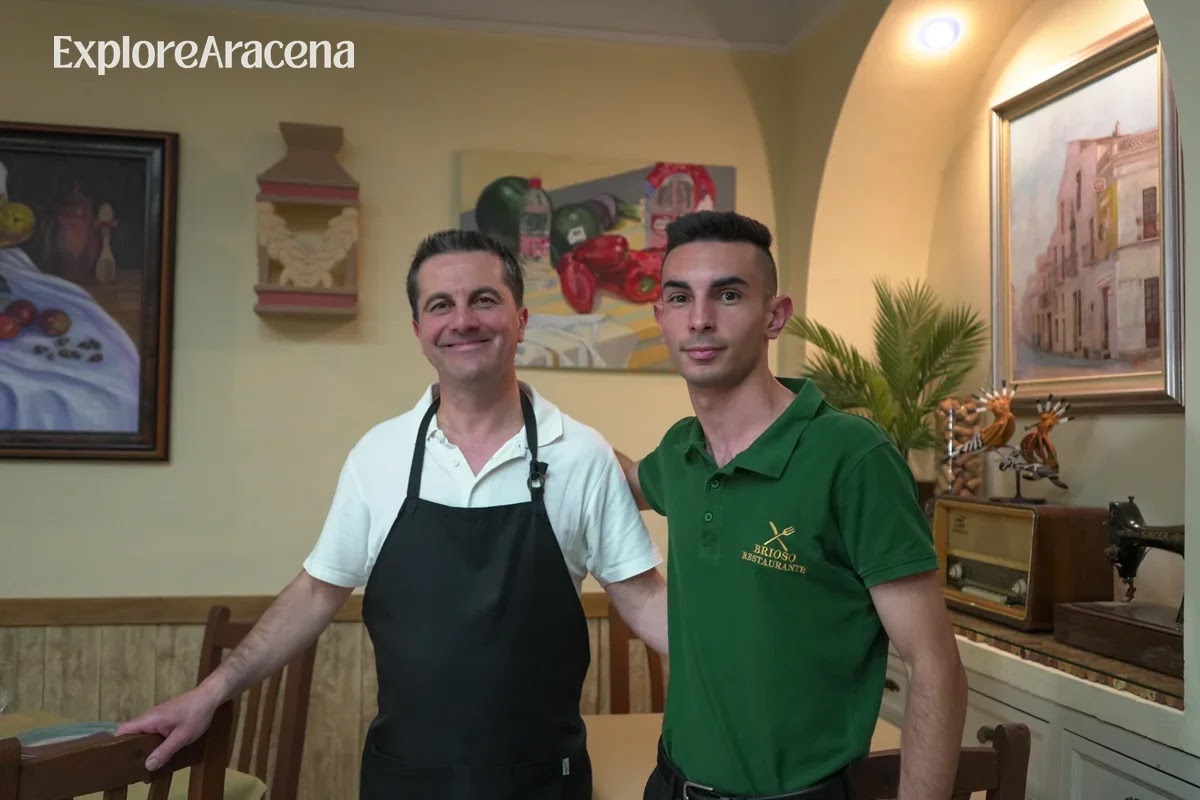
Today, Brioso is very much a family affair. José Manuel and his wife work in the kitchen, while their son helps in the restaurant. On busy weekends, the team expands to meet the rush.
“My wife and I are in the kitchen,” José Manuel explained. “My son helps out too, and on weekends we bring in more staff.”
You feel that family character without it ever becoming a performance. It is there in the ease with which father and son move through the same space, in the warmth of the welcome and, perhaps most of all, in the pride with which José Manuel speaks about the restaurant.
When we mentioned that Brioso is considered one of Aracena’s best-known places to eat, his response was simple: “We’ve put in a lot of years building that.”
That line stayed with us because it explains much of what you feel at the table. Brioso is not trying to impress through novelty. Its confidence comes from repetition, consistency, deep knowledge of the landscape that feeds them, and years of serving people properly.
What we ate at Brioso Restaurante
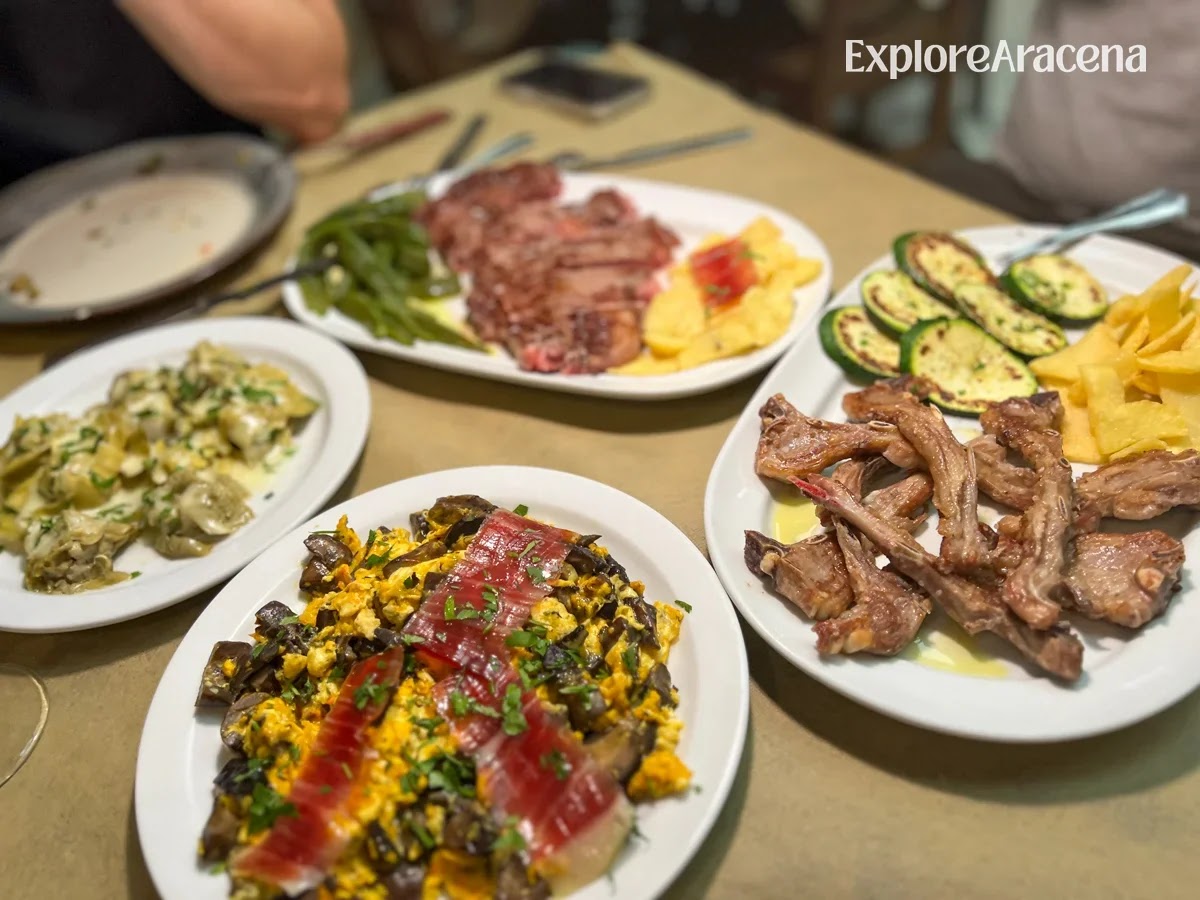
Our lunch did not arrive as a formal sequence of individually plated courses. It grew across the table: something chilled, something crisp, something creamy, another plate to share. That abundance suited the restaurant. Brioso is at its best when several dishes can be passed around, compared, and returned to between sips of wine (or your choice of drink).
Our table moved through vegetables, croquettes, Iberian pork, grilled dishes, and slow-cooked flavours; a colourful, varied picture of Sierra cooking.
Sierra Foods to Know
The Sierra de Aracena is famous for jamón ibérico, but its food culture reaches well beyond cured meat. Local cooking follows the landscape and the seasons, with autumn bringing mushrooms and chestnuts, while summer tables lean towards fresher produce and cooling dishes.
- Cold soups: Gazpacho and salmorejo (both tomato-based) offer welcome relief during the hottest months, usually served chilled with simple garnishes.
- Garden vegetables: Ripe tomatoes, peppers, asparagus, artichokes, and other seasonal produce appear in salads, grilled dishes, and revueltos with egg.
- Jamón and Iberian pork: The Sierra’s signature flavours include acorn-fed jamón alongside grilled cuts, sausages, and slow-cooked pork dishes.
- Local cheeses: Goat’s cheese and other regional varieties often appear in salads, on toast, or paired with honey and quince.
- Seasonal specialities: Mushrooms and chestnuts define autumn, while summer meals tend to feel lighter, brighter, and particularly well-suited to sharing.
Our lunch at Brioso captured that summery side of Sierra cooking beautifully.
A fresh, colourful beginning
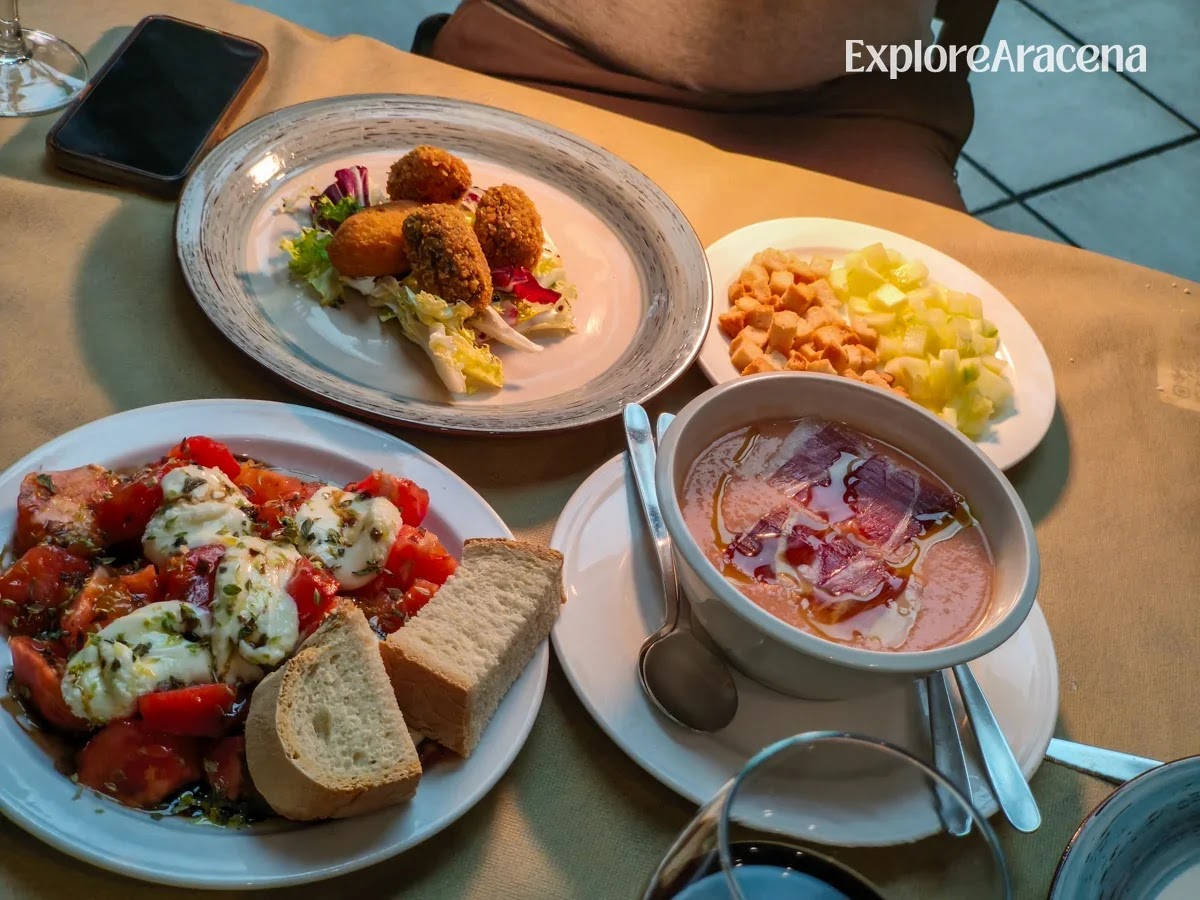
The opening dishes brought freshness to the table. Green olives gave us something to pick at while the wine was poured, followed by a chilled red gazpacho scattered with colourful garnishes. It was exactly the kind of beginning that makes sense, and even brings relief, on a warm Aracena afternoon: cool, bright, and immediately restorative.
A fresh tomato salad arrived beneath generous pieces of soft goats cheese, allowing ripe tomatoes, creaminess, and olive oil to do most of the work. Beside it, grilled green asparagus came dressed with leaves and vivid accents of colour. These were uncomplicated plates in the best possible sense. Rather than disguising the vegetables, the kitchen allowed their seasonal freshness and quality to shine, using only a few simple ingredients to enhance their natural flavour.
The pleasure came from the produce, the contrasts, and the freedom to take a little from each plate while conversation settled around the table.
Artichokes, croquettes, and the pleasure of sharing
The middle of the meal brought richer textures. Artichokes arrived coated in a pale, silky sauce, their earthy character softened by the creaminess surrounding them. A plate of golden croquettes followed, crisp at the edges and accompanied by dressed leaves. We ordered the variety plate, a flavourful surprise inside each croquette! We also shared a colourful vegetable-and-egg dish, referred to as revueltos in Spain, that felt perfectly at home among the larger spread.
This was the point at which the table began to look gloriously full. Serving spoons moved between plates, favourites were revisited, and the usual boundaries between one person’s order and another’s disappeared. The meal became communal, its pace decided by the table and laughter, not a thought of the clock.
They were generous, comforting plates made to be shared, and very difficult to leave alone once placed within reach.
Presa ibérica, jamón and the more substantial plates
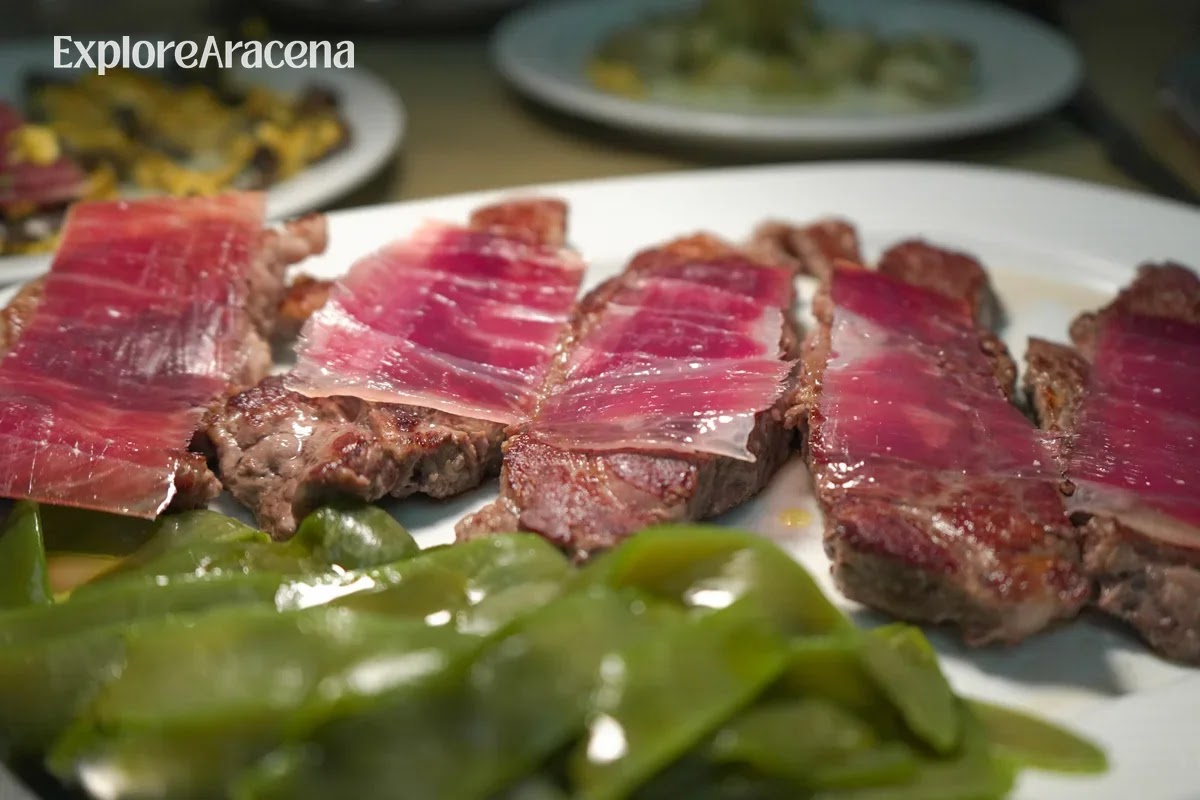
One of the most striking dishes brought two of the Sierra’s defining ingredients together: rosy slices of presa ibérica topped with fine ribbons of jamón and served alongside green peppers. The presa was deeply seared outside while remaining pink and tender at the centre, with the jamón adding its unmistakable savoury depth. It was an authentic celebration of local Iberian pork rather than an overcomplicated reinvention of it.
The meal then deepened into its richest stage. A generous grilled-meat platter arrived for the table, followed by a slow-cooked meat dish in a glossy, savoury sauce with rustic fried potatoes ready to catch it. One plate offered the char and immediacy of the grill; the other had the comforting depth of something given time.
Together, these plates showed Brioso at its most deeply connected to the Sierra: substantial, unfussy cooking built around excellent ingredients, generous portions, and the instinct to take another piece, and perhaps another potato, for the remaining sauce.
Wine, dessert, and the art of not rushing
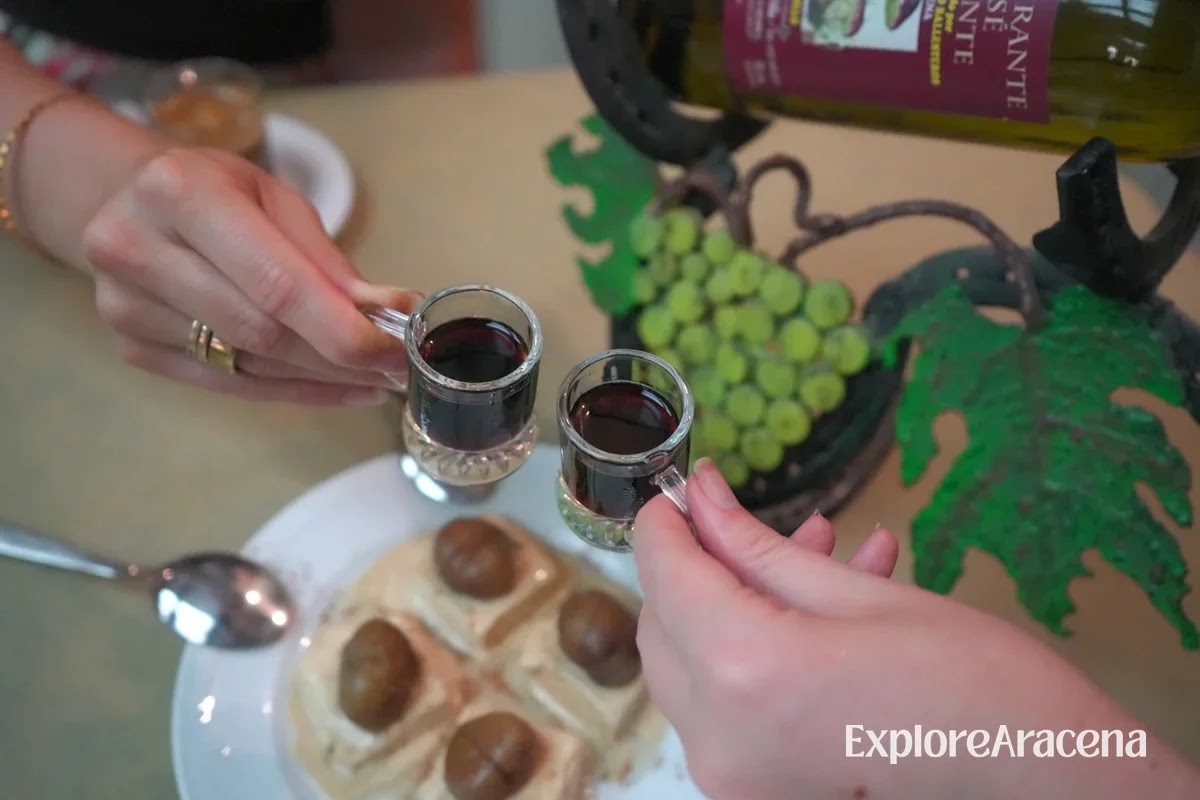
The José Vicente-labelled red wine brought the restaurant’s naming story back to the table. Even as the Brioso name marks the current family chapter, the older identity remains part of the restaurant’s public face and emotional texture.
By then, the afternoon had relaxed around us. The plates had travelled back and forth, the wine had been poured, and conversation had wandered. Nobody hovered with the bill or made the end of the meal feel like an appointment we were late to keep.
Small dessert bites arrived, followed by a dessert shot: a dark, sweet mouthful served in adorable mug-style shot glasses. It was the right ending to a lunch that made us forget the day, preparing us to return to the real world just outside the restaurant walls.
The kind of service you remember
Good service is not always about constant attention. Sometimes it is about recognising when guests have everything they need and letting them enjoy it.
That distinction matters. There are restaurants where friendliness can become intrusive, and others where service is efficient but distant. At Brioso, the balance was exquisite. We had space to talk, time to eat slowly, and a genuine warmth from the family to understand that the restaurant matters to them personally.
Meeting José Manuel and his son added depth to the experience, but it did not turn the lunch into a staged story. Their openness simply made the restaurant’s character more visible. You could see the connection between the family, the space atmosphere, and, perhaps most importantly, the food.
This is one of the reasons Brioso belongs in a thoughtful guide to eating in Aracena. It is not only about what arrives on the plate, although the meal was excellent. It is also about the experience of being there.
If you are comparing places to eat in town, our guide to the best restaurants in Aracena is a useful companion, but Brioso deserves special attention for travellers who want lunch to become part of the day rather than a practical interruption.
A restaurant shaped by the Sierra’s seasons
Those unfamiliar with the Andalusian summer heat might expect summer to be Brioso’s busiest period, but José Manuel told us the opposite.
“Summer is the low season,” he said. “High season runs from October through Easter.”
The explanation lies in Aracena’s relationship with nearby Seville. Once the serious heat arrives, many Sevillanos look towards the coast. In autumn, attention turns back to the mountains. Rain restores the green to the Sierra, walking becomes more comfortable, chestnuts begin to fall, and mushrooms return to the local kitchen.
“Autumn is the best time to come to Aracena,” José Manuel told us.
He was not speaking only as a restaurateur. He was describing the wider seasonal life of the Sierra: food, landscape, weather, and visitors all moving together. For a restaurant like Brioso, that context matters. The meal is rooted in a region where autumn is not just a pretty backdrop. It changes what people come for and how they spend their days
In autumn, a morning walk through damp woodland can lead to a long, rewarding lunch featuring seasonal mushrooms and the deeper flavours that suit the weather. Summer gave us a quieter room and an unforgettable afternoon; autumn would offer another version, shaped by the produce and energy of the Sierra’s high season.
Our honest review: is Brioso Restaurante worth visiting?
Yes, based on our experience, Brioso Restaurante is worth visiting.
It’s the kind of restaurant we hope to find when travelling: established without feeling stuck in time, traditional without reducing the region to clichés, and deeply personal without turning its family story into theatre.
The cooking was generous and delicious. We especially enjoyed the movement between fresh vegetable-led plates and the richer dishes that followed, as well as the iconic jamon, and the simple pleasure of ending with dessert.
This is not the place we would choose for a hurried bite before the next timed entry. Brioso deserves a free afternoon and a table of people willing to share. It is particularly well-suited to travellers who value traditional cooking, family-run restaurants, and the Spanish custom of allowing lunch to become an occasion in itself.
A true slow traveller’s cuisine dream.
Would we return? Without hesitation. Next time, we would follow José Manuel’s advice and come in autumn: hungry for mushrooms, cooler walking weather, and another afternoon with nowhere more important to be.
Practical information
Name: Brioso Restaurante, formerly Restaurante José Vicente
Address: Avenida de Andalucía, 53, 21200 Aracena, Huelva
Location: Opposite Parque Arias Montano
Telephone: +34 959 128 455
Website: https://restaurantejosevicente.com/
Reservations: Recommended, especially during autumn, weekends, and the October-to-Easter high season.
Opening hours: At the time of writing, the restaurant lists lunch reception hours from 13:00 to 17:00 on Monday and Wednesday through Sunday, with Tuesday closed. Dinner is available by prior reservation. Always confirm current hours directly before travelling.
Final thoughts: a long lunch at the heart of Aracena
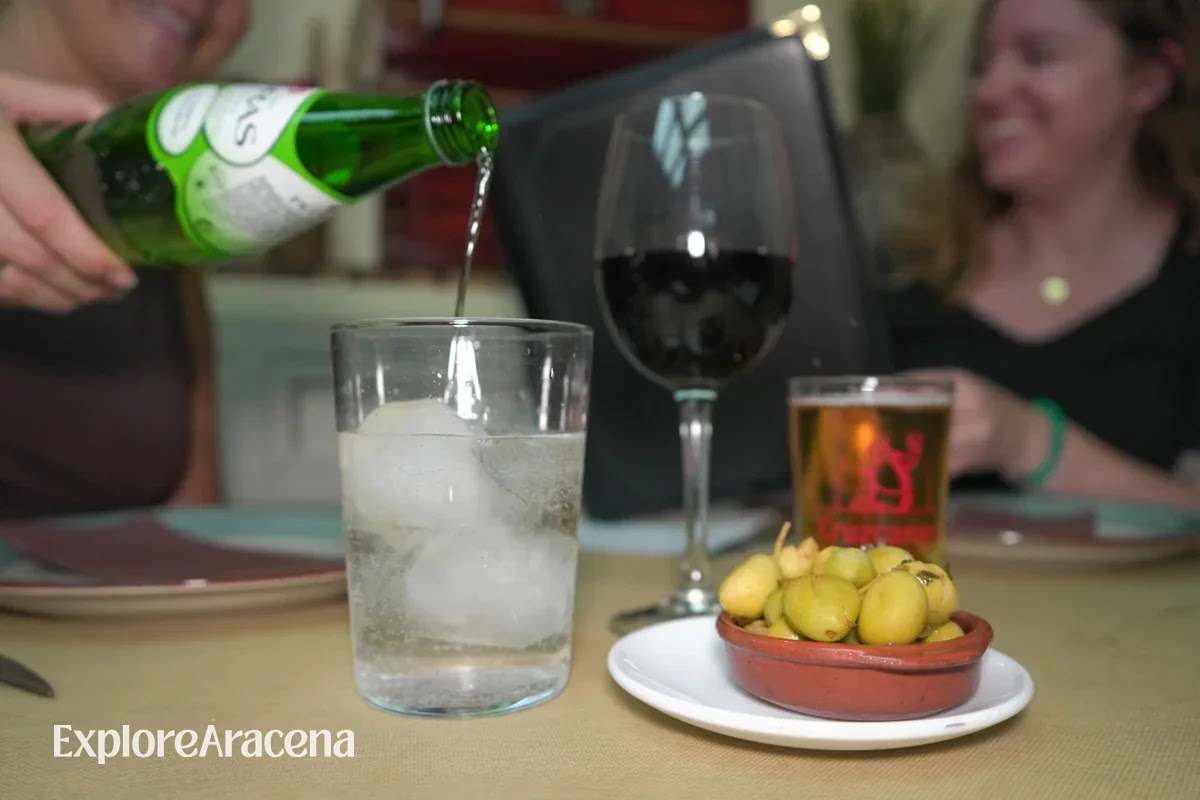
Long after we left, we kept returning to the same small moments: the first olives on the table, the refreshing chill of the gazpacho, rosy presa beneath delicate slices of jamón, wine poured beside a label carrying the restaurant’s former name. José Manuel sharing with us about the 25 years he spent working here before it became his own. His son standing beside him in the dining room. Dessert arriving when nobody was in a hurry to leave.
There was no single theatrical flourish. Brioso’s appeal came from the way everything belonged together: the food, the family, the history, and the unforced passage of time.
Aracena offers plenty of reasons to keep moving, from the Gruta de las Maravillas to the castle above town and the walking trails beyond it. But one of the best ways to understand this corner of Andalusia is to stop, take your seat, order for the table, and let lunch change the shape of your day.