Why Is Dinner So Late in Southern Spain? Understanding Andalusia’s Evening Rhythm
Why Is Dinner So Late in Southern Spain? Understanding Andalusia’s Evening Rhythm
Dinner in southern Spain can feel confusingly late at first, especially if you arrive hungry at 7:30pm and find empty terraces. In Andalusia, late dinners make sense once you understand the wider daily pattern: lunch is the anchor meal, summer heat shifts life into the evening, and tapas and sobremesa turn dinner into something unhurried and social. Here’s what to expect in Aracena, and how to enjoy the evening without feeling like you’re waiting.
We learned about Spanish dinner time the hungry way, so you don’t have to.
At six or seven, you might find yourself rather pleased to have secured a restaurant table before the crowds. The chairs are out, cold glasses sit on neighbouring tables, a waiter is stacking plates somewhere in the backdrop; everything suggests that you have timed it perfectly.
Except the kitchen is not serving dinner. In fact, the kitchen probably isn’t serving food, period.
Seven o’clock is for a drink and a decision about where dinner might happen later. If you have arrived ready for a full meal, the empty terrace can look like a gift. In truth, you are early enough to watch the restaurant prepare for everybody else.
Let us save you the confusion. In Andalusia, dinner is not running late; you are simply meeting the evening before it has reached that part of the story.
Aracena has its own version of this wait. At seven thirty, the tables may still be waiting for their occupants. An hour later, someone orders a beer while children appear with a ball. Friends stop to exchange a greeting, and remain talking long after the greeting has finished. Dinner assembles itself from these small beginnings rather than arriving on the stroke of a particular hour.
Before a ten o’clock reservation sends you into despair, look at the full Spanish day. There are several chances to eat before dinner:
Breakfast: Often coffee with toast or something sweet.
A mid-morning break: Another coffee, a tostada, or a small sandwich is common.
Lunch: The most substantial meal, usually eaten around two or three.
Merienda: A late-afternoon snack that closes the long gap between lunch and dinner.
Drinks and tapas: These may begin before anyone officially declares that dinner is happening.
Dinner: Commonly served around nine or ten, sometimes later during summer.
Once you see the whole day, dinner stops looking quite so alarmingly late.
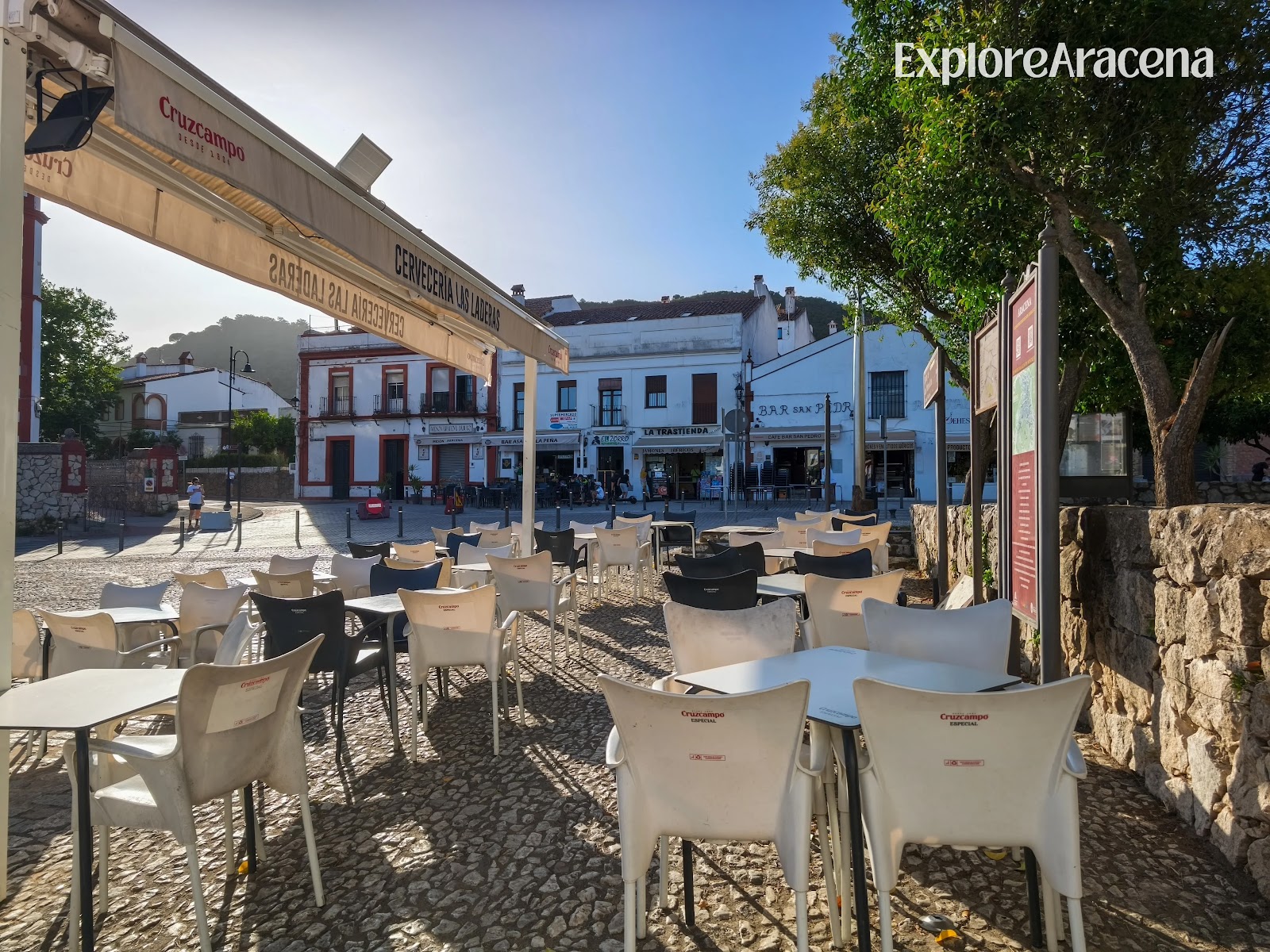
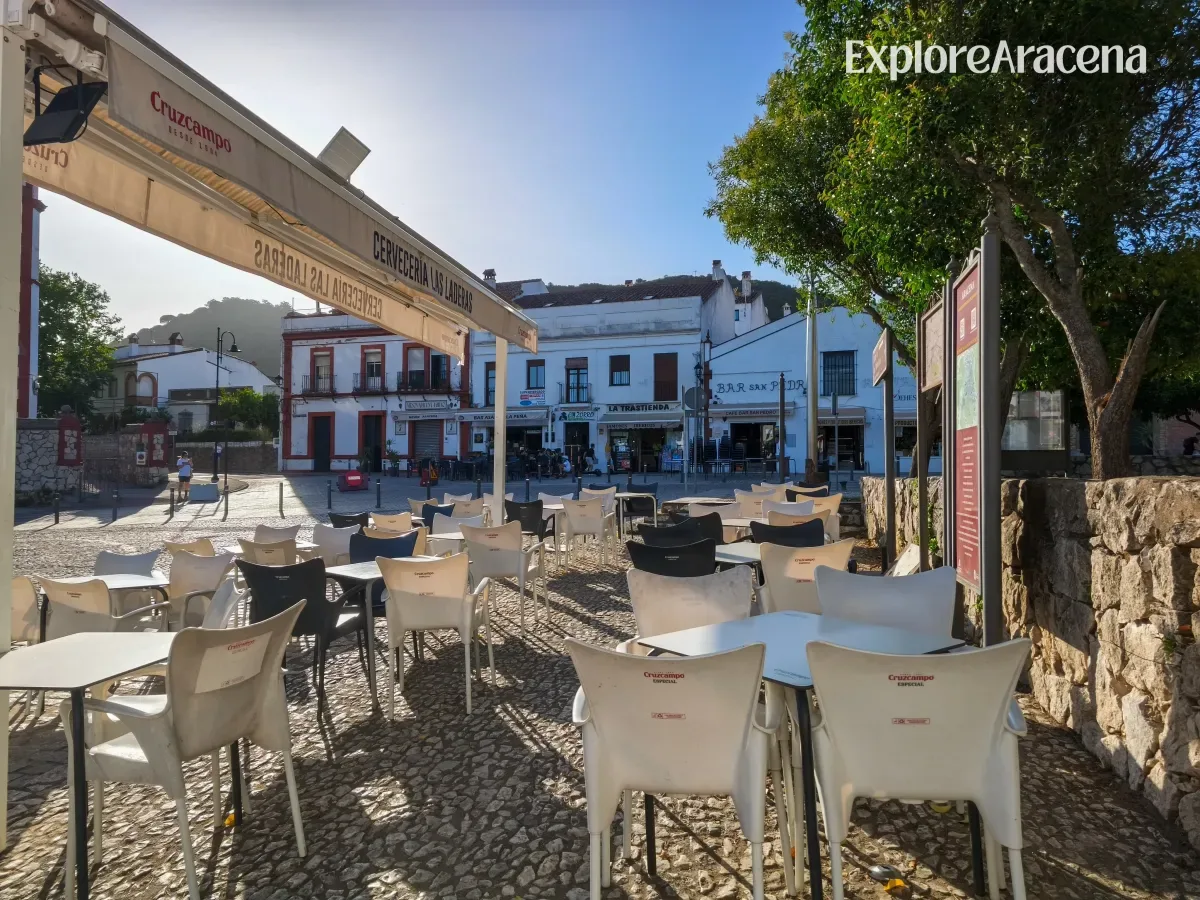
The tables are ready, but dinner is still hours away. In Aracena, an empty terrace at sunset simply means you have arrived before the evening has begun.
Lunch has already done the heavy lifting
If you are accustomed to organising your day around dinner, Spanish meal times can take a few days to understand. Lunch changes the equation.
In Canada, Britain and much of northern Europe, lunch is often practical: something wrapped, packed, or eaten near a computer. Dinner receives the appetite, attention, and planning. In Spain, lunch has traditionally claimed more of all three. It begins later, often after 1:30 p.m., and can occupy a good piece of the afternoon.
On weekends, you may find yourself moving through several courses before coffee appears and conversation takes over. Even an ordinary weekday lunch is often more substantial than the sandwich-and-back-to-work version many international visitors are so deeply familiar with.
After eating properly at two or three, another full meal at six makes very little sense. By ten, you may want grilled fish, a revuelto, a few shared plates, or something small with bread. Dinner has less to prove because lunch has already done the heavy lifting.
If you are deciding where that meal should happen, our guide to the best restaurants in Aracena will help. Just remember that opening hours on a screen do not always tell you when the kitchen begins serving lunch or dinner.
Six o’clock belongs to merienda
Merienda is the missing piece in many explanations of Spanish dinner culture.
It occupies the space between lunch and dinner, usually sometime between five and seven. It can be fruit, yoghurt, bread with chocolate, a small sandwich, biscuits or a pastry with coffee. It may be practical, nostalgic, or unapologetically sweet.
At home in Seville, merienda arrives with impressive reliability. My partner is Sevillano, and at around six each evening (or as the Spanish still refer to as “afternoon”) he has coffee with something sweet. Every day. Dinner is still several hours away and he sees no reason to suffer in the meantime.
Children often have merienda after school, but adults have certainly not surrendered the pleasure to them. You will see people meeting for coffee and cake, opening a packet of biscuits at home, or stopping at a bakery during the late afternoon.
The portion is small enough to leave room for dinner and substantial enough to prevent the particular fury that comes from expecting food at seven and discovering that the kitchen opens at eight or nine.
Merienda also explains why cafés remain relevant throughout the day. The table that held somebody’s morning tostada may host coffee and a pastry at six, then drinks and tapas later that night. Eating is distributed across the day instead of confined to three immovable meals.
Have the coffee. Eat the pastry. Spain has already solved the problem.
Summer rewrites the clock
Spain’s time zone appears in almost every discussion about late dinners, and it forms part of the history. It cannot explain everything. Spend one July afternoon in Seville, and the weather will present its own evidence.
At four, the city can appear abandoned by common agreement. Metal shutters come down. Pedestrians choose the thin strip of shade beside a building. Even a brief errand begins to sound unreasonable. When the sun drops lower, the evening becomes usable again.
Aracena sits higher than Seville and usually offers cooler air after dark, but summer still rearranges the day. Your best walk happens early. Lunch earns more time than planned. The afternoon is for shade, a book, a nap, or the democratic hum of a fan. Dinner belongs to the hours when being outside stops requiring endurance.
In June, daylight can remain beyond nine. Ten o’clock does not carry the same psychological weight it would in a country where darkness arrived three hours earlier. You are not eating in the middle of the night. You are eating at the end of a very long day.
Our guides to visiting Aracena in July and handling the August heat will help you plan the hours before dinner without declaring war on the temperature.
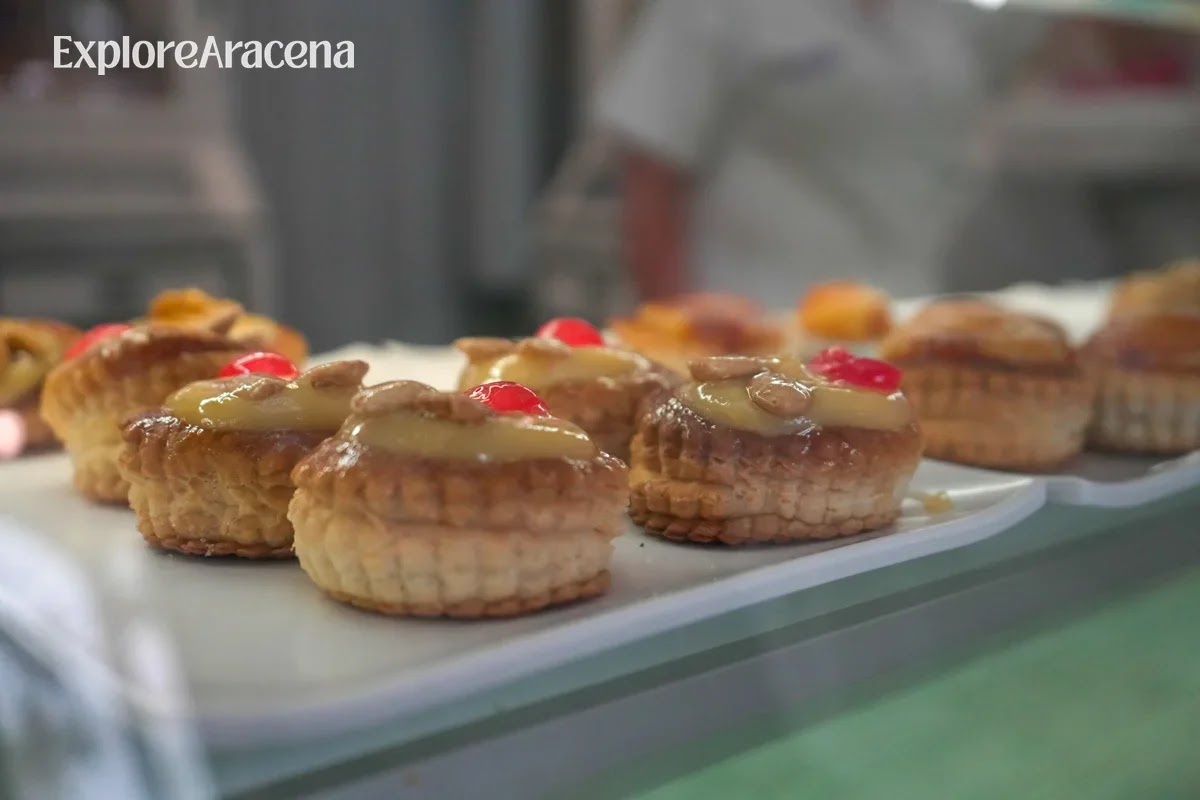
A sweet pastry makes the wait until dinner considerably easier. Merienda fills that important space between a late lunch and an even later evening meal.
Why are the children still awake?
You may notice the number of children in restaurants and plazas at an hour when children elsewhere would already be in bed. They run between tables and invent games around benches and trees. It’s very common to see playgrounds nearby bars and restaurants.
It can look like a holiday exception. More often, you are seeing a different idea of family time. Public life does not divide itself as firmly into adult and child territory. A late meal does not automatically require a babysitter, and a plaza at ten thirty can still belong to three generations at once.
This is particularly visible in summer, when an early bedtime would send children indoors just as the temperature becomes pleasant. During school holidays and local festivals, the border between afternoon and evening becomes even less important.
If you are travelling with children, you do not have to reproduce the local schedule perfectly. A late-afternoon snack can buy you time, and restaurants in visitor-heavy areas may serve earlier. What you do not need to worry about is whether your family is unwelcome after dark. In Andalusia, children remain part of the public evening.
Sobremesa, or why nobody has brought the bill
There is a Spanish word for the portion of a meal that begins after the eating has finished: sobremesa.
The plates may be empty, but the table has not completed its work. Someone orders coffee, maybe a story acquires an unnecessary but enjoyable second ending. Another person remembers something from twenty years ago. The point is, nobody reaches for a coat.
Sobremesa may last ten minutes or consume the distance between lunch and dusk. Its importance lies less in duration than in permission. Conversation is not treated as the delay after a meal: it belongs to the meal.
You can see this principle in our experience at Brioso Restaurante. We went for lunch and remained for the afternoon, speaking with José Manuel and his son as plates gave way to wine, dessert, and more conversation. Although that meal happened during the day, it carried the same lesson: a table is a place to be together, not a piece of furniture rented for the shortest possible interval.
You may become anxious when the bill fails to appear. In many restaurants, this is not neglect. The staff are waiting for you to indicate that you have finished. Ask for la cuenta when you want it. Until then, nobody assumes an empty plate means you must leave.
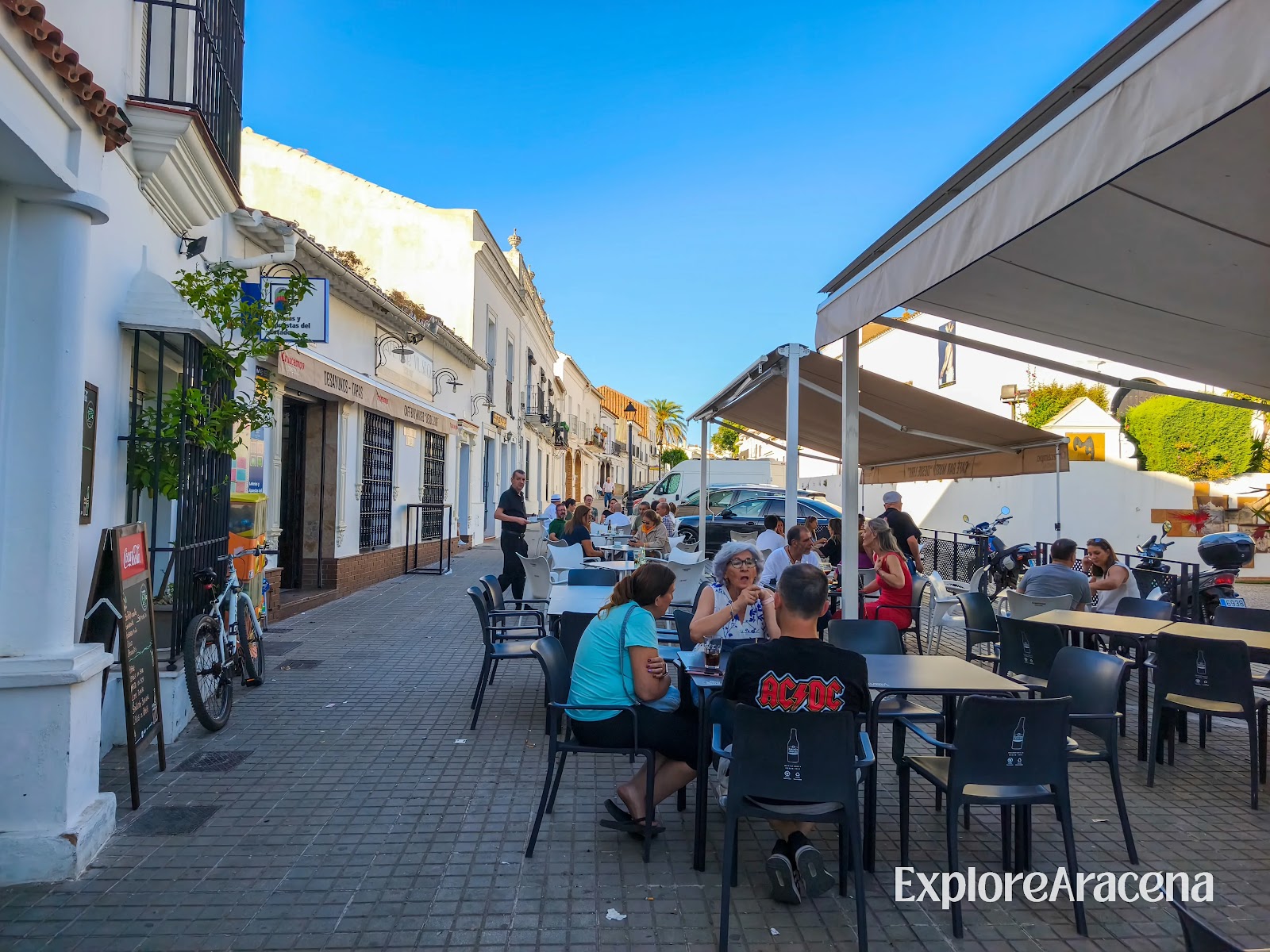
Dinner may not have started, but the evening certainly has. Drinks and conversation occupy the hours before anyone begins thinking seriously about food.
Dinner may begin before you call it dinner
At nine, the person you are meeting may suggest a drink. This does not mean dinner has been cancelled. Dinner may already have started, although neither of you has named it yet.
Olives arrive first, perhaps followed by a tapa of ensaladilla, cheese or jamón. Before long, someone suggests moving to another bar where the terrace catches more air, and one shared plate becomes several. By the time you ask what the plan is for dinner, you look down and realise the evidence is sitting in front of you.
Tapas make the evening wonderfully imprecise. They also give you a practical way to adapt without spending two hours hungry and resentful. Start with a substantial lunch, make time for merienda, then head out for a drink around eight or nine and order something small. From there, you can decide whether you still want a restaurant meal or whether the growing collection of dishes on the table has already made that decision for you.
There is no prize for copying local habits perfectly. If you need to eat earlier, eat earlier. Tourist centres provide more options, and Spanish households have schedules shaped by work, school, age, and personal preference. “Spaniards eat at ten” is a useful warning, not a law.
What dinner might actually look like
Dinner in Andalusia does not always arrive as one starter, one main, and one dessert. Depending on the night, your table might include:
A drink with one tapa: Enough when lunch was large and merienda happened late.
Several tapas across different bars: Particularly common in cities such as Seville and Granada.
A few media raciones: Half portions let you share several dishes without ordering an enormous meal.
One or two raciones for the table: Larger plates are placed in the centre so everyone can help themselves.
Something sweet and coffee afterwards: Because finishing the food does not necessarily mean the table is finished with you.
The freedom is part of the pleasure. You do not always need to decide what dinner will become before it begins.
Andalusia after dark: same clock, different night
Southern Spain shares certain habits, but an evening in Seville is not interchangeable with one in Cádiz, Málaga, Granada, or Aracena.
Seville turns summer dinner into an act of weather management. At dusk, the streets regain the population they appeared to lose that afternoon. Tables push out across pavements. In Triana, the Alameda or the streets around Santa Cruz, your dinner may move between bars instead of settling in one restaurant. Seville’s official tourism guide describes tapear as a social way of moving through and understanding the city, not merely a method of ordering smaller portions.
Cádiz has the Atlantic at its shoulder. Your route towards dinner may begin when you leave the beach, cross the promenade and follow the smell of fried fish. Salt remains on your skin and nobody has dressed for ceremony. The coast does not necessarily make dinner earlier; it gives the preceding hours somewhere beautiful to happen.
Málaga contains several dinner schedules at once. You can usually find an early table around the historic centre and waterfront, while local dining continues later around you. Tourism, neighbourhood life, and the habits of a large coastal city occupy the same streets without obeying one timetable.
Granada lends itself to movement. A drink brings a tapa, which leads you to another address and another plate. Its student population adds energy, but the older customs remain visible too. Dinner can become a trail through the city rather than a reservation.
The official Andalusian tourism website offers broader context on the region’s food and local traditions. The best education, however, remains an evening outside with no urgent appointment afterwards.
Aracena keeps the scale small
Aracena does not compete with the cities for nightlife, and it has no reason to.
Here, your evening takes place across a handful of plazas, restaurant dining rooms, and familiar terraces. People greet the waiter by name, children claim the open ground and you will observe how a conversation may leap from one table to the next because half the diners know each other.
Summer brings concerts, fair nights, and village celebrations, but most evenings are less eventful than that. Their pleasure is domestic, even when everybody is outdoors. A family orders dinner, as friends divide a bottle of wine. Someone who intended to stay for one drink discovers that two hours have passed.
The season changes what you encounter. Summer keeps people outside and encourages later starts. Autumn brings mushrooms, chestnuts, and visitors returning to the Sierra for walking and food. Winter shortens the evening and sends more people indoors, although weekend dinners still begin later than many international travellers expect.
This is why checking ahead matters. A small-town restaurant may serve dinner only on certain nights or by reservation, particularly outside busy periods. Never assume that because Spaniards dine late, every Aracena kitchen will remain open late. The culture and the business hours are related, but they are not identical.
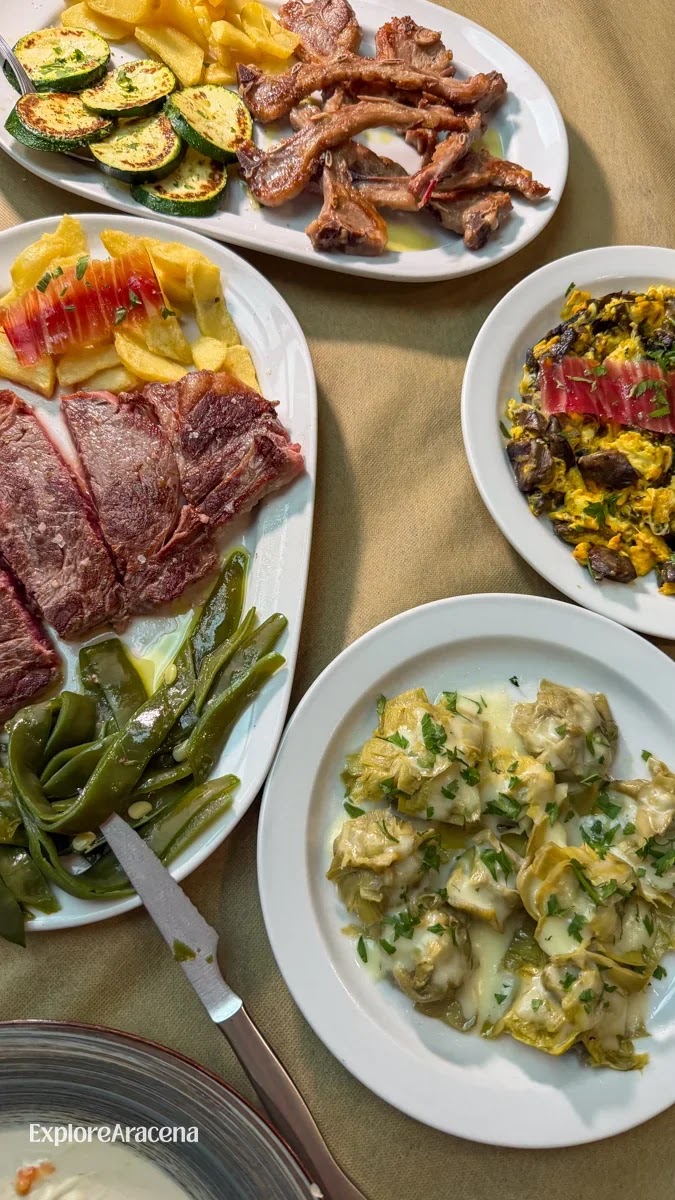
Dinner often develops plate by plate, with tapas and larger dishes passed around until the collection at the centre of the table becomes the meal
How to stop being hungry at seven
You do not need to remake your entire body clock. A few adjustments are enough:
Eat a proper lunch. The tiny midday meal that works at home will leave you furious by eight.
Keep room for merienda and carry a snack if you are travelling with children.
Treat your first drink and tapa as part of the evening rather than dead time before dinner.
Check the restaurant’s own hours and confirm that the kitchen serves dinner. Online listings can be outdated.
Reserve on weekends, during festivals and throughout the busy autumn season.
Ask for the bill when you are ready. Do not wait for the staff to guess.
Leave the hour after dinner empty. Sobremesa has little chance if you have scheduled against it.
Check out the best restaurants in Aracena
Spain’s official tourism website is useful for general visitor planning, but restaurant hours should always be confirmed directly.
Eventually, ten o’clock stops looking late
The adjustment happens without much ceremony. One evening, you notice it is nine fifteen and you have not eaten, yet nothing has gone wrong. You are sitting outside, bread is on the way, and something cold is in your glass. The people beside you have reached the funniest part of a story they have probably told before.
This is what late dinner can teach you about Andalusia. Daily life is not free from work, school runs or early alarms, and nobody has escaped the clock entirely. The difference is more ordinary than the mythology suggests. Meals are permitted to occupy space. Conversation receives minutes that would be cut elsewhere. Summer darkness gives people a reason to return outside and socialize.
In Aracena, you do not need a grand night out to understand any of this. Take a table after the heat has broken and order what you want to share. Ask for the bill when the conversation has reached its own conclusion, and you may just find that it picks right back up and continues on long after the bill is paid.
By then, the hour will be the least interesting thing about dinner.
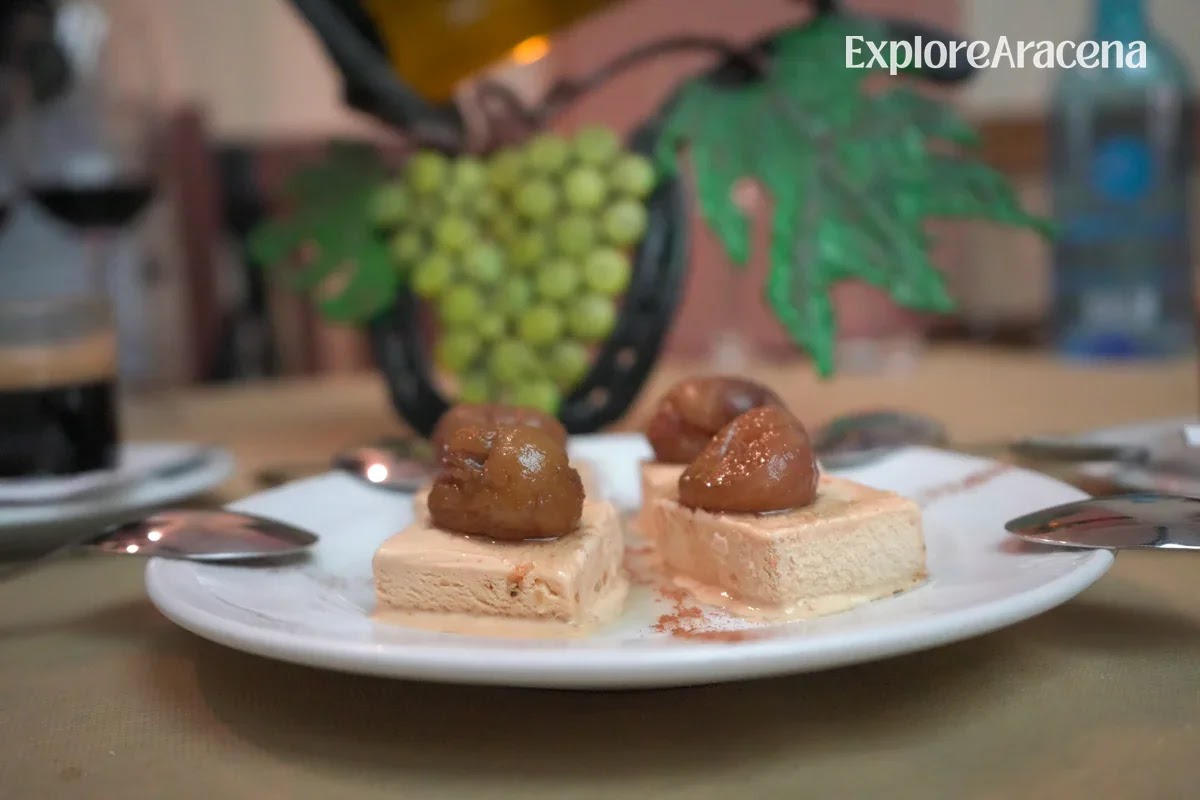
Dessert has arrived, but nobody is leaving. Wine, espresso and sobremesa carry the table into the final hours of the evening.